
What happens when a former physician writes crime fiction? She gets the autopsies right. And honestly, after fifteen years of watching doctors fumble through explanations that novelists somehow fumble worse, that's not nothing.
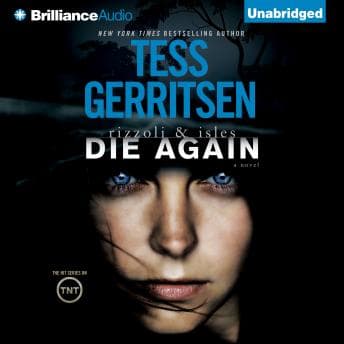
I picked up Die Again on a Wednesday morning - not my usual post-shift drive but during a rare bout of insomnia where Carlos and the kids were asleep and I was sitting on the back patio with coffee at 4 AM, too wired from a rough code to close my eyes. Seemed fitting. A book about bodies hung upside down like leopard kills felt about right for my mood.
Tess Gerritsen Still Remembers Her White Coat
Here's what I keep coming back to with Gerritsen: she was a physician before she was a novelist, and you can feel it in how Maura Isles processes a crime scene. The way Maura connects the hanging-upside-down positioning across multiple unrelated deaths - that's not just plot convenience. That's pattern recognition, the kind of lateral thinking I've watched good diagnosticians do in real life. The medical examiner scenes have weight because the procedural details don't make me want to throw my phone. When Maura examines the taxidermist found dead alongside that white snow leopard, the forensic observations track. The medical details are accurate. Finally.
But - and this is a real but - Die Again has a pacing problem in its first two hours. The dual timeline structure (present-day Boston murders alongside a Botswana safari gone wrong four years earlier) takes a while to find its footing. The safari chapters feel like setup for too long before the tension kicks in. I was sitting there on my patio thinking, "Okay, I get it, the African bush is dangerous, can we move?" Once the two storylines start converging around hour three, though? Different story. The connection between a big game hunter's murder and a camping trip massacre is genuinely clever, and Rizzoli's dogged investigative work feels earned, not shortcut.
The thing that surprised me is how much the book has to say about trophy hunting and the exotic animal trade. It's not preachy - Gerritsen's too smart for that - but there's real anger underneath the procedural elements. The dead snow leopard isn't just a set piece. It's the whole thesis.
Tanya Eby - Consistent, Professional, and a Little Divisive
So here's where it gets complicated. Tanya Eby has narrated enough of this series that she is these characters for longtime listeners. Her Rizzoli has this no-nonsense, slightly clipped delivery that feels right for a Boston homicide detective. And her Maura is cooler, more measured - you can hear the medical precision in how she delivers those autopsy findings. The character differentiation is solid.
But I get why some people bounce off her style. There's a flatness to certain passages - the exposition-heavy sections especially - where the delivery goes a bit mechanical. Not robotic exactly, but like she's pacing herself for the long haul and some emotional peaks don't quite land. The Boston accent shows up intermittently, which is... fine? It's there when it needs to be for Rizzoli but doesn't carry through other Boston-native characters consistently. As someone who works with people from everywhere, inconsistent accents stick out to me.
At 9 and a half hours, the length is manageable. I bumped it to 1.25x during the slower safari exposition chapters and dropped back to normal speed once the bodies started piling up. Worked perfectly.
The Medicine, The Murder, The Moments That Work
What Gerritsen does well here is the gross stuff. I don't mean gratuitous - I mean specific. The leopard-kill positioning, the forensic details of how a body decomposes when suspended, the taxidermy process described in enough detail to make you deeply uncomfortable about that mounted deer head at your uncle's cabin. As someone who's actually worked a code and seen what trauma does to the human body, I appreciate when a writer respects the reality instead of Hollywood-ing it up.
The mystery itself is solid if not her strongest. I figured out one of the twists around hour five, but the final reveal still had a piece I didn't see coming. Gray Plague is another medical thriller I picked up recently that tries for the same kind of slow-burn reveal, though with considerably less success on the accuracy front. Rizzoli and Isles' dynamic carries a lot - their professional respect tinged with genuine friendship is one of the better partnerships in the genre.
Carlos asked why I was still outside at 5:30 AM. I told him I was waiting for a murderer to get caught. He made me more coffee. Good man.
Who Needs This in Their Ears
If you're already invested in Rizzoli & Isles, this is a decent entry - not the best in the series, but worth your time. If you're new, don't start here. Go back to The Surgeon. If you're a fellow healthcare worker who stress-reads crime fiction because real trauma isn't enough apparently, the medical accuracy will scratch that itch. If monotone narration drives you up a wall, maybe sample the audio first before committing a credit.
Perfect for that post-shift decompression. Just maybe not the first two hours - save those for when you're alert enough to push through the setup.
Night Shift Rx: Solid But Not Her Strongest Dose
Gerritsen's medical background keeps this grounded where lesser thrillers would spiral into nonsense, and the exotic animal trade angle gives it a flavor that sets it apart from standard procedurals. Eby's narration is reliable if not electric. It's a good 9.5-hour listen that earns its ending even if it takes too long to get there. Night shift approved - with the caveat that you might need caffeine for act one.