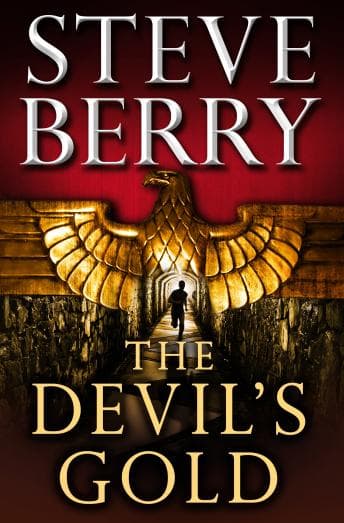

I tell my students that short stories are exercises in economy—every word must fight for its life. Steve Berry isn't exactly Chekhov, and this plot is about as subtle as a freshman's excuse for missing homework. But here's the thing: he doesn't need to be Chekhov when Scott Brick is driving the bus.
Why I'd Listen to Brick Read the Lunch Menu
Let's be real for a second. I spend eight hours a day listening to teenagers mumble through Macbeth like they're reading a grocery list. My ears are tired. They crave competence.
Scott Brick is the antidote to high school mumbling. The man understands that narration is performance art. (I've tried explaining this to Principal Martinez regarding his morning announcements, but I digress.) Brick brings this gravity—this serious, almost heavy texture—to the text that elevates it way above its pay grade. He uses pauses like weapons. When he drops a line about "The Sphinx" or some secret intelligence plot, you believe it. You shouldn't, because it's ridiculous, but you do.
Brick pulls the same classroom-silencing trick in Piranha, though that one has more muscle and less museum-dust conspiracy.
He has this specific way of lowering his pitch at the end of a sentence that makes everything sound like a state secret. I was listening to this while grading a stack of essays on The Great Gatsby (which, for the record, 90% of my class misunderstood), and I actually stopped grading. Put the red pen down. Just stared at the wall and listened to Brick describe a South American village. That's power.
History Channel at 3 AM
The story itself? Look, it's pulp. We've got rogue agents, we've got Martin Bormann, we've got lost Nazi gold. It's the kind of plot that usually makes me roll my eyes so hard it hurts. Feels like one of those documentaries my dad falls asleep to.
But because it's a short story—under two hours—it doesn't have time to get annoying. It moves. It's lean. Berry strips away the bloat that usually plagues this genre. There's no 50-page detour about the history of a specific pistol. When Berry lets the machinery sprawl, as he does in Templar Legacy: A Novel, I start reaching for my imaginary faculty-meeting timer. It's just: Here is the bad guy, here is the gold, here is the conflict. Boom.
I was walking the lakefront with Denise while listening to the climax. She asked me what I was grimacing at. I told her it was the wind. Actually, it was the sheer melodrama of a confrontation involving Eva Braun's secrets. (I can't tell her I listen to this stuff; she thinks I'm re-listening to Ulysses.)
The "Grading Papers" Test
Is this great literature? No. My students would probably enjoy the violence, but I couldn't teach it. The prose is functional—it gets you from point A to point B without tripping over the furniture. But sometimes, especially at 11 PM on a Tuesday when your eyes are burning from reading bad handwriting, functional is exactly what you need.
Who should listen: Anyone who needs a palate cleanser after heavy reading, or who wants a quick thriller that won't demand much but delivers solid entertainment. Who should skip: If you're looking for literary depth or historical accuracy you can cite in a paper, keep walking.
It's a quick, dirty, well-acted thriller that respects your time. Scott Brick makes it sound like a Greek tragedy, and honestly, that's enough for me. If you need a break from the classics—or just a break from reality—this is a solid hour and a half spent.
Just don't expect me to quote it in class.