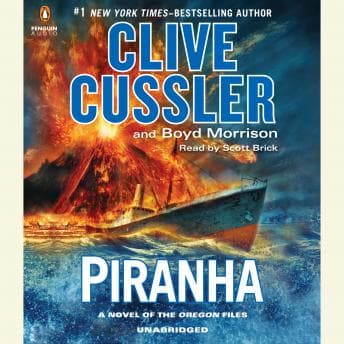

"The Oregon crew never disappoints" - that's what I kept thinking around hour three, grading papers at my kitchen table while Denise slept and Juan Cabrillo orchestrated yet another impossible escape. There's something almost meditative about red-penning sophomore essays on *The Great Gatsby* while listening to a covert ops ship fake its own death to evade assassination.
Look, I'm an English teacher. I should be above this. I should be listening to Proust or finally finishing *Middlemarch* (again). Though honestly, Brideshead Revisited proved you can have both literary weight and genuine momentum. But sometimes you need fiction that moves like a missile strike rather than a meditation on consciousness. Cussler and Morrison understand something Hemingway understood: momentum is its own kind of art.
The Oregon Is Basically a Character at This Point
Ten books into this series, the ship itself has become as familiar as any protagonist in literature. And that's not hyperbole - the Oregon, with its rusted exterior hiding state-of-the-art weaponry, functions as setting, character, and symbol all at once. The sequence where the crew stages their own destruction is genuinely clever plotting. They're not just faking a sinking; they're erasing their identity to regain anonymity. It's the kind of operational detail that rewards paying attention.
The historical hook - a German scientist's breakthrough lost in the 1902 Mt. Pelée eruption - gives the plot actual texture. Morrison (who handles most of the writing these days, let's be honest) connects that volcanic disaster to a modern weapons designer with genuinely unsettling capabilities. The villain can anticipate the Oregon's moves, which creates something rare in these books: actual tension.
Are there implausibilities? Of course. This is Cussler-adjacent fiction. You don't come here for realism. You come for missile shootouts, drone attacks, and competent people being extremely competent under pressure.
Scott Brick Knows Exactly What He's Doing
Here's the thing about Brick's narration: he commits. Every character gets a distinct voice. Juan Cabrillo sounds different from Max Hanley sounds different from the various antagonists. When the action sequences hit - and they hit often - Brick's pacing accelerates without becoming frantic. He understands that pause is punctuation.
Now. Some listeners find his intensity overwhelming. I get it. There's a certain... *muchness* to his delivery during climactic moments. If you prefer understated narration, Brick might feel like too much caffeine. But for a book about covert operatives and global conspiracies, understated would be wrong. The energy matches the material.
The production is clean - no music, no sound effects, just Brick doing his thing for twelve hours. That's actually refreshing. Let the prose carry the weight.
Morrison's Fingerprints Are All Over This
Boyd Morrison brings something to these collaborations that pure Cussler sometimes lacked: tighter plotting. There's a crossover moment with characters from Morrison's Tyler Locke series that fans will catch - it's the kind of easter egg that rewards series readers without alienating newcomers.
The prose is cleaner than you'd expect. (Yes, I just said that about a Clive Cussler book. My grad school professors are spinning in their theoretical graves.) Morrison writes action with clarity. You always know where everyone is, what they're doing, and why it matters. That's harder than it sounds.
My students would hate this. They'd call it "old people adventure fiction." They're not entirely wrong. But there's craft here - the kind of craft that keeps twelve hours moving without dragging.
Who Should Queue This Up (And Who Should Skip)
If you want literary fiction, this isn't it. If you want slow character studies, look elsewhere. But if you want a competently executed thriller with naval operations, historical intrigue, and a crew of specialists doing specialist things - this delivers. Oregon Files veterans will feel right at home; newcomers can jump in here without much confusion, though you'll miss some crew dynamics.
Best for road trips or long commutes. The plot requires enough attention that background listening won't work. I wouldn't recommend bedtime either - too much adrenaline. This is a "driving to visit family" audiobook, or a "grading papers at 11 PM when you need something to keep you awake" audiobook.
Content note: violence, language, some sexual content. Standard thriller fare.
Worth Pausing the Faculty Meeting For
I'm not going to pretend this is *Moby-Dick*. But it's excellent at what it is. Scott Brick's narration elevates solid source material into genuinely entertaining listening. The Oregon Files series has found its groove, and Morrison keeps the formula fresh without abandoning what works.
Principal Martinez, if you're reading this: I was definitely paying attention during the budget presentation last Tuesday. (I was listening to a fake ship sink while Juan Cabrillo planned his next impossible mission. It was worth it.)