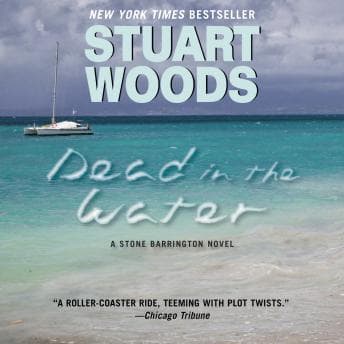

"The problem is, though she arrived alone, she had departed the other side of the Atlantic in the company of her husband."
That line hit different at 4 AM when I was charting on a patient who came in alone too, though under very different circumstances. My unit was quiet (I knocked on wood twice, don't judge me), and I had this playing low through one earbud while documenting vitals. Caribbean legal drama and IV drip rates - welcome to my life.
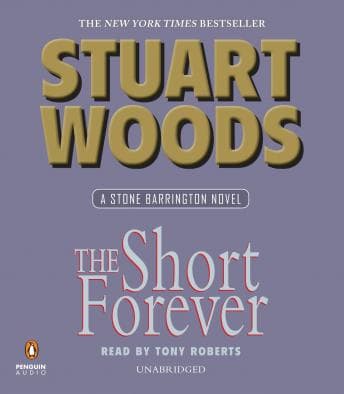
Stone Barrington Walks Into a Caribbean Courtroom and I Have Questions
So here's the setup: Stone Barrington, the ex-cop-turned-Manhattan-lawyer we're apparently supposed to find irresistible, stumbles into a situation in the fictional island nation of St. Marks where a gorgeous woman named Allison Manning sails into harbor alone on a yacht she left port on with her husband. Husband's gone. As in, dead-at-sea gone. And the local minister of justice, Sir Winston Sutherland, wants to hang her for it. Literally. St. Marks still has the death penalty by hanging, and Stuart Woods uses this colonial holdover legal system as the engine for the whole plot.
The courtroom stuff is actually where the book shines. The clash between Stone's American legal instincts and this island's abbreviated, almost medieval judicial process creates genuine tension. There's a scene where Stone realizes he can't object the way he would in a New York courtroom, and the judge basically tells him those rules don't apply here - that landed. The powerlessness of a smart guy who's used to working within a system suddenly trapped in someone else's system? That I understand. Try being a nurse arguing with a surgeon about a protocol they refuse to follow. Different arena, same pit-in-your-stomach feeling.
But - and this is a big but - Allison Manning is written like a fantasy more than a character. She's beautiful, she's vulnerable, she's wealthy, she's immediately sleeping with Stone. Of course she is. Because Stone Barrington apparently cannot enter a ZIP code without a woman falling into his bed within 48 hours. I've read enough of these to know it's a feature, not a bug, for Woods fans. But it makes it real hard to take the murder mystery seriously when your protagonist is more focused on his love interest than on the fact that she might actually be guilty.
The Legal System That's Held Together With Duct Tape and Colonial Grudges
What keeps this from being completely disposable is Sir Winston Sutherland. He's the real antagonist here - not a mustache-twirling villain but a man who weaponizes a legitimate legal system for what seem like personal and political reasons. His motivations stay murky for most of the book, which is smart. You keep adjusting your read on him. Is he corrupt? Zealous? Both? Some listeners found this frustrating - the "lacking some expected judicial quirks" complaint makes sense to me. The legal framework feels like it should be weirder, more foreign, more specifically Caribbean in its quirks. Instead it sometimes reads like American court with the safety rails removed.
The plot twists are... fine. I saw one of the bigger reveals coming around hour seven, but I'll give Woods credit - the insurance subplot with the $12 million policy on the dead husband threw me a genuine curveball. That's the kind of detail that makes you reconsider everything Allison has told Stone, and by extension, everything she's told you.
Tony Roberts Behind the Mic
Tony Roberts does a competent job. I won't oversell it. His Stone Barrington is smooth and confident, which fits. But the Caribbean characters - the locals, Sir Winston, the judges - don't get the vocal distinction they deserve. In a book where the ENTIRE point is that Stone is a fish out of water in a foreign legal system, the voices should make you FEEL that foreignness. They don't, really. Everyone sounds a bit too... Manhattan. It's serviceable narration. It won't pull you out of the story, but it won't elevate it either. Honestly, atmosphere through voice is something I've found done more effectively in darker material - my review of Skeleton Crew: Selections gets into how narration can actually make you feel like you're somewhere genuinely unsettling, which this audiobook could have used more of.
At 11 and a half hours, this is a solid length for a week of commutes. I finished it over four post-shift drives home, and it did its job - kept my brain occupied enough that I wasn't replaying the trauma bay in my head, but didn't demand so much attention that I'd miss my exit on the I-10.
Who Gets the IV and Who Gets Discharged
If you're a Stuart Woods completist or you like your thrillers with a side of beach-read romance, this will scratch the itch. If you want a legal thriller with the procedural rigor of a Grisham, you'll be frustrated. The medical moments are minimal (a brief drowning-related death discussion that's vague enough I couldn't yell at my dashboard, which was almost disappointing). This is not how I'd introduce someone to legal thrillers, but it's a perfectly acceptable 3 AM companion.
Night Shift Prescription
It's comfort food. Not the adobo my mom makes from scratch - more like the cafeteria lumpia that's technically fine but you know could be so much better. Carlos asked me if I liked it when I got home and I said, "It was fine." He said, "That bad?" He knows me too well. It's not bad. It's just... fine. And sometimes, after a twelve-hour shift where nothing was fine, fine is exactly what you need.