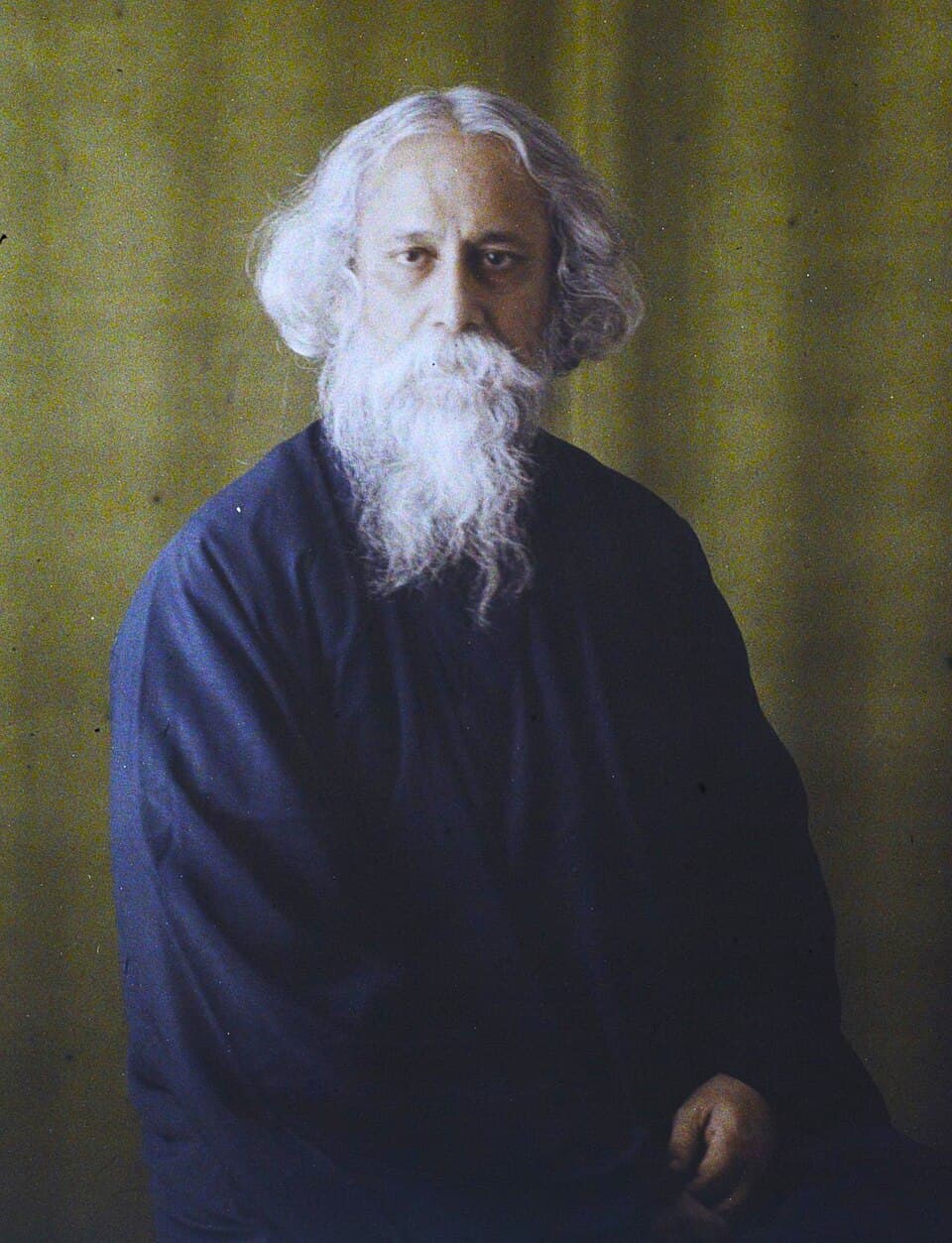

Tagore is one of those writers I assign to my students knowing full well they'll resist. And then something happens. A line catches them off guard, a phrase lands differently than expected, and suddenly they're underlining passages. That's the Tagore effect. With Creative Unity, I wanted to experience that effect myself - not through the page, but through my ears during those late-night grading sessions.
Here's the thing about this collection: it's not poetry. My students always assume Tagore means poetry, but this is philosophy. Essays on creativity, on East-West artistic traditions, on what education should actually be. And honestly? It hit different than I expected.
When a Nobel Laureate Teaches Your Class
Tagore wrote this in 1922, and I kept pausing to marvel at how relevant his ideas about creativity and freedom still feel. He's talking about the spirit of artistic expression, about how the West approaches creation versus the East, and - this is the part that got me - about his vision for what a university should be. As someone who's spent two decades in education watching standardized testing slowly strangle creative thinking, I found myself nodding along at 11 PM over a stack of ungraded essays.
The essays on creative ideals are particularly striking. Tagore argues that true creativity comes from unity - with nature, with humanity, with something larger than ourselves. Talking to Strangers explores that same idea of connection—how we fundamentally misunderstand our relationship to the people around us. It's the kind of philosophy that sounds abstract until you're listening to it while watching the Chicago skyline from your apartment window, and suddenly it clicks.
The LibriVox Reality Check
Okay, so here's where I have to be honest. This is a LibriVox production, which means volunteer narrators. And look - LibriVox is a beautiful project. Free audiobooks of public domain texts, recorded by people who genuinely love literature. I respect that deeply.
But.
The narration is... uneven. Some sections are clear and engaging, with good pacing that lets Tagore's prose breathe. Other sections feel a bit flat, and there were moments where I wished for more interpretive depth. The kind of narration that understands pause is punctuation, you know? That said, the audio quality itself is generally clean, which isn't always the case with volunteer productions.
For a text like this - philosophical essays that demand careful attention - the narration matters less than it would for fiction. You're here for Tagore's ideas, not for dramatic performance. The volunteers do their job: they deliver the words clearly. I just found myself occasionally wanting more.
(Don't tell my students I said this, but I actually paused during one particularly dense essay on East-West artistic comparison to make notes for a future podcast episode. Forty-seven listeners are going to hear me ramble about Tagore's creative philosophy whether they like it or not.)
Philosophy That Demands Your Full Attention
At four and a half hours, this isn't a quick listen. And Tagore's prose style - elegant, meditative, sometimes circling back on itself - requires patience. This isn't the kind of audiobook you throw on during a workout. Trust me. I tried it once on the lakefront and completely lost the thread during a section on artistic nationalism.
Where it works beautifully: late evening listening. Quiet moments. The kind of focused attention you'd give to any serious philosophical text. Denise fell asleep next to me during the university essays, but I was wide awake, thinking about how Tagore's vision of education - holistic, creative, connected to nature and community - is basically the opposite of everything we've built in modern American schools. That tension between idealistic vision and institutional reality shows up differently in 48 Laws of Power—Greene's ruthlessly practical take on how systems actually operate versus how we wish they would.
If you loved the Upanishads or the Bhagavad Gita as audiobooks, this sits comfortably in that tradition. Tagore is drawing from the same well, even when he's engaging with Western philosophy and art.
Who This Is (and Isn't) For
If you're coming to Tagore for the first time, this might not be your entry point - start with Gitanjali, maybe. But if you already appreciate Tagore's mind and want to understand how he thought about creativity, unity, and the purpose of art, this is essential listening. Skip it if you need polished production values or something you can half-listen to while multitasking.
The LibriVox production is free, which means the barrier to entry is basically zero. And despite the occasional flat moment in narration, Tagore's ideas come through. The prose deserves to be savored, and even imperfect narration can't diminish the power of sentences like these.
Class Dismissed
My students would probably zone out during the East-West comparison essays. I loved them. That's the honest truth of it.