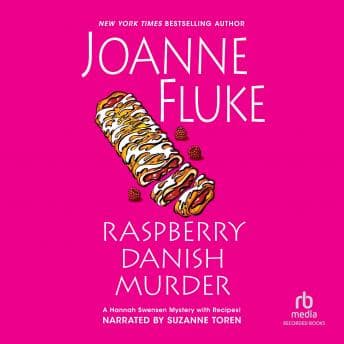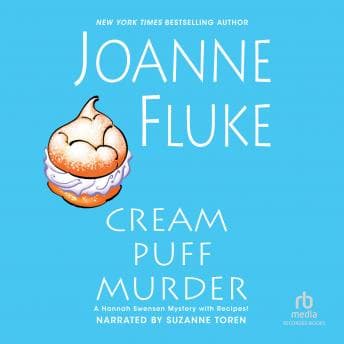

Is there anything more psychologically confusing than the human desire to pair brutal murder with pastry recipes? I listened to this while meal-prepping a dal that took three hours (don't ask), and honestly, the cognitive dissonance is real. We're dealing with Cream Puff Murder here. A woman is found dead in a jacuzzi—classic distinct setting for trauma—and yet, the narrative keeps swinging back to sugar content.
I admit, I picked this up because sometimes my brain needs a break from analyzing the darker triad of personality traits. I wanted cozy. Gingerbread Cookie Murder delivers the same cozy-with-recipes formula, though at least that one has seasonal charm going for it. I got... well, I got a lot of baking instructions.
The Minnesota Nice Paradox
Suzanne Toren narrates this, and she understands the assignment. She nails that specific Minnesota cadence—warm, polite, but with that underlying layer of "I am judging you, but I will do it with a smile." It's a fascinating linguistic mask. She makes Lake Eden feel like a real place where people actually say "Uff da" without irony. Toren brings that same immersive quality to Zookeeper's Wife: A War Story, though in a completely different register—historical drama instead of small-town murder.
However—and this is a big however—her character voices can be a lot. Specifically, Hannah's mother, Dolores. (Why is the mother figure always the source of auditory stress? My therapist would have a field day with that observation.) Toren voices her with this high-pitched, shrill quality that frankly grated on my nerves. It felt less like a character interpretation and more like a caricature. If you're sensitive to pitch, you might find yourself lowering the volume whenever Dolores enters the scene.
When the Kitchen Hijacks the Crime Scene
Look, here's the thing about audiobooks vs. physical books. In a book, you can skim the recipes. In audio? You are held hostage.
A significant portion of the runtime is dedicated to reading recipes out loud. Ingredients. Measurements. Steps. I'm jogging through Cambridge, trying to get my heart rate up, and suddenly I'm listening to a step-by-step guide on how to make cream puffs. Psychologically, it destroys the narrative tension. We go from "Who killed Ronni Ward?" to "Make sure the butter is room temperature."
I saw a lot of other listeners complaining about this online, and they are 100% correct. It disrupts the flow state. Unless you are literally standing in your kitchen with a notepad (and who does that while listening to a murder mystery?), it's dead air. The pacing becomes a stop-and-go nightmare.
The "Man-Eater" Trope
The victim, Ronni Ward, is framed as the town "man-eater." From a narrative psychology perspective, this is the oldest trick in the book. You create a victim who transgresses social norms so that everyone has a motive. It's efficient, sure, but a little lazy. It allows the protagonist, Hannah, to remain the moral center—the "good" woman versus the "loose" woman.
It's a bit dated. But Toren's narration keeps it light enough that you don't dwell on the sociological implications too much. (Or maybe that's just me.)
Who's This Actually For?
If you want low-stakes comfort listening and don't mind keeping your thumb on the 30-second skip button during recipe segments, you'll find this pleasant enough. Skip it if you need your mysteries to have actual tension, or if shrill character voices make you want to throw your earbuds into traffic.
The Diagnosis
If you can tolerate the recipe interruptions, this is a functional cozy mystery. It's not going to challenge your intellect, and the mystery itself is thinner than the dough on a strudel. But Toren is a pro, despite the shrill character voices, and sometimes you just need a story where the stakes are high but the vibe is low-stress.
Just don't expect to learn anything profound about the human condition. Unless the lesson is that people will kill for a good pastry.