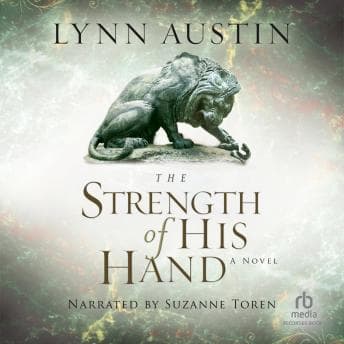
"The Lord is my strength and my song; he has become my salvation."
That line from Exodus 15 kept echoing in my head around hour nine of this audiobook, not because Lynn Austin quotes it directly in that moment, but because her entire project with Song of Redemption is building toward what that verse means when a nation - and a man - have to earn back the right to sing it.
I was listening on one of those brutally cold lakefront walks with Denise, the kind where Lake Michigan looks like hammered steel and you can feel your earbuds freezing. And here's Hezekiah, post-temple-cleansing, trying to drag an entire kingdom back to faithfulness while the Assyrian war machine is sharpening its teeth at the border. The cold felt appropriate. This is not a warm and fuzzy biblical retelling.
When the Old Testament Reads Like a Political Thriller
What Austin does here that most biblical fiction doesn't bother with is the political calculus. Hezekiah isn't just a righteous king making righteous decisions because the text says so. He's a young ruler surrounded by advisors who remember his father Ahaz's reign of compromise and idolatry, and they're not all convinced that piety is a viable foreign policy. The tension between faith and pragmatism - do you trust God or do you pay tribute to Assyria? - is the engine of this book, and Austin never makes it feel simple.
This is the second book in the Chronicles of the Kings series, and Austin uses that runway well. The groundwork from the first book means she can spend time on the consequences of Ahaz's choices rippling through Hezekiah's reign. There's a weight to the generational damage here that felt genuinely earned. My students would hate this - too much setup, not enough action sequences. I love it. The prose deserves to be savored because Austin is doing something careful: she's making you understand why idolatry was tempting, not just wrong. She gives the pagan practices a seductive logic, which makes the choice to reject them actually dramatic.
The Assyrian threat, when it arrives in full force, carries real menace. Austin doesn't shy away from the brutality - the torture, the psychological warfare, the sheer scale of imperial violence. There's a content warning here for Assyrian violence that I'd take seriously. This isn't sanitized Sunday school material.
Suzanne Toren Knows Where the Silence Lives
The narrator understands that pause is punctuation. Toren's delivery has this quality I keep coming back to - she reads like someone who's thought about what the next sentence means before she says it. Her emotional range is quiet but effective. She doesn't oversell the devotional moments, which is critical in a book like this. Nothing kills a biblical novel faster than narration that sounds like it's auditioning for a church drama.
Her character work is solid across the board with one interesting exception: her Ahaz voice has apparently divided listeners, and I can see why. There's something almost cartoonishly weak in how she voices him, a reedy quality that borders on caricature. But here's the thing - I think it works. Ahaz is supposed to be the cautionary tale, the father whose spiritual cowardice nearly destroyed a nation. A little vocal contempt from the narrator feels like an interpretive choice, not a failure. Whether you agree with that choice is another matter.
Her Hezekiah, by contrast, carries a steadiness that grows throughout the thirteen-plus hours. You can hear the character maturing in the voice. That's performance art, not just reading.
Who Needs This in Their Queue
If you loved Francine Rivers' Mark of the Lion series, this is its spiritual successor in the biblical historical fiction space - but with more political complexity and less romance. If you're someone who reads the Old Testament historical books and thinks "I wish I could feel what this was actually like," Austin is writing for you.
Skip this if you need fast pacing or if faith-centered fiction isn't your thing. Austin is unapologetically writing from a devotional perspective. The theology isn't subtle. I keep a short list of books that earn their sincerity rather than just assuming it, and Corrections is on it for secular reasons that rhyme more with Austin's project than you'd expect - both authors are doing the hard work of making you understand a character's failure from the inside. But it's also not lazy - she's wrestling with the material, not just illustrating it.
At 13 hours and 48 minutes, this is a commitment. I listened at 1.0x because the author chose those words and Toren chose those pauses, and I wasn't about to rush past either of them.
The Margin Note I'd Leave My Students
This is why we still read the classics - even the biblical ones. Austin takes a story most people think they know (if they know it at all) and makes you realize you'd only ever seen the outline. The interior life she gives Hezekiah, the political and personal cost of reformation, the way faith looks different when an army of 185,000 is camped outside your walls - that's the gap between knowing a Bible story and understanding one. Worth pausing the faculty meeting for. Worth pausing a lot of things for.