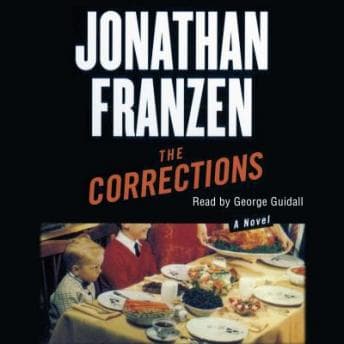

Look, I'm going to be honest with you. Twenty-two hours is a lot to ask of anyone. That's longer than most of my students have spent reading anything in their entire high school careers combined. And yet here I am, having spent the better part of three weeks with the Lambert family rattling around in my head while I grade essays about The Great Gatsby. The irony of listening to one great American novel while my students butcher another wasn't lost on me.
But here's the thing about Franzen—he makes you earn it. And I mean really earn it. This isn't beach reading. This is the literary equivalent of training for a marathon while someone occasionally punches you in the stomach with uncomfortable truths about family dysfunction.
The Lamberts Are Every Family You've Ever Dreaded Visiting
I kept pausing this book to text my wife Denise—yes, same name as the youngest Lambert, which made things weird—to say things like "This is exactly like my Aunt Carol" or "This is what Thanksgiving would be if everyone said what they were actually thinking." Franzen has this gift (curse?) for making you recognize your own family's pathologies in his characters. Gary's desperate insistence that he's definitely not depressed while exhibiting every symptom of clinical depression? I've sat through faculty meetings with that guy. Chip's spectacular academic flameout? I've watched it happen to colleagues. (Not me. Mostly not me.)
Enid Lambert, though. Enid is the heart of this thing, and she's maddening in the way that only mothers who love you too much in all the wrong ways can be. Her obsession with getting everyone home for Christmas—this impossible, doomed mission to recreate something that maybe never existed in the first place—it's so painfully real that I had to stop walking and just stand on the lakefront for a minute.
George Guidall Gets the Midwest
So here's where I have to talk about the narration, because in a 22-hour audiobook, the narrator is basically your roommate. George Guidall has this smooth, almost grandfatherly quality that works beautifully for the novel's older characters. He nails Alfred's deteriorating mind—there are passages where Alfred's Parkinson's-addled thoughts spiral into confusion, and Guidall reads them with this patience that makes you feel the tragedy of it rather than just observing it.
But—and this is a real but—sometimes that smoothness works against the material. Chip's sections are supposed to be frantic, desperate, a little unhinged. Guidall reads them competently, but I kept wanting more chaos in the delivery. More panic. The prose is doing backflips and the narration is doing a calm walk. It's not bad, exactly. It's just... polished in places where roughness might have served better.
He differentiates the characters well enough that I never lost track of who was speaking, which in a book this dense is no small achievement. But I'll admit there were stretches—particularly in the Lithuania sections, which, yes, there are Lithuania sections, don't ask—where my attention drifted. That might be the book. That might be the narration. That might be the fact that I was listening during a particularly tedious professional development session about differentiated instruction. (Sorry, Principal Martinez.)
This Is Why We Still Read the Classics (And Their Descendants)
Here's what I tell my students about great literature: it should make you uncomfortable. It should hold up a mirror you didn't ask for. The Corrections does this relentlessly. Franzen is writing about the late 1990s, about the dot-com bubble and pharmaceutical culture and the death of Midwestern manufacturing, but honestly? It could have been written yesterday. The anxiety about what we owe our parents, what we've failed to become, how we medicate our way through disappointment—none of that has aged a day.
If you loved Freedom (his later novel that got all the Oprah attention), this is its angrier, messier older sibling. That same sprawling family dysfunction shows up in Rich People Problems, though with more humor and significantly better real estate. If you've read Updike's Rabbit books or Roth's American Pastoral, you're in similar territory—big, ambitious novels about American families cracking under the weight of American promises.
My students would hate this. Absolutely hate it. Too long, too slow, too many middle-aged people having feelings about their retirement portfolios. But that's exactly why I loved it. This is a book for people who've lived long enough to recognize their own failures in someone else's story.
Who Should Listen (And Who Should Skip)
If you have the patience for a 22-hour commitment and you've ever sat through a family holiday wondering how everyone turned out this way, this one's for you. Skip it if you need plot momentum or if middle-aged malaise sounds like homework rather than catharsis.
Would I Listen Again?
Probably not—but only because life is short and there are too many books. Once through was enough to get the full impact. But I'm genuinely glad I experienced it this way rather than reading it. Guidall's voice gave me permission to sit with the slower sections instead of skimming, which I absolutely would have done with a physical copy. Some books benefit from being forced to move at the narrator's pace rather than your own impatient one.
Fair warning: this is not a happy book. It's not even really a hopeful book. But it's a true one. And sometimes that's worth the 22 hours.