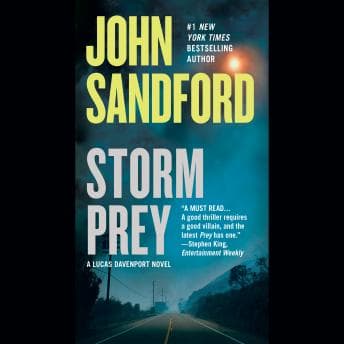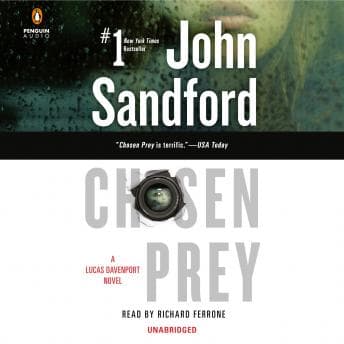
John Sandford writes villains who feel like they could be sitting next to you at a faculty meeting. That's what makes Chosen Prey so deeply unsettling - and why I ended up listening to the last four hours with every light in my apartment blazing at 1 AM on a Tuesday.
The Quiet Monster in the Art Department
James Qatar is a specific kind of predator - the kind who functions in polite society, who holds office hours and grades papers and photographs women in secret because he's built an entire internal architecture around his entitlement to them. Sandford doesn't rush the reveal. He lets you sit with Qatar's banality, his self-justifications, the way he rationalizes escalation the way someone might rationalize a second dessert. This understands that horror isn't about gore - it's about dread. And yeah, I know this is technically a procedural thriller, not horror. But the Qatar sections? Pure psychological horror. The man's inner monologue is a slow-motion car crash you can't look away from.
What Sandford does particularly well here is the dual obsession structure. Qatar is obsessed with his victims. Davenport becomes obsessed with Qatar. And neither man can pump the brakes. It's a mirror that doesn't flatter either reflection, and the twelve-hour runtime gives both obsessions room to breathe without feeling padded. The investigation unfolds with that Sandford precision - the dead ends feel like real dead ends, not authorial stalling. When Davenport's team pulls a thread that actually leads somewhere, you feel the momentum shift physically.
Ferrone's Gravelly Magic Trick
Richard Ferrone is Lucas Davenport. I don't know how else to say it. His voice has this gravelly, lived-in quality that makes Davenport's swagger feel earned rather than performative. When Davenport cracks wise with his colleagues, Ferrone goes warm and folksy - loose, almost lazy in his delivery, like a guy who knows he's the smartest person in the room but doesn't need to prove it every thirty seconds. But when Ferrone shifts to Qatar's perspective? Something changes. Not dramatically - he doesn't do a villain voice or go full cartoon creep. It's subtler than that. A tightness creeps into the delivery, a measured quality, like Qatar is always choosing his words even inside his own head. That restraint is what makes it work. The narrator commits. That's rare.
Now, Ferrone doesn't do wildly distinct character voices. If you need every single side character to sound completely different, you might occasionally lose track of who's talking in crowded scenes. But honestly? His approach fits Sandford's style. These books aren't about vocal gymnastics. They're about tone and momentum, and Ferrone nails both.
(Side note: make sure you get the unabridged version. Apparently there's an abridged cut floating around with noir music layered in, and from what I've heard, it sounds like someone scored a Dateline episode. Hard pass.)
A Librarian's Confession About Procedurals
Here's the thing - I shelve procedurals all day. I recommend them to patrons who want "something like Patterson but better." I know this genre inside and out, which means I'm hard to impress. Chosen Prey impressed me. Not because it reinvents anything, but because Sandford respects the machinery of the procedural while making Qatar feel genuinely dangerous. Too many thriller writers create villains who are either genius-level Hannibal Lecter types or mindless brutes. Qatar is neither. Only If You're Lucky works that same vein - a villain whose danger lives entirely in plausibility rather than spectacle, and it stuck with me for the same reasons Qatar does. He's a mediocre man with terrible impulses and just enough intelligence to be a real problem. That's scarier than any criminal mastermind, and Sandford knows it.
The pacing earns its twelve hours. There's a stretch in the middle where the investigation stalls and Davenport pivots strategies that could feel slow in lesser hands, but Sandford uses it to ratchet tension - you know Qatar is still out there, still photographing, still escalating. I was shelving returns at the library while listening to that section and I kept glancing at the art history section like Qatar might materialize between the Janson and the Gombrich.
Shirley (my cat) was unimpressed. I was terrified. But the quiet, creeping kind of terrified - not jump-scare terrified.
Who Needs This in Their Ears
If you're already deep in the Prey series, you don't need me to tell you to listen to this. If you're new to Sandford, this is a solid entry point - you don't need twenty books of backstory to follow the investigation. If you scare easily, skip. If you don't, you need this. And if you appreciate a villain who's more mundane than mythic, who makes your skin crawl precisely because he's plausible? This is your book.
My podcast listeners are going to love this one. I'm already planning an episode on the "banal predator" trope and Qatar is exhibit A.
Grab this for a road trip or a long commute. Just maybe not right before a faculty dinner.