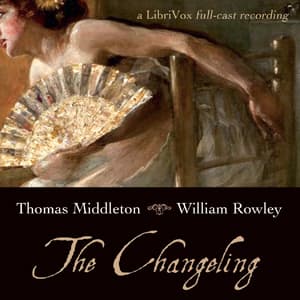

Okay, so I need to be honest with you - a 1622 Jacobean tragedy about murder and madness is not exactly my usual vibe. Like, at all. I'm typically curled up with my cats listening to slow-burn romances, not revenge plays where everyone ends up dead. But I was in a weird mood last week, doing some late-night logo work for a client who wanted "dark academia aesthetics," and I thought, you know what? Let's go full dark academia. Let's listen to something with murder and betrayal and people speaking in verse.
This book felt like watching a telenovela through a 400-year-old filter. And I mean that as a compliment? Beatrice-Joanna is basically every scheming telenovela heroine my abuela ever clutched her rosary at - she wants what she wants, and she's willing to get a man killed to get it. Abuela would have been SCANDALIZED. She would have loved every second.
When Desire Turns Into a Trap
Here's the thing about this play - it's only two hours, but it packs in so much messy, complicated emotion. Beatrice thinks she's being clever, hiring De Flores to kill her fiancé so she can marry the man she actually wants. But De Flores? He's in love with her. Obsessively. And when he comes to collect his "payment," it's not money he's after.
My heart. MY HEART. The power dynamics here are genuinely disturbing in a way that made me pause my work and just... sit with it. There's this horrible inevitability to everything - you can see exactly where it's going, and you can't look away. It's not romantic, to be clear. It's dark and twisted and uncomfortable. But the emotions are real. The desperation is real. I found myself unexpectedly moved by how trapped everyone becomes by their own desires.
The subplot in the madhouse is... honestly kind of chaotic? An old jealous husband locking up his young wife, men disguising themselves as fools and madmen to get to her - it's a lot. It mirrors the main plot thematically (jealousy, desire, deception), but it has this weird comedic energy that doesn't always land in audio form. Sometimes I wasn't sure if I was supposed to be laughing or cringing.
The LibriVox Reality Check
So here's where I have to level with you. LibriVox is free, which is amazing. Volunteer narrators reading classic texts for the public good? Beautiful. But it's also... inconsistent. You're getting multiple readers, each with their own style, their own recording setup, their own interpretation.
Some of the volunteers here really bring it - there's genuine passion in how they deliver the verse, and you can feel the weight of Middleton's language. The scenes between Beatrice and De Flores have this crackling tension that worked for me. But then you'll get a transition to another narrator and the energy shifts completely. The accents wander. The audio quality changes. It's a bit like listening to a play performed by a community theater group - charming in its earnestness, but not exactly polished.
I couldn't find much specific info about the individual volunteers online, but based on this listen, I'd say the production is a solid effort for what it is. Just know what you're getting into. This isn't Julia Whelan delivering emotional devastation with velvet-honey perfection. This is dedicated volunteers doing their best with Jacobean verse, and honestly? I respect the effort.
Did I Ugly-Cry Though?
Here's my honest take: I didn't cry. (I know, shocking for me.) But I did feel something. There's a moment near the end - trying not to spoil, but when everything unravels - that genuinely got to me. The tragedy isn't just the death and destruction. It's that Beatrice believed she could control everything, and she couldn't. She thought she was the one with power, and she was wrong. Women deluding themselves about power and control—that's the whole devastating core of My Brilliant Friend too, just set in 1950s Naples instead of Jacobean England.
That hit different while I was sitting in my apartment at 2 AM, Frida purring on my lap, thinking about all the ways we convince ourselves we're in control of our own stories.
Who Needs This in Their Ears
This is a rainy Sunday book, for sure. Or a late-night, feeling-contemplative book. It's short enough to finish in one sitting, and dense enough to make you think. If you're curious about older drama but intimidated by Shakespeare, this might actually be a good entry point - Middleton's language is a little more accessible, and the plot moves fast. Skip it if inconsistent audio quality will pull you out of the story, or if you need your tragedies to come with professional production values.
Just maybe don't expect studio-quality audio. And definitely don't expect a happy ending. But if you want to feel the weight of desire and consequence and the mess humans make of their own lives? Yeah. This delivers.