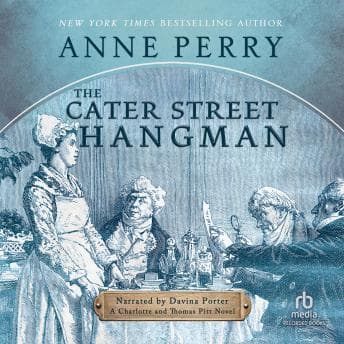

Three AM on the trauma unit, charting finished, one patient sleeping off a post-op morphine haze, and I'm deep into Victorian London watching a strangler terrorize respectable society. The irony of listening to murder mysteries while surrounded by actual medical emergencies is not lost on me. But here's the thing - Anne Perry's The Cater Street Hangman hit different at that hour. Maybe it's the quiet. Maybe it's the exhaustion. But Charlotte Ellison's growing fear as women keep dying in her neighborhood? I felt that in my bones.
This is a slow burn. I need to say that upfront because if you're expecting a thriller that moves like an ER on a Saturday night, you will be disappointed. This is more like... watching a wound heal. Methodical. Sometimes frustrating. But there's something happening underneath.
When the Corset Is Tighter Than the Plot
Look, I've worked in hospitals long enough to know that social hierarchy can literally kill people. The way families hide symptoms because they're embarrassed. The way patients lie to doctors because admitting truth would mean admitting weakness. Perry gets this. The Ellison family and their neighbors are more terrified of scandal than of an actual murderer walking their streets. A maid dies and the biggest concern is whether the investigation will embarrass them at dinner parties.
Charlotte is the exception, and watching her wake up to the absurdity of her world - that was the hook for me. She starts as this proper Victorian daughter, all corsets and calling cards, and by the end she's actively helping Inspector Pitt investigate because nobody else will tell him the truth. The romance between them builds so gradually I almost missed it. Almost. (Carlos asked why I was crying in the car. I blamed allergies.)
But I won't pretend the pacing didn't test me. There are stretches - conversations about propriety, endless tea service descriptions - where I understood why some listeners hit fast-forward. I didn't, but I get it. The mystery itself is almost secondary to the social commentary. If you want a whodunit that keeps you guessing with clever clues, this isn't it. The killer reveal felt abrupt, like Perry ran out of pages and had to wrap it up.
Davina Porter's Voice - A Divided Opinion
Here's where I have to be honest: Davina Porter won an Audie Award for Best Female Narrator. She's clearly talented. Her delivery is elegant, sensitive, subtle - all the words critics use. And for most of this book, I found her soothing. Perfect for that post-shift decompression when my brain needs something engaging but not jarring.
But.
Some of her female characters come out gravelly. Lower than the men, sometimes. It's not consistent enough to be a stylistic choice - more like her voice just does that with certain tones. For a book with multiple female characters who need to sound distinct, this got confusing. I'd be mid-scene thinking "wait, is that the mother or the aunt talking?" Not ideal when you're trying to follow who might be hiding what.
The Victorian dialect work is solid though. She captures that formal, restrained speech pattern without making it sound like a parody. Inspector Pitt gets a slightly rougher edge to his voice - working class origins showing through - and Charlotte's gradual loosening as she becomes more independent actually comes through in how Porter reads her dialogue. Subtle stuff. I appreciated it.
The Anne Perry Elephant in the Room
I did not know this going in: Anne Perry, born Juliet Hulme, served five years in prison for murder when she was a teenager. The case was famous enough to inspire a movie. So here I am, listening to a murder mystery written by someone who actually committed murder, and I don't know what to do with that information. Does it change how I hear the book? Maybe. The way Perry writes about violence - clinical, detached, more interested in the social aftermath than the act itself - takes on a different weight when you know her history.
I'm not saying don't read her. I'm saying I can't un-know it now.
Patient Listeners Only - Everyone Else, Check Out Now
This is for listeners who like their mysteries wrapped in social commentary. If you enjoy watching class dynamics play out, if you want a slow-building romance that earns its moments, if you're okay with the mystery being secondary to character development - you'll find something here.
Skip it if you need fast pacing. Skip it if you want likeable characters across the board (most of the Ellison neighbors are insufferable, and that's the point, but it doesn't make them fun to spend ten hours with). Skip it if voice differentiation in audiobooks is crucial for you - Porter's gravelly women might drive you up a wall.
For me? Night shift approved, but barely. I finished it, I'm glad I did, and I'll probably try the next one in the series. But I won't pretend it was flawless.
Charting Complete, Patient Stable
This is a first book in a series, and it feels like one. Perry is setting up her world, her characters, her themes. The mystery is almost an excuse to introduce Charlotte and Pitt, to show us their chemistry, to establish the Victorian setting she'll mine for thirty-plus books. At the Water's Edge does something similar—using a historical backdrop to let character transformation breathe, even when the central mystery takes its time revealing itself. As someone who's actually worked a code, I can tell you: sometimes the setup is more important than the immediate crisis. Sometimes you're laying groundwork for what comes next.
The Cater Street Hangman is groundwork. Elegant, frustrating, occasionally beautiful groundwork. Worth the time if you know what you're getting into.