
The Thesis Can Wait (Again)
Look, I started this audiobook during what was supposed to be a "focused coding session" for my procedural generation project. Thirty-nine hours later, I have exactly zero lines of code written and a deeply concerning emotional attachment to 18th-century Scottish politics. Dr. Patel is going to kill me. Worth it.
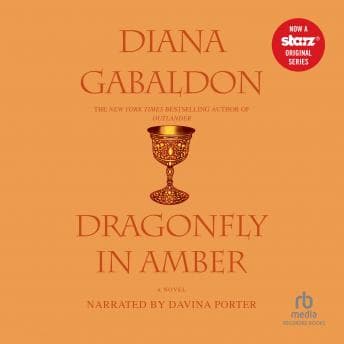
Dragonfly in Amber is the second book in Diana Gabaldon's Outlander series, and honestly? It's a weird beast. The structure threw me at first - we open with Claire back in the 1960s, twenty years after the events of the first book, and she's about to tell her grown daughter Brianna everything. So you're getting this frame narrative that jumps between "present day" and the meat of the story, which takes place in 1740s Paris and Scotland. Some people apparently hate this. I get it. But once I settled into the rhythm, it actually added this layer of dramatic irony that had me yelling at my phone while doing dishes. You know what's coming. Claire knows what's coming. And you have to watch her try to stop it anyway.
Davina Porter is a National Treasure
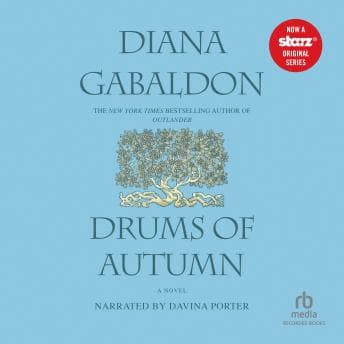
Okay, so here's the thing about Davina Porter: she's doing the work that Steven Pacey made me expect from every fantasy narrator. She brought that same level of craft to Outlander, where she first established these characters. (Yes, I'm comparing Outlander to First Law. Fight me.) Her Claire voice is warm and intelligent without being prim, and when she shifts into Jamie Fraser's Scottish burr, it's not just "oh, an accent" - it's a completely different person. The cadence changes. The emotional register shifts. I genuinely forgot sometimes that one person was doing all of this.
And the supporting cast? She's got French courtiers dripping with aristocratic disdain, Scottish clansmen who sound like they've been drinking whisky since birth, and this one character - Master Raymond, this mysterious apothecary - whose voice is so distinctly otherworldly that I got actual chills. My D&D group would absolutely steal him for an NPC. The man sounds like he knows things about the universe that would break your brain.
The emotional scenes are where Porter really earns her paycheck. There's a sequence in the middle of this book - I won't spoil it, but if you've read it, you know the one - where Claire goes through something devastating. Porter's delivery had me sitting in my car in the Kroger parking lot, unable to go inside for groceries because I was genuinely wrecked. Forty-year-old women were walking past my Honda Civic while I processed fictional grief. This is my life now.
1740s Paris as a Campaign Setting
Gabaldon does this thing where she's clearly done an absurd amount of research, and she wants you to KNOW about it. The Paris sections are dense with court intrigue, period-accurate medical practices, and enough French aristocracy drama to fuel three seasons of a Netflix show. Some people call this "long-winded." I call it Sanderson-level world-building, just for historical fiction instead of fantasy. Elantris does something similar with its detailed magic-as-religion system, though Sanderson gives you way more technical detail.
The magic system here - and yes, I'm calling time travel a magic system - is still pretty soft. We don't get hard rules about how the standing stones work or why certain people can travel. Normally this would bug me, but Gabaldon treats it more like a force of nature than a system to be exploited, and somehow that works? It's the mystery that makes it compelling. The progression satisfies in a different way - it's about Claire and Jamie's relationship deepening, about watching them try to change history, about the slow march toward Culloden that you know is coming.
Fair Warning
This book is not for everyone. The pacing in the Paris section can drag if you're not into political maneuvering and Claire's attempts to prevent the Jacobite rising. There's also a narrative perspective shift where occasionally we jump to third person for scenes Claire wasn't present for - a little jarring, not a dealbreaker, but noticeable.
Content-wise: there's violence, there's blood, there's sex. This isn't a cozy listen. Some scenes are genuinely brutal. If you made it through the first book, you know what you're signing up for.
The Verdict
I listened to this instead of writing my thesis, and I regret nothing. Davina Porter has completely ruined me for lesser narrators - she's doing what the best fantasy audiobook performers do, which is making you forget you're listening to one person. The story itself is sprawling and occasionally indulgent, but in the way that a really good D&D campaign is indulgent. You're here for the journey, not the efficiency.
Listen if: you want 39 hours of Scottish history, French court intrigue, and emotional devastation delivered by a narrator who could voice your entire campaign party. Skip if: you need tight pacing, hard magic rules, or can't handle graphic content. I listened at 1.0x speed because Porter's pacing is already perfect and speeding it up felt like sacrilege.
My mom asked how my thesis was going yesterday. I told her "soon." Then I started book three.