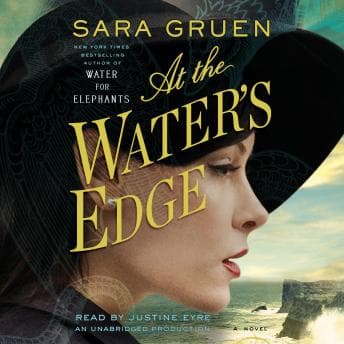

Sara Gruen knows how to write a slow burn that actually pays off. I'll say that right up front.
I started this one on my drive home after a particularly brutal night shift—we'd had three codes and a trauma activation, and I needed something to take my brain somewhere else entirely. Scotland in 1945? Perfect. Monster hunting? Even better. Sometimes you just need to escape to a place where the biggest problem is whether or not Nessie exists.
The Maddie Problem (And Why It Works)
Here's the thing about Maddie Hyde—she starts out as the kind of woman I would have zero patience for in real life. Sheltered, passive, following her husband around like she doesn't have her own spine. But Gruen does something smart here. She lets you see the cage before she shows you the bird learning to fly. By the time Maddie starts waking up to who her husband actually is (spoiler: not great), you're rooting for her so hard it hurts.
The Scottish Highlands setting is basically a character itself. The remote village, the war rationing, the locals who've seen too much and trust too little—it all feels real. Camp of the Dog has that same isolated setting where the location becomes part of the tension. As someone who's actually worked with people in crisis, I can tell you that trauma changes communities. Gruen gets that. The way the villagers interact with these clueless rich Americans? Spot on.
And Ellis. Ugh. Ellis and his buddy Hank are exactly the kind of men I've seen families enable for decades. The entitlement, the casual cruelty, the way they treat Maddie like she's furniture that occasionally needs to be managed. My blood pressure went up during their scenes. (Carlos asked why I was gripping the steering wheel so hard. I blamed traffic.)
Justine Eyre's Voice in My Head
Okay, so the narration. This is where I have to be honest—Justine Eyre is a love-her-or-hate-her narrator, and I fall somewhere in the middle. Her American accent for Maddie is solid, really solid. You can hear Maddie's growth in the way Eyre's delivery changes over the book. That takes skill.
The Scottish accents? Look, I'm not Scottish. I can't tell you if they're authentic. But they worked for me. They differentiated the characters clearly, which is what matters when you're trying to keep track of who's who during a 45-minute commute. Some listeners apparently found her voice grating—I didn't have that experience, but I also listen to heart monitors beeping for twelve hours straight, so my tolerance for repetitive sounds is probably abnormal.
There were a few moments where I noticed some breathiness, maybe some strain in the lower registers. Nothing that pulled me out of the story, though. Eyre has won Audie Awards for a reason. She knows what she's doing.
When the Story Shifts
The first third is slow. I won't lie to you. Gruen takes her time establishing Maddie's world before she starts dismantling it. I'm Still Standing had a similar pacing issue for me—lots of setup before the real story kicks in. If you're the kind of listener who needs action in the first hour, this might test your patience. But if you can stick with it—and I'm telling you, stick with it—the payoff is worth it.
The monster hunting stuff is almost beside the point, honestly. It's the excuse that gets everyone to Scotland, but the real story is about what Maddie discovers about herself when she's finally away from the life that was suffocating her. The friendships she forms, the way she starts seeing her marriage clearly for the first time. That's the good stuff.
There are some heavy moments—war references, relationship difficulties, substance abuse. Nothing graphic, but it's there. The kind of weight that makes a story feel real.
Post-Shift Prescription
I kept thinking about this one after I finished it, which is always a good sign. Gruen's Water for Elephants was a phenomenon for a reason, and while this isn't quite at that level, it's close. The historical details feel researched, not Wikipedia'd. The character development is earned, not rushed.
Perfect for that post-shift decompression when you need something absorbing but not too dark. My mom would love this—it's got that sweeping historical fiction vibe she's into, plus a heroine who finds her backbone. (She still thinks I should've been a doctor, but she's coming around to respecting my book recommendations.)
Who should listen: Fans of character-driven historical fiction who want to disappear into another time and place. Who should skip: If you're sensitive to accented narration or need a fast-paced thriller, sample first.