
I was halfway through my morning jog along the Charles River when Kay Scarpetta started describing an autopsy in such vivid detail that I nearly tripped over a dog walker. This is the Patricia Cornwell experience, folks. You think you're just getting some cardio in, and suddenly you're mentally cataloging decomposition stages while dodging geese.
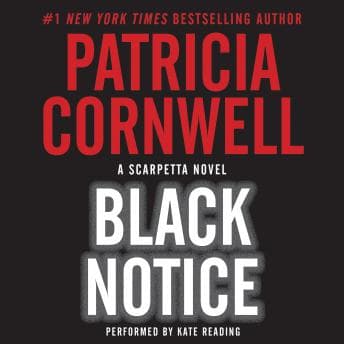
So here's the thing about Black Notice—it's the tenth book in the Scarpetta series, and Cornwell knows exactly what she's doing by now. The setup is classic forensic thriller territory: a dead body shows up in a shipping container, no ID, no obvious cause of death. Scarpetta does what Scarpetta does, which means poking at evidence until something gives. But then the story pivots to Paris, and suddenly we're dealing with secret missions and career-threatening stakes. Cornwell's time working at the Chief Medical Examiner's office in Richmond really shows here—you can feel that authenticity in every procedural detail.
The Voice That Became Scarpetta
Kate Reading. I need to talk about Kate Reading.
Listeners who've been through multiple Scarpetta audiobooks apparently consider her the best narrator the series has had, and honestly? I get it. She doesn't just read Scarpetta—she inhabits her. There's this formality and precision in her delivery that matches exactly how a chief medical examiner would carry herself. The emotional range is impressive too. When Scarpetta experiences grief or fear, Reading conveys it without melodrama. Just... controlled intensity. Which is exactly right for this character.
The character voices are distinct and memorable. Minor characters feel like real people rather than plot devices. I will say—and some listeners noted this too—the French accents aren't her strongest suit. Given that a significant chunk of this book takes place in Paris, that's worth mentioning. But it's a minor wobble in an otherwise excellent performance. She's an AudioFile Golden Voice and Audie Award winner for a reason.
Where the Psychology Gets Interesting
Scarpetta is essentially a study in professional compartmentalization. She deals with death and violence constantly, and Cornwell doesn't shy away from showing the psychological toll. The protagonist exhibits classic patterns of someone who uses work as a coping mechanism—throwing herself into cases because the alternative is sitting with feelings she'd rather not examine.
(My therapist would have thoughts about this character, honestly.)
The plot involves political intrigue layered over the forensic mystery, and some listeners found this overwhelming. Too many threads, not enough payoff. I can see that criticism. Cornwell does pack a lot in here. But for me, the complexity felt realistic. Real investigations aren't neat. They sprawl. They go sideways. That messy realism reminded me of Nowhere to Run, where the investigation similarly refuses to follow a tidy path. Sometimes you chase leads that don't pan out.
The pacing is generally solid—Reading's narration helps enormously here. There are moments where the story drags, particularly in the middle section, but the suspense builds effectively toward the end.
A Note on Content
Look, I need to be real about this. Black Notice contains detailed medical and autopsy descriptions. Strong language throughout. Violence that doesn't pull punches. Some dark themes and sexual content. If you're sensitive to any of that, this isn't your book. Cornwell writes unflinching forensic thrillers, and she's not interested in softening the reality of what her protagonist encounters daily.
Some reviewers specifically called out the profanity as excessive. I didn't find it jarring—it felt authentic to the law enforcement and medical examiner world—but your mileage may vary.
Who's This Actually For?
If you're already a Cornwell fan, you know what you're getting. If you're new to the series, starting at book ten isn't ideal, but the audiobook stands reasonably well on its own.
Best for: People who appreciate forensic detail. Commuters who want something absorbing enough to make traffic bearable. Anyone who enjoys watching a competent professional navigate both dead bodies and office politics.
Skip if: You need fast, uncomplicated plots. Graphic medical descriptions make you queasy. You've grown tired of thriller tropes and want something that subverts expectations—this doesn't really subvert anything. It's very much a Patricia Cornwell novel. (Last Trial offers similar procedural depth if you're looking for another legal thriller that doesn't hold back.)
The production quality is clean and professional. No audio issues to report. At twelve hours, it's a solid length—long enough to develop properly, not so long it overstays its welcome.
The Psychological Takeaway
Would I listen again? Probably not—I'm more of a one-and-done mystery reader. But I found myself asking: why does Scarpetta keep putting herself through this? And the answer Cornwell provides—that some people are built to face the darkness so others don't have to—is psychologically honest in a way I appreciated. She understands human nature, even when she's writing about its most violent expressions.