
Jim Kjelgaard wrote the kind of books that would've been my entire personality at age twelve.
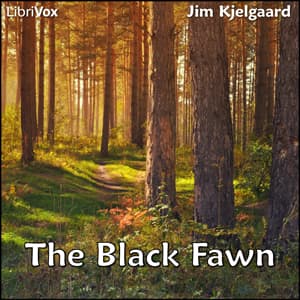
I found Black Fawn while procrastinating on my thesis — shocker — and figured a five-and-a-half-hour listen about an orphan boy and his bond with a wild deer was a safe palette cleanser between epic fantasy binges. What I didn't expect was to get genuinely invested in the survival drama of a jet-black whitetail fawn in the rural American wilderness, or to find myself drawing mental parallels to every ranger backstory I've ever written for a D&D character.
An Orphan and His Orphan (No, It's Not a Fantasy Novel, But It Reads Like One)
Bud Sloan is an orphan who's been basically sold out of an orphanage to work on an aging couple's farm. That's a brutal setup for a kids' book, and Kjelgaard doesn't sugarcoat it. Bud's life is labor and loneliness, and when he stumbles on a newborn black fawn — alone, confused, clearly abandoned — the connection is instant and primal. That kind of outsider-shaped-by-hardship storytelling stuck with me in a completely different register when I read Hillbilly Elegy — Vance and Bud Sloan have basically nothing in common on paper, but that bone-deep sense of being born into a life that wasn't designed to favor you hits the same nerve. The fawn is him. He's the fawn. It's not subtle, but it doesn't need to be.
What surprised me is how much of the book is actually about the fawn's perspective. Kjelgaard shifts into the animal's point of view for long stretches, tracking the black deer as it grows, learns to navigate predators, avoids hunters, and deals with being visibly different from every other deer in the woods. The black coloring makes it a target — a trophy animal — and that tension drives the whole second half. Kjelgaard clearly knew his wildlife biology. The descriptions of deer behavior, the way the fawn learns to detect wind shifts for scent, how it beds down in specific terrain for safety — this stuff feels observed, not invented. It's giving nature documentary energy decades before nature documentaries were a thing.
And then there's the hunting culture. Kjelgaard isn't anti-hunting (the man wrote dozens of outdoor adventure novels), but he's also clearly asking you to root for this particular animal to survive. The local hunters who fixate on bagging the black deer are painted as obsessive, sometimes reckless, and Bud's quiet determination to protect the fawn puts him at odds with basically his entire community. For a mid-century YA novel, it's got real moral weight.
Roger Melin and the LibriVox Question
Okay, let's talk about the elephant in the room. This is a LibriVox recording, which means it's a volunteer narrator reading a public domain text. Roger Melin does a serviceable job — his pacing is steady, his tone is warm enough for the material, and he doesn't stumble over Kjelgaard's nature prose, which can get dense. But I'd be lying if I said this was a polished audiobook experience. There's no music, no production flourishes, no post-processing magic. The recording quality is clean but flat, like someone reading into a decent microphone in a quiet room. Which is literally what it is.
Melin doesn't do wildly distinct character voices — Bud sounds pretty much like the old farmer sounds pretty much like the narration — and that's fine for a book that's largely internal and observational. But if you're coming from, say, Steven Pacey's First Law performances (Steven Pacey walked so other narrators could run, I will never stop saying this), you need to calibrate your expectations way down. This is a campfire reading, not a theatrical production. And honestly? For this particular story, that works okay. The simplicity matches the material.
Who This Is Actually For
I listened to most of this on a rainy Saturday while assembling a new shelf for my board game collection — Gloomhaven needed a permanent home, don't judge me — and it was genuinely pleasant background listening that kept pulling me back into active attention during the fawn's survival sequences. The hunting scenes in the final act had me pausing mid-shelf-bracket to just... listen.
This is a book for kids who love animals, obviously, but also for adults who grew up on Kjelgaard or Jack London or Gary Paulsen and want that nostalgic hit of boy-meets-wilderness storytelling. My D&D group would love the animal companion angle — this is basically a Beast Master ranger origin story if you squint. If you need Sanderson-level world-building or complex magic systems, this ain't it. But if you want a quiet, earnest story about a kid and a deer and the wild places where they're both trying to survive, it's surprisingly affecting.
The fact that it's free (LibriVox, baby) makes the value proposition pretty unbeatable.
Worth Rolling a Perception Check
At just over five hours, Black Fawn is a short, heartfelt listen that punches above its weight class. It's old-fashioned in the best sense — no cynicism, no irony, just a kid and a fawn against a world that doesn't care much about either of them. The narration is adequate, not exceptional, and the production is bare-bones. But the story itself? Kjelgaard knew what he was doing. I read this instead of writing my thesis, and I regret nothing.