
The Unlikely Faculty Meeting Companion
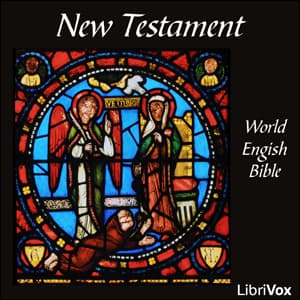
Look, I never thought I'd be reviewing the New Testament. Twenty years of teaching English lit, and here I am, a guy who assigns Paradise Lost and spends faculty meetings secretly listening to Middlemarch, telling you about a LibriVox Bible production. But Denise and I have been doing these long lakefront walks lately—her idea, something about my blood pressure—and I needed something substantial. Nineteen hours substantial. So I figured, why not go back to the source material that shaped half the literature I teach?
And honestly? This was not what I expected.
The Volunteer Choir
Here's the thing about LibriVox productions: they're free, they're public domain, and they're read by volunteers. Which means you're not getting a single polished professional voice. You're getting a rotating cast of real people who showed up because they wanted to read Scripture out loud. Some of them are incredible. Some of them are... learning.
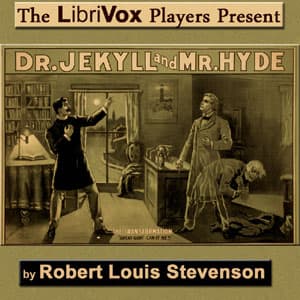
The narrator understands that pause is punctuation—at least, the best ones do. There's this one volunteer (I wish I could tell you their name, but LibriVox doesn't always make that easy to track) who reads the Gospel passages with genuine theatrical instinct. That same dramatic energy shows up in LibriVox's Strange Case of Jekyll and Hyde (Version 4 - Dramatic Reading), where the volunteers really lean into the dual-personality thing. Changes voices for dialogue. Gives Jesus a different cadence than Peter. Lets the parables breathe. My students would hate this. I love it. It's not slick, but it's alive.
But then you'll hit a stretch where someone's clearly reading from their living room, maybe a little too fast, maybe a little flat, and the spell breaks. It's like a community theater production—some nights you get magic, some nights you get your neighbor Dave who memorized his lines but forgot to feel them. The variability is real. If you need consistency, if you need that one authoritative voice guiding you through, this might drive you nuts.
Me? I found something almost appropriate about it. The New Testament was written by multiple authors with different styles, different audiences, different theological emphases. Paul doesn't sound like John. Matthew's genealogies hit different than Luke's parables. Having multiple voices—even imperfect ones—accidentally mirrors that reality. (Don't tell my students I'm finding literary meaning in production inconsistency. They'll never let me hear the end of it.)
The Translation Itself
The World English Bible is basically a cleaned-up American Standard Version from 1901, which was itself trying to be more accurate than the King James. The result is readable modern English that doesn't have the poetry of the KJV but also doesn't have its archaic stumbling blocks. No "thee" and "thou." No "begat" chains that make your eyes glaze over.
For listening purposes, this matters. A lot. The prose deserves to be savored, sure, but not every translation can be savored at 1.0x speed while you're walking past joggers and trying not to step in goose droppings. The WEB flows. It's clear. When Jesus tells a parable, you follow it. When Paul gets into one of his theological tangles in Romans, you can actually track the argument—mostly.
This reminds me of what Hemingway said about writing: the dignity of movement of an iceberg is due to only one-eighth of it being above water. The WEB translation keeps most of the iceberg submerged. It's not trying to impress you with its language. It's trying to get out of the way so you can hear the story. Whether that's a feature or a bug depends on what you want from Scripture.
The Listening Experience
Nineteen hours is a commitment. I spread this across maybe three weeks of walks, some grading sessions, and—yes, Principal Martinez—at least one budget presentation. The Gospels flew by. Acts kept me hooked. The epistles... okay, the epistles dragged in places. Paul repeating himself to the Corinthians for the third time about spiritual gifts, I zoned out. I'll admit it.
But then you hit Revelation, and suddenly you're wide awake. Seven seals. Four horsemen. A woman clothed with the sun. The volunteers reading those chapters leaned into the apocalyptic weirdness, and it worked. By the time I finished, walking home as the sun set over Lake Michigan, I felt like I'd actually experienced something. If you want that Old Testament context for all these references, the Bible (WEB) Old Testament - complete is the obvious companion piece—same translation, same volunteer approach. Not just consumed content.
The audio quality is what you'd expect from volunteer recordings—clean enough, no background noise that bothered me, but not studio-polished. I listened at 1.0x because the author chose those words (well, the translators chose those words, but you know what I mean), and the pacing felt right. Speeding it up would've lost something.
Who This Is For
If you want a professional, single-narrator Bible audiobook with consistent quality, this isn't it. Go pay for one of those. They exist.
But if you're curious about the New Testament, if you want something free and accessible, if you can tolerate—or even appreciate—the variability of human volunteers trying their best, this is worth your time. It's especially good for commuters, walkers, anyone who wants substantial listening material that doesn't require plot tracking. You can pick it up and put it down. The chapters are short. The content is, you know, foundational to Western literature.
If you loved the King James for its language, this is its practical successor. Less poetry, more clarity. If you're assigning biblical allusions to high schoolers and want them to actually understand the source material, point them here.
Worth pausing the faculty meeting for. Just maybe not during the budget presentation.