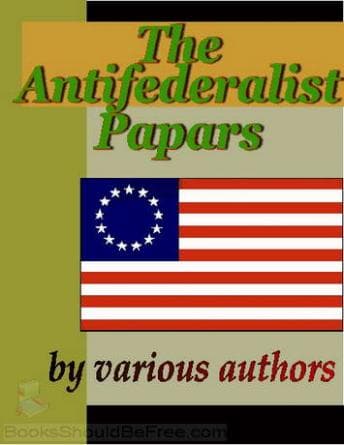

Most people know the Federalist Papers. Hamilton, Madison, Jay - the guys who won. Everybody reads those in school, quotes them in op-eds, treats them like sacred text. But here's the thing that's been bugging me for years: the guys who lost the ratification argument were right about a disturbing number of things. And nobody reads them.
I picked this up during a late-night session prepping threat assessments for a client - the kind of work where you need something in your ears to keep the brain from going numb while you're staring at spreadsheets. Nearly twenty hours of Anti-Federalist arguments seemed like a good companion for tedious work. It was. Mostly.
The Losers Who Saw It Coming
Let me cut to the chase: the Anti-Federalists predicted standing armies becoming a permanent feature of American life. They warned that the "necessary and proper" clause would become a blank check for federal power. They argued the President would accumulate king-like authority. Brutus - whoever he actually was - laid out concerns about federal judiciary overreach that read like a news brief from last week. I've spent 25 years serving within the very standing army they feared, and I can tell you their concerns weren't paranoid fantasies. They were pretty solid threat assessments.
Patrick Henry's speeches are the highlight here. The man could argue. His Virginia ratifying convention speeches crackle with an urgency that survives even 230-plus years of distance. When he hammers on the phrase "We the People" versus "We the States," demanding to know by what authority the framers presumed to speak for all Americans rather than sovereign states - that's a constitutional grenade that still hasn't fully detonated.
But here's where I need to be honest with you. This collection isn't a single coherent argument. It's a compilation - dozens of different writers, different pseudonyms, different audiences, different levels of sophistication. Some of these pieces are brilliant political philosophy. Others are repetitive local grievances that feel like reading the same after-action report rewritten by twelve different officers. By hour eleven or twelve, the arguments about taxation and standing armies start blurring together. You've heard Centinel's version, and Federal Farmer's version, and Brutus's version, and they're all making variations of the same point.
Twenty Hours With a Rotating Cast
The narration is listed as "Various," and that's about all I can tell you with confidence. I couldn't find solid details on who these narrators are or how the production was specifically handled, so I'll give you my honest impression rather than fake expertise I don't have. The reading is competent - clear enough, professional enough - but it's essentially straight narration of 18th-century political prose. Nobody's performing Patrick Henry's fiery oratory with the passion that man apparently brought to a room. These are read, not performed. For academic material, that's acceptable. But when you're listening to Henry's "liberty or death" energy filtered through a calm, measured reading voice, something gets lost.
At 1.25x speed, the pacing worked fine for the denser philosophical arguments. Some of the more straightforward passages could've handled 1.5x without losing anything. Twenty hours is a serious commitment for material that - and I say this with genuine respect for the content - can feel like drinking from a fire hose of constitutional anxiety.
Who This Is Actually For
If you've read the Federalist Papers and thought you got the whole story, you didn't. This is the other half of the most important argument in American history. Anyone who works in government, policy, law, or - frankly - anyone who has strong opinions about federal power should hear what these men were worried about. Compare their fears against what actually happened. It's an uncomfortable exercise.
But if you're looking for a narrative, a story, something that pulls you through twenty hours with momentum - this ain't it. This is primary source material, organized thematically but not dramatically. It demands active listening and rewards patience. I wouldn't recommend this for a road trip unless you want your passengers filing noise complaints. This is desk work listening. Focus time. Maybe paired with bourbon.
Ranger fell asleep around hour three, which honestly isn't a bad metaphor for how casual listeners will respond. But I kept going because I've seen this scenario play out in real life - the tension between security and liberty, between centralized authority and individual rights. These aren't abstract questions when you've operated under rules of engagement drafted by people who've never heard a shot fired.
Mission Debrief
Worth your time? Here's the debrief: the content is essential American political philosophy that most people have never encountered. The audio production is serviceable but unremarkable. Twenty hours is too long for most listeners - a curated eight-to-ten hour version of the strongest pieces would've been more effective. But if you care about where American political arguments actually started, and you've got the discipline to push through repetitive stretches, this collection will reward you with an understanding that most people never bother to acquire. The Anti-Federalists lost the debate. They weren't wrong about everything. The foundational document they were arguing over - the one that became the prize - is worth keeping close while you work through this material, and I've spent time with United States Constitution as a reference point more than once during sessions like this.





![Steve Jobs [unabridged audiobook] audiobook cover](/_next/image?url=https%3A%2F%2Fcovers.audiobooks.com%2Fimages%2Fcovers%2Ffull%2F9788499923406.jpg&w=1920&q=75)