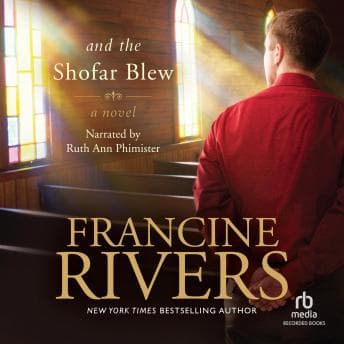

This is a slow-motion tragedy about a man who builds a megachurch while demolishing his own soul.
I finished this one at 2 AM, grading forgotten on my desk, Denise asleep upstairs. Couldn't stop. Not because it's a thriller—it's the opposite, really. But watching Paul Hudson's gradual corruption felt like reading a Greek tragedy filtered through suburban California Christianity. You know where it's going. You can't look away.
The Anatomy of a Spiritual Autopsy
Francine Rivers does something here that reminds me of what Hemingway said about writing—she shows you the iceberg by revealing just the tip. Paul Hudson starts as a young pastor with genuine fire, taking over a dying congregation of faithful elderly believers. By hour three, you're watching him rationalize his first compromise. By hour ten, you've witnessed a complete spiritual inversion, and the terrifying part is how reasonable each individual step seemed.
This is why we still read the classics—or listen to them, in my case. Rivers is working in the tradition of moral fiction that goes back to Hawthorne. The Scarlet Letter examined public sin and private redemption; And the Shofar Blew examines public success and private damnation. That question of discernment—knowing what's actually God's voice versus our own rationalization—is exactly what Joyce Meyer wrestles with in How to Hear from God, though her approach is far more instructional than Rivers' narrative devastation. Paul's ambition doesn't look like ambition. It looks like vision. It looks like growth. It looks like what every church growth seminar would applaud.
My students would hate this. I love it.
Twenty-Two Hours of Watching a Family Fracture
Let's talk about what Rivers is really saying here. The book isn't anti-church or anti-growth. It's anti-self-deception. Paul's wife Eunice and son Tim become collateral damage in his ascent, and Rivers refuses to let us look away from the wreckage. There's a scene—I won't spoil specifics—where Tim essentially becomes invisible to his father during a conversation about the church building campaign. Not metaphorically invisible. His father literally stops seeing him mid-sentence because something more important walked in.
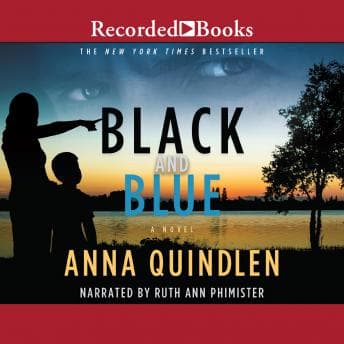
The prose deserves to be savored, which is why I kept this at 1.0x despite the length. Rivers writes with restraint. She trusts you to understand that Paul's increasingly hollow prayers are hollow. She doesn't underline it. Ruth Ann Phimister's narration matches that restraint—she reads with steady, almost maternal patience, which makes the dark turns hit harder. When Paul's manipulations become explicit, Phimister doesn't shift into villain mode. She keeps him human. That's the scarier choice.
The Shofar as Literary Symbol (Yes, I'm That Teacher)
The shofar—the ram's horn blown on Jewish high holy days—appears throughout as both literal object and metaphor. In the Hebrew tradition, it's a call to repentance, a wake-up alarm. Rivers uses it to mark moments when characters either hear the call or choose not to. The title itself is a question: when the shofar blows, who actually listens?
I found myself pausing during faculty meetings (sorry, Principal Martinez) to think about the book's central question: How do you know when you've stopped serving God and started serving your own image of success? Rivers doesn't offer easy answers. Some characters find redemption. Some don't. The book respects you enough to let that ambiguity stand.
Who Should Clear Their Schedule (And Who Shouldn't)
This is for readers who want their faith fiction to challenge rather than comfort. If you loved The Scarlet Letter's moral complexity, this is its spiritual successor. If you're looking for inspirational uplift with a tidy resolution by chapter twelve, look elsewhere—Rivers earned those Christy Awards by refusing to write propaganda.
The 22-hour runtime demands commitment. This isn't background listening—you'll miss the slow accumulation of compromises that makes the tragedy work. Save it for dedicated listening: long drives, quiet evenings, those insomniac nights when you're wrestling with questions about integrity and ambition. Non-religious listeners might still find value here. Swap "pastor" for "CEO" or "politician" and the character study works just as well. Ambition corrupting purpose is a universal theme.
Worth the Unfinished Grading
I've taught cautionary tales for two decades. Most of them hit you over the head with their warnings. Rivers does something harder—she makes you complicit. You understand Paul's choices even as you watch them destroy everything that matters. That's not easy writing. That's craft.
Phimister's narration won't win awards for theatrical range, but it serves the material. She sounds like someone reading Scripture at a Wednesday night service—calm, clear, trusting the words to carry weight. For this particular story, that's exactly right.
The audiobook is worth your time if you're willing to sit with discomfort. It's not entertainment. It's examination. And at 2 AM, grading still unfinished, I found myself grateful for a book that took its subject—and its readers—seriously enough to tell an uncomfortable truth.