
"The Lord is close to the brokenhearted and saves those who are crushed in spirit."
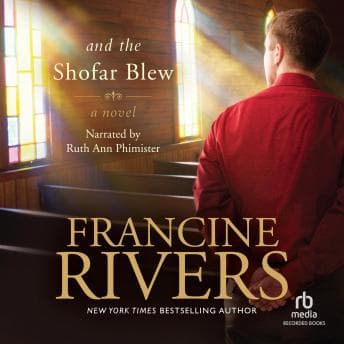
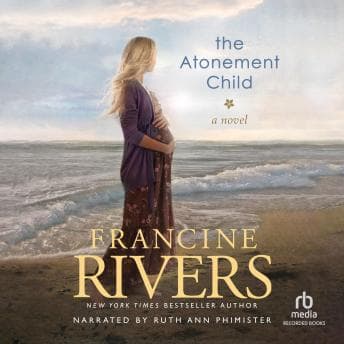
That verse from Psalms shows up somewhere around the midpoint of Francine Rivers' The Atonement Child, and I had to stop walking. Just stood there on the lakefront path like a man who'd forgotten where he was going. Denise circled back, gave me that look — the one that means "are you okay or are you having a literary crisis again?" Both. The answer was both.
Let me be upfront: this is a Christian novel about rape, unwanted pregnancy, and the absolute wreckage those things leave behind — not just for the victim, but for the families, the fiancés, the churches, the communities that claim to have answers until they're actually tested. Rivers wrote this in 1997, and the questions she raises haven't gotten any easier. If anything, they've gotten louder.
When Faith Gets Its Hands Dirty
Dynah Carey is a student at a Christian college, engaged, seemingly on the expected path, when she's assaulted and discovers she's pregnant. What Rivers does well — and I mean well — is refuse to make this simple. Every character in Dynah's orbit becomes a mirror for a different response to crisis. Her mother. Her fiancé. Her grandmother. The college administration. Each one reveals something about how people use faith as armor or weapon depending on what's convenient. Rivers doesn't let anyone off the hook, including the reader.
This is why we still read the classics, and while Rivers isn't Hawthorne, she's working the same territory as The Scarlet Letter — what happens when a community's moral certainty collides with a human being's actual suffering. The author is really asking: does your theology survive contact with someone else's pain? And the answer, for most of these characters, is uncomfortable. I found myself sitting with a similar question while working through Anxious for Nothing — different tradition, different vocabulary, but the same uncomfortable gap between what we profess and how we actually hold up when tested.
At 14 hours and 20 minutes, this isn't a quick listen. Rivers takes her time building out multiple generations, multiple perspectives. There's a subplot involving Dynah's mother's own past that reframes everything — the kind of structural choice that rewards patience. But I'll be honest: the pacing sags in the middle third. There are stretches where the message overtakes the story, where characters start sounding like position papers rather than people. My students would call this "being preachy." They wouldn't be entirely wrong, even though the preaching comes from a place of genuine wrestling rather than certainty.
Ruth Ann Phimister's Voice — Right and Wrong at Once
Here's the tension with the narration. Ruth Ann Phimister is a skilled performer. Her dramatic inflection is real — she hits the emotional beats with conviction, and during the heavier scenes, that maturity in her voice actually serves the gravity of what's happening. The narrator understands that pause is punctuation, and Phimister uses silence well.
But — and this is the thing I kept bumping against — Dynah is nineteen, maybe twenty. Phimister sounds like a woman in her fifties narrating the inner life of a girl who's barely started living. During the early chapters, when Dynah is still hopeful and unbroken, the voice mismatch is distracting. It's like hearing your aunt read your diary. The wisdom is already baked into the delivery before the character has earned it. By the back half, when Dynah has been through the crucible, the older voice starts to feel earned — almost like we're hearing an older Dynah looking back. I don't think that's intentional, but it works retroactively.
I listened at 1.0x, as is my religion, and the pace felt right. Phimister's cadence has a deliberateness that matches Rivers' prose — this isn't a book that wants to be rushed.
The Ending Problem
I need to talk about the ending without spoiling it. Rivers wraps Dynah's arc with clear resolution, but several of the secondary characters — the ones she spent hours developing — just... drift off. The mother's story, which had been building with real emotional force, gets a conclusion that feels more like a note scribbled in the margin. "And then she was okay." After investing that much time in the parallel narratives, I wanted the full reckoning for everyone, not just the protagonist. The prose deserves to be savored, and I wish Rivers had given her own supporting cast that same generosity.
Who Needs to Hear This
If you loved Redeeming Love, this is its spiritual successor — darker, more confrontational, less romantic. It's for readers of faith who want their fiction to challenge them rather than comfort them, and for anyone interested in how novels can grapple with moral questions without reducing them to bumper stickers. Skip it if you need a tight narrative with no theological digression. This book has plenty of both digression and theology.
Content warning that matters: the assault is not graphic in a sensational way, but it is direct, and the emotional aftermath is sustained and heavy. Late-night listening with headphones was probably not my wisest choice — I was grading sophomore essays on To Kill a Mockingbird and had to set everything down for a while.
The Grade I'd Give My Own Students
Flawed but serious. Rivers swings for something enormous here, and she connects more often than she misses. The narration carries you through the rough patches even when the voice doesn't quite match the face you're imagining. Twenty years of teaching has taught me that the books worth arguing about are the ones worth finishing. This one's worth finishing.