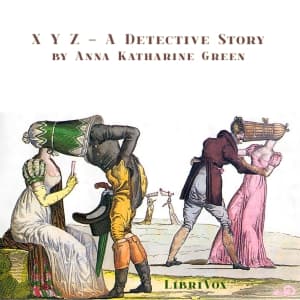

Everyone told me Anna Katharine Green was the "mother of detective fiction" - that she predated Agatha Christie by decades. So I expected something... foundational but dusty? Like reading Freud's original case studies. Interesting historically, less so practically.
I was wrong. Completely, delightfully wrong.
I started this at 5 AM, couldn't sleep, mind racing about a paper deadline I was definitely not going to meet. Made chai, wrapped myself in a blanket, and figured a Victorian mystery would either calm me down or bore me to sleep. Three hours later, the chai was cold, the sun was up, and I'd forgotten entirely about my deadline.
The Psychology of Poison and Panic
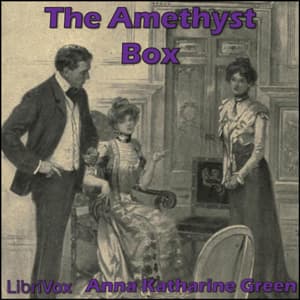
Here's what grabbed me: Sinclair's reaction to losing the amethyst box isn't rational. It's obsessive, spiraling, paranoid. He doesn't just worry about the poison - he immediately suspects the two women closest to him. His fiancée. Her cousin. The night before his wedding.
The protagonist exhibits classic anxiety-driven catastrophizing. But Green does something clever - she makes us question whether Sinclair's paranoia is unfounded or whether he's picking up on something real. Is he a man protecting his loved ones, or is he projecting his own ambivalence about marriage onto this crisis?
I found myself asking: why does Sinclair keep this poison in the first place? What kind of man collects deadly curiosities? Green never quite answers this, and I think that's intentional. The box itself becomes a Rorschach test - it reveals character through how people respond to it.
When Brevity Works
At under three hours, this is a tight little mystery. No wasted scenes. No meandering subplots about the servants' romantic entanglements. Green understood something that many modern thriller writers don't: urgency requires economy.
The pacing works because the stakes are immediate. Someone might die. Tonight. At the wedding. Dark Hours creates that same ticking-clock urgency, where every scene matters because the threat is right there, breathing down everyone's neck. Every conversation carries weight because we're watching people who might be murderers - or might be victims - and we genuinely don't know which.
Carolin Ksr's narration is... serviceable? I don't mean that as an insult. She's clear, she's consistent, she doesn't get in the way. For a LibriVox recording, that's actually a compliment. The production is clean enough that I forgot I was listening to a volunteer recording. But I won't pretend she's doing character voices or bringing theatrical flair. She's reading competently, and for a book this short and propulsive, that works fine.
Worthington: A Case Study in Conflicted Loyalty
Worthington - Sinclair's best friend - is the real psychological case study here. He's in love with the cousin. He's asked to help investigate whether she might be a poisoner. The conflict of interest is so obvious it hurts, and yet he agrees. Why?
Green understands that love makes people stupid. Not in a melodramatic way - in a mundane, recognizable way. Worthington convinces himself he can be objective. He can't. We know he can't. He probably knows he can't. But he tries anyway, because the alternative is admitting he's useless to his friend when his friend needs him most.
This is a fascinating case study in Victorian masculinity, actually. These men define themselves by their usefulness, their rationality, their ability to solve problems. When the problem is emotional - when it involves women they love - they're completely out of their depth, but they can't admit it.
The Ending Problem
I won't spoil it, but the resolution felt... quick. Almost too neat. After all that psychological tension, the actual mystery wraps up in a way that's more plot-convenient than psychologically satisfying. My therapist would have thoughts about how quickly everyone moves on from almost being poisoned.
But here's the thing - this was written in 1905. Green was working within constraints. The mystery had to resolve. The wedding had to happen (or not happen). Readers expected closure. And honestly? For a story this short, I'll forgive a rushed ending if the journey was compelling. And it was.
Who This Is For
If you're a Christie fan curious about her predecessors - yes, absolutely. You'll recognize the DNA. The drawing-room tension, the limited suspect pool, the emphasis on psychology over forensics. That same psychological focus makes Girl on the Train so compelling - unreliable narrators forcing us to question what's paranoia and what's real.
If you need high production values and theatrical narration - maybe look elsewhere. This is a clean, competent reading, not a performance. And if you want something short that won't demand weeks of your life - perfect commute or insomnia listen. I finished it in one sleepless morning and regret nothing.
The Priya Prescription
This is what I'd call "comfort mystery" - not because it's cozy (there's poison and paranoia and potential murder), but because it follows rules. There's a problem. There's an investigation. There's a solution. The human mind craves patterns, and Green provides them elegantly.
Worth streaming through LibriVox or your library app. I wouldn't spend money on it, but I'd absolutely recommend the experience. Sometimes the old stuff holds up better than we expect.