
What happens when you eavesdrop on a theological cage match that's been raging for eighteen centuries?
I started this one during a particularly brutal stretch of grading sophomore essays on The Great Gatsby. Sixty-three papers arguing that the green light represents money. (It does, but also... it doesn't? We'll get there, kids.) Somewhere around paper forty, I needed something to remind me that intellectual rigor existed before TikTok attention spans. Irenaeus delivered. Perhaps too well.
The Bishop Who Took Receipts
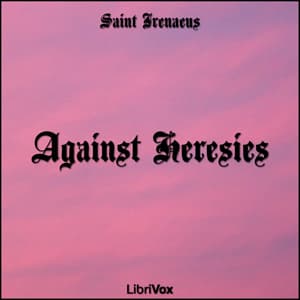
Here's what my students would never believe: in 180 AD, a bishop sat down and wrote twenty-five hours worth of material essentially saying "let me tell you exactly why you're wrong." And he meant it. Irenaeus doesn't just disagree with the Gnostics—he methodically dismantles them. He quotes their own texts back at them. He traces their theological genealogies like a prosecutor building a RICO case. The man kept receipts before receipts were a thing.
What struck me most was how *modern* these ancient heresies feel. The Valentinians with their elaborate cosmic hierarchies of aeons and emanations—it's like someone tried to turn Christianity into a fantasy RPG skill tree. Thirty divine beings cascading down from an unknowable source? My Dungeons & Dragons players would recognize that worldbuilding instinct. Irenaeus sees through it completely. His argument essentially boils down to: "You've made this needlessly complicated because complicated feels profound. It isn't."
This reminds me of what Hemingway said about writing—the dignity of movement of an iceberg is due to only one-eighth of it being above water. Irenaeus would have appreciated that. He's arguing for theological simplicity against ornate speculation.
The LibriVox Reality Check
Let's talk about what you're actually getting here. LibriVox recordings are volunteer projects, and with twenty-five hours of dense theological argumentation, you're going to encounter... variety. Different readers pick up different chapters. Some have crisp, professorial delivery. Others sound like they're recording in a room with unfortunate acoustics. One reader's microphone clearly sat too close to their mouth. Another rushed through passages that deserved contemplation.
This isn't a polished Audible production with a single narrator who spent weeks preparing. It's a community effort, and it sounds like one. For a free recording of a public domain text, that's the trade-off.
Here's my honest assessment: if you're approaching this as entertainment, you'll struggle. If you're approaching it as study material—something to accompany your reading of the text, or to absorb while doing something else with your hands—the inconsistency matters less. I listened while grading those Gatsby papers, and the rotating voices actually helped me stay alert. Each new reader was a small reset.
Why We Still Read the Heresy Hunters
My students would hate this. I love it.
Not because it's easy or even particularly enjoyable as a listening experience. But because Irenaeus shows us something crucial about early Christianity that gets sanitized in most Sunday school versions: it was messy. Contentious. People disagreed violently about fundamental questions. What is Jesus? What is salvation? What is the body? The Gnostics thought matter was evil, created by a bungling lesser god. Irenaeus thought that was dangerous nonsense that would lead people away from the incarnation—God becoming flesh, entering the material world.
The prose deserves to be savored—when you can get past the translation's occasional clunkiness. Irenaeus builds arguments like a lawyer, but occasionally he'll land a genuinely cutting line. His descriptions of Gnostic rituals have this "can you believe these people" energy that transcends centuries.
Worth pausing the faculty meeting for? Honestly, yes. Principal Martinez was discussing budget allocations for new textbooks. Irenaeus was explaining why the Marcosians used numerical mysticism to decode scripture. No contest.
Who This Is (and Isn't) For
If you loved Augustine's Confessions or City of God, this is its spiritual predecessor—the earlier generation making the arguments Augustine would later refine. For a more accessible entry point into hearing divine guidance through the noise, How to Hear from God offers a gentler on-ramp than Irenaeus's theological cage match. Theology students, church history enthusiasts, anyone fascinated by how orthodoxy gets constructed through argument rather than handed down from on high—you'll find this genuinely rewarding.
Skip it if you want a smooth listening experience with consistent narration. Skip it if you have no background in early Christian thought—you'll be lost within the first hour. Irenaeus assumes you know who Valentinus was. He assumes you care about the difference between emanation and creation. He wrote for people already in the argument.
Class Dismissed (But Extra Credit Available)
This is a commitment. Twenty-five hours of second-century theological combat, delivered by earnest volunteers with varying equipment quality. I can't call it a must-listen in any conventional sense. But for the right listener—the one who wants to understand how Christianity became Christianity, who finds intellectual history as gripping as any thriller—it's genuinely valuable. And it's free.
The Annotated Life might get a Gnostic episode out of this. That'll bring my listener count down to forty-six. Mom's definitely sleeping through that one.