
Sixteen hours on sobriety. At 2.0x speed, that's still eight hours of my life. I started this at 5 AM on a Tuesday, couldn't sleep, thinking about a client whose drinking was tanking his startup. Figured I'd do some research. Ended up doing some self-reflection I didn't sign up for.
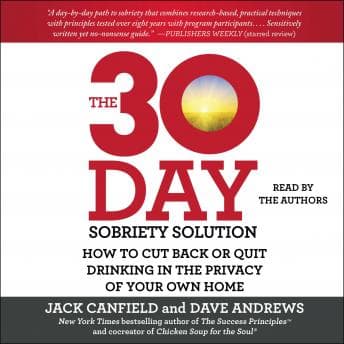
Bottom line: This is a legitimate framework disguised as self-help. The Chicken Soup for the Soul pedigree had me skeptical—I've seen too many feel-good books that crumble under real-world pressure. But Dave Andrews brings actual recovery expertise, and the structure here is surprisingly rigorous. Thirty days, five phases, specific exercises. My parents would recognize this approach: show up every day, do the work, no shortcuts.
The McKinsey Part of My Brain Approved
Here's what separates this from the usual "just believe in yourself" garbage: it's process-driven. Each day builds on the previous one. There's cognitive behavioral therapy woven through, neuroscience that actually checks out, and practical exercises you can do without announcing to the world that you're working on your drinking. That privacy angle? Underrated. I've watched executives destroy their careers because they were too proud to get help publicly. This gives them an on-ramp.
The phased approach—from "Mastering the Absolute Basics" through "Cultivating Thriving Relationships"—follows a logical progression. That relationship piece reminded me of 5 Love Languages—different context, same recognition that connection requires intentional work. Day 1 doesn't ask you to overhaul your life. It asks you to commit to 30 days. That's it. Smart psychology. Reduce the barrier to entry, then build momentum. I've implemented similar frameworks for organizational change. Same principle applies to personal change.
Four Narrators, One Coherent Experience
The multi-narrator setup could've been a disaster. It's not. Bahni Turpin handles the testimonials and emotional content—and there's a reason she's won every award in audiobook narration. Her delivery of the recovery stories hits different at 5 AM when you're questioning your own relationship with that nightly bourbon. Jack Canfield and Dave Andrews narrate their respective sections, which adds authenticity. Johnathan McClain rounds it out.
The author-narrated portions work because Andrews isn't performing—he's sharing. Eight years sober himself. You hear it in his voice. This isn't theory for him. When he talks about the shame spiral, about hiding bottles, about the lies you tell yourself—there's weight there. Jenny would probably say I'm projecting. Jenny might be right.
Why You Can't Skip to Chapter 5 This Time
Usually I tell people to jump ahead. Most business books front-load fluff. This one earns its runtime. The daily structure means skipping around defeats the purpose. It's designed for sequential consumption—each "solution" builds on previous ones. Day 12's "Subconscious Mind Solution" won't land if you haven't done Day 3's "Pendulum Solution" work.
That said, at 15+ hours, this is a commitment. Not a casual listen. You're not doing this during a commute unless you've got a very long commute. I'd recommend dedicated listening sessions—maybe 30 minutes a day, matching the program's daily structure. Novel concept: listening to the day's chapter on the actual day.
What My Parents Did Instinctively
The success principles embedded here—visualization, affirmations, accountability—are dressed up versions of what immigrant parents have been doing forever. My mom didn't call it "positive self-talk." She called it "stop complaining and keep going." Different packaging, same engine.
But here's where Andrews and Canfield add value: they connect these principles specifically to addiction patterns. The neuroscience of habit formation, the role of limiting beliefs in maintaining destructive behaviors, the specific triggers that lead to relapse. This isn't generic self-help retrofitted for sobriety. It's purpose-built.
Who This Is For (And Who Should Look Elsewhere)
If you're questioning your drinking—not rock-bottom, just questioning—this is your entry point. The "cut back OR quit" framing is honest. Not everyone needs AA. Some people need a structured reset. This provides that. If you're dealing with severe addiction, this is a supplement, not a replacement for professional help. Andrews is clear about this. Respect.
If you're a manager watching an employee struggle? Buy them this. Anonymously. Give them a way to address it privately before it becomes an HR issue. I've seen this play out. Early intervention beats crisis management every time.
The ROI Calculation
ROI on this one is high if—and this is the critical if—you actually do the exercises. Passive listening won't cut it. This is an interactive program that happens to be delivered via audiobook. The four-narrator approach keeps it from becoming monotonous over 16 hours. The structure is sound. The science is legitimate.
My 2.0x speed worked fine for comprehension, but I'd slow down for the exercise sections. Some things need processing time.
That client I mentioned? I'm sending him this link. Discreetly. Because sometimes the best consulting advice isn't a framework deck—it's knowing when to point someone toward the help they actually need.