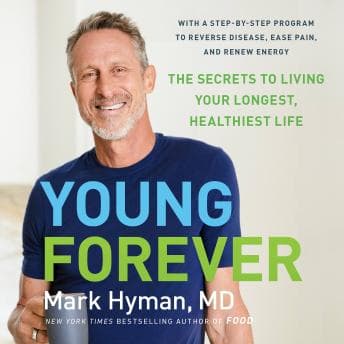

"Aging is a disease, and it's treatable." That line hit me around the 45-minute mark, somewhere between Millbrae and San Mateo, and I actually paused the book to let it sink in. Bold claim. The kind of thing that either makes you roll your eyes or lean in. I leaned in.
Quick Verdict: Worth your commute if you want the science-backed longevity primer, but be warned—this could've been a blog post. Or rather, a series of really good blog posts stitched together with some promotional padding.
The Functional Medicine Framework, Decoded
Look, I've consumed probably a dozen longevity books at this point. Attia's Outlive, Sinclair's Lifespan, various biohacking manifestos that promised to turn me into a 25-year-old with the wisdom of a 60-year-old. Hyman's angle is functional medicine—treating root causes instead of symptoms—and he actually does a decent job explaining the biological hallmarks of aging without making you feel like you're back in undergrad biochemistry.
The ROI on this audiobook is highest in the middle sections. He covers the nine hallmarks of aging (mitochondrial dysfunction, cellular senescence, the usual suspects) and then maps specific interventions to each one. This is basically Lifespan but for people who want practical action items instead of deep dives into NAD+ pathways. If you've already read Sinclair, some of this will feel redundant. If you haven't, Hyman is actually a gentler entry point.
The Pegan Diet stuff—his hybrid paleo-vegan approach—takes up a significant chunk. Some of it is genuinely useful (the emphasis on phytonutrients, the "eat the rainbow" framework that actually has research behind it). Some of it feels like he's just... really excited about his previous book and wants you to buy that one too.
When the Doctor Reads His Own Prescription
Here's the thing about author-narrated books: you get authenticity, but you don't always get performance. Hyman reads like a doctor giving a lecture, which—fair, that's what he is. Clear enunciation, measured pacing, zero dramatic flair. If you've ever watched his podcast interviews, you know exactly what you're getting.
I listened at 1.5x and it worked fine. At normal speed, I can see how some people would find it a bit... flat? There's a certain evangelical quality to his delivery that works in a TED talk but can feel relentless over 9+ hours. Around hour 6, during a section on supplements, I caught myself zoning out. Not because the content was bad, but because the cadence never changes. It's all delivered with the same "this will change your life" energy, whether he's talking about the importance of sleep or his specific brand of protein powder.
(Side note: the marketing complaints from other listeners are valid. There are moments where this feels less like a book and more like a very long infomercial for the UltraWellness Center. I get it—the man has a business—but it does undercut the credibility when you're trying to separate science from sales pitch.)
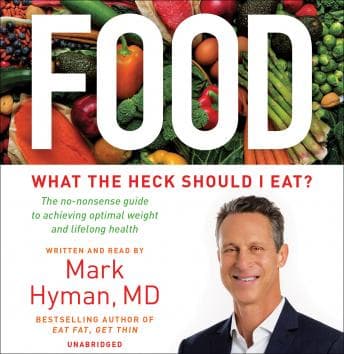
The same cross-promotional energy runs through Food: What the Heck Should I Eat?—another Hyman title where the useful nutritional framework and the brand-building are in constant tension with each other.What Actually Stuck After Three Commutes
Here's what I retained:
The inflammation-aging connection is more direct than I'd understood. He explains how chronic low-grade inflammation basically accelerates every hallmark of aging, and the dietary interventions are surprisingly simple.
His breakdown of which supplements have actual evidence versus which are basically expensive urine—genuinely useful. I appreciated that he was willing to say "this one doesn't have great data" about some popular options.
The sleep and stress sections, while not groundbreaking, are presented with enough clinical backing that I actually started taking my sleep hygiene more seriously. (Kevin noticed. He's thrilled I'm no longer doom-scrolling at midnight.)
What didn't stick: the repeated assertions that functional medicine is the answer to everything. I work in systems—I know when someone's overselling a solution. The body is a distributed system with more failure modes than he acknowledges.
Best For Long Walks, Not Deep Focus
This is background-compatible listening. You don't need to be fully present for every section—he repeats key points enough that you'll catch them even if you zone out during the supplement deep-dives. I finished most of it during my commute, but the last two hours happened during a Saturday cleaning session.
Who should listen: Anyone who wants a comprehensive longevity overview without reading five separate books. People who like actionable takeaways. Fans of Hyman's other work.
Who should skip: If you've already read Outlive and Lifespan, the marginal value here is low. If you're allergic to anything that smells like wellness marketing, you'll be irritated by hour 3. And if you need dynamic narration to stay engaged, this isn't it.
System Status: Functional, With Known Issues
Solid content, mediocre delivery, occasional marketing bloat. The science actually holds up—Hyman cites real research and doesn't venture too far into woo territory. But the audiobook format exposes the book's structural weakness: it's too long for what it's saying. The core insights could fit in 4 hours. The other 5 are padding, repetition, and promotional material.
Still, I don't regret the listen. It's the kind of book that plants seeds—I've already adjusted a few habits based on his recommendations. Just don't expect to be entertained. Expect to be informed, occasionally sold to, and moderately convinced that you should probably eat more vegetables.
Could've been a blog post? More like could've been a really good 4-hour audiobook. But we got 9.5, so here we are.