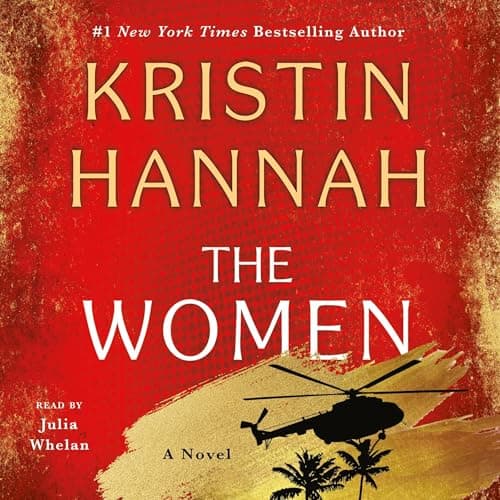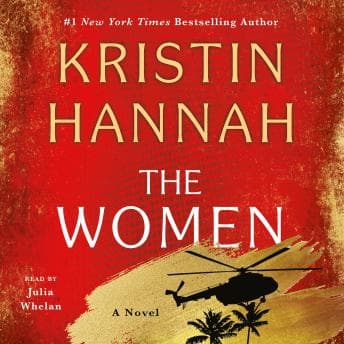

The Women: A Novel
The "Cold Open"
Look, I made a mistake. A rookie mistake, actually, which is embarrassing considering how many audiobooks I consume. I decided to start listening to The Women while grading a stack of sophomore essays on The Great Gatsby. (Yes, they still think Nick Carraway is just a "nice guy." No, I don't have the energy to correct them right now.)
I thought it would be background noise. Historical fiction about nurses in Vietnam? Educational, sure. But manageable.
Two hours later, the red pen was on the floor, the essays were ignored, and I was staring out the window at the Chicago skyline, absolutely wrecked. My wife, Denise, walked in, saw my face, and asked if the school budget got cut again. I just pointed at my headphones.
The Whelan Factor
We need to talk about Julia Whelan.
I tell my students that reading aloud is an interpretive act. Most of them mumble through Shakespeare like they're reading a grocery list, but Whelan? She understands that the narrator is the final author of the story.
Here's the thing—Kristin Hannah's writing can be... a lot. It's big, bold, and sometimes borders on the melodramatic. If I were reading this on paper, my inner English teacher might have started twitching at some of the dialogue. It's very "movie script." But Whelan grounds it. She has this low-pitched, limber voice that doesn't just read the lines; she inhabits the exhaustion.
There are moments in the combat zones—chaos, shouting, fear—where a lesser narrator would scream. Whelan goes tight. Controlled. She understands that true terror is quiet. It's performance art. (And yes, she won an Audie for this. Totally deserved.) She moves between Frankie (our protagonist) and the other nurses with such distinct shifts in tone that you forget it's one person in a booth. Whelan pulls off the same magic in Beach Read, where she juggles two writers with completely different worldviews without ever losing either voice. You can hear the dirt and the humidity in her voice.
The History Lesson I Can't Teach
We read The Things They Carried in my AP Lit class. It's brilliant. But it's also very... male.
The Women fills in the gap that my curriculum leaves wide open. It's about Frankie McGrath, a nice girl from a conservative family who ships out to Vietnam because she's told "Women can be heroes."
The pacing of the audiobook is fascinating. The first half is the war—fast, brutal, episodic. Then, the war ends. And the book... keeps going.
At first, I was checking the timestamp thinking, "Okay, wrap it up, we get it." But that's the point. The real battle is coming home to a country that hates you and denies you were even there. The pacing drags intentionally in the second half because trauma drags. It's slow. It's repetitive. It's frustrating.
Is it subtle? No. Hannah writes with a sledgehammer, not a scalpel. But sometimes you need a sledgehammer to break through the apathy. Hannah did something similar in Nightingale: A Novel, another war story where she refuses to let you look away from the cost of survival. Listening to Frankie try to reintegrate into a fractured America—while dealing with PTSD that has no name yet—hit me harder than I expected.
The Emotional Toll (Fair Warning)
This isn't a "fun" listen. It's 15 hours of emotional heavy lifting.
There were moments—specifically dealing with grief and betrayal—where I had to actually pause the track. Not to analyze the syntax (though old habits die hard), but just to breathe. It's unrelenting. If you're looking for something to listen to while you mindlessly fold laundry, this ain't it. You'll end up crying into a towel.
A heads up: the romance subplots. (Yes, there are several.) They're the weakest part for me. A bit soap-opera-ish. But again, Whelan sells it. She makes even the cheesier lines sound like desperate confessions.
Who Should Listen—And Who Should Skip
If you want the women's side of Vietnam that your history class never covered, or you're a Kristin Hannah fan who trusts her emotional gut-punches, this one's for you. Skip it if you need something light, or if melodramatic romance subplots are a dealbreaker even when beautifully performed.
The Exit
My mom is going to love this book. She'll listen to it, call me, and tell me she learned more about the 60s than she did living through them. And for once, I won't roll my eyes.
It's not perfect literature. It's not Faulkner. But the combination of Hannah's storytelling engine and Whelan's stunning narration makes it impossible to turn off.
I finished it at 2 AM on a Tuesday. The essays still aren't graded. Principal Martinez, if you're reading this... blame Frankie McGrath.