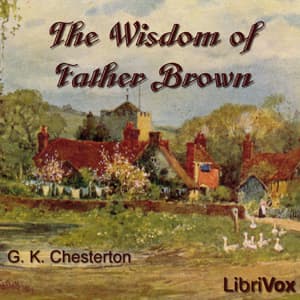

Look, I've read my share of detective fiction - comes with the territory when you've spent decades analyzing threats and trying to figure out who's lying to you. But Father Brown? This little priest operates on a completely different wavelength than your typical investigator, and honestly, it's refreshing as hell.
The Anti-Sherlock Approach
Here's what got me about these stories: Father Brown doesn't deduce his way through crime scenes like he's cataloging evidence for a court martial. He understands evil. He's heard confessions, sat with the worst of humanity, and somehow came out the other side with this quiet certainty about how people tick. Chesterton wrote these over a century ago, but the psychology holds up - I've interrogated enough people to know that understanding motivation matters more than collecting fingerprints.
The stories themselves are hit or miss, I'll be honest. Some of them - "The Perishing of the Pendragons" comes to mind - kept me guessing right up until Father Brown dropped his little revelation. Others felt like Chesterton was more interested in making a philosophical point than actually solving a mystery. That's the nature of short story collections, I suppose. You take the brilliant ones with the merely good ones.
What I didn't expect was how much the paradoxes would stick with me. Chesterton has this way of flipping your assumptions on their head. The most suspicious character turns out to be innocent for exactly the reasons you suspected them. The obvious solution is wrong because it's too obvious. It's the kind of thinking that would've driven my intelligence analysts crazy, but it works in these stories.
Martin Clifton Behind the Mic
Now, about the narration - and I'll cut to the chase here. Martin Clifton does solid work. His aristocratic English accent fits the period perfectly, and his pacing is clean. No dramatic pauses where they don't belong, no rushing through the good parts. Professional.
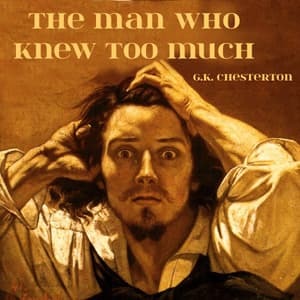
Clifton brings that same steady professionalism to Man Who Knew Too Much, though I found that one even harder to marathon through.
But here's the thing: seven hours of that same measured, droll delivery? It starts to wear on you. I found myself bumping up to 1.25x around the third story just to keep things moving. Clifton's style works beautifully for individual stories - perfect for a commute or a long drive between client meetings. But marathon listening? Your mileage may vary.
He doesn't do much voice differentiation between characters, which is fine for most of the stories since Chesterton's dialogue is distinctive enough that you can usually track who's speaking. But in the more crowded scenes, I occasionally lost the thread. Not a dealbreaker, just something to note.
Where This Works (And Where It Doesn't)
These stories hit different when you're in the right headspace. I listened to most of this collection during early morning runs with Ranger - the cool Austin air, the quiet streets, Father Brown quietly dismantling some elaborate criminal scheme. That worked. Trying to listen during a particularly tedious security audit? Less so. The stories require just enough attention that you can't completely zone out, but they're not so demanding that you can't multitask.
The violence is mild - we're talking 1914 sensibilities here - but the crimes themselves are genuinely clever. Chesterton understood that the best mysteries aren't about the body in the library; they're about the human weakness that put it there. That focus on character over mechanics is what drew me to Lock and Key: The Gadwall Incident too. Father Brown gets this. He's not interested in punishment so much as understanding, which makes him a surprisingly sympathetic detective.
Fair warning: some listeners have complained that this audiobook doesn't include all the stories from the original collection. I couldn't verify that one way or the other, but if you're a completist, maybe check before you commit.
SITREP
Worth your time? If you're into classic detective fiction - the stuff that actually influenced everything that came after - absolutely. Father Brown is the template for every intuitive detective who ever frustrated their more methodical colleagues. The audiobook production is clean, Clifton's narration is competent if not spectacular, and Chesterton's wit still lands over a hundred years later.
Who should listen: Fans of classic mysteries who appreciate psychological insight over forensic procedure, and anyone who can handle their detective fiction in short doses. Skip it if: you need constant action or prefer your sleuths with magnifying glasses and cocaine habits.
Just don't try to power through the whole thing in one sitting. These stories were meant to be savored, not consumed. Take them one or two at a time, let them percolate. That's how Father Brown would want it.
Ranger approved this one, though he did fall asleep during "The God of the Gongs." Can't blame him - that one dragged.