
"The tragedy of 9/11 and what America must do to retaliate."
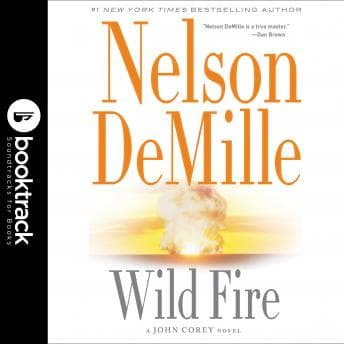
That line hit different at 11:47 PM while I was grading sophomore essays on The Great Gatsby. Denise had gone to bed hours ago, and I was supposed to be writing comments about symbolism and the green light. Instead, I was deep in the Adirondacks with John Corey, watching a conspiracy unfold that felt uncomfortably plausible for a book written in 2006.
Nelson DeMille does something here that reminded me of what Hemingway said about writing—the dignity of movement of an iceberg is due to only one-eighth of it being above water. That same iceberg principle—showing restraint while hinting at deeper currents—is what makes Queen's Gambit work so well, even if it operates in a completely different genre. Wild Fire shows you the hunting lodge, the wealthy power brokers, the venison dinners and single malt scotch. But underneath? A nuclear nightmare scenario that made me pause grading entirely and just... listen.
When Your Protagonist Is the Smartest Guy in the Room (And Knows It)
John Corey is not for everyone. I need to be honest about this.
He's the kind of character my students would either love or despise—no middle ground. Wise-cracking, sarcastic, convinced of his own brilliance, and frequently right about being right. Scott Brick plays him with this New York twang that carries both the bravado and—here's what makes it work—a humanizing hint of self-doubt beneath all the wisecracks. You catch it in the quieter moments, when Corey's processing something that genuinely unsettles him.
Brick earned that AudioFile Earphones Award honestly. His delivery finds the irony in DeMille's prose without overselling it. When Corey makes a joke at a crime scene, Brick lands it dry rather than punching it up. The man understands that pause is punctuation.
But I'll say this: if you find cocky protagonists grating—and some listeners absolutely do—eighteen and a half hours is a long time to spend with someone who annoys you. Defiant Queen has a similarly polarizing lead character—confident to the point of abrasive—and I had the exact same reaction there. My students would hate this. I loved it. But I also teach Holden Caulfield every year, so my tolerance for unreliable narrators with attitude problems is professionally calibrated.
The Booktrack Experiment (Or: Why I Didn't Hate Background Music)
I was skeptical. Deeply skeptical. Adding music to audiobooks feels like colorizing Casablanca—technically possible, philosophically questionable.
But the Booktrack edition surprised me. The score plays so far in the background that I sometimes forgot it was there, which is exactly right. It's not trying to tell you how to feel—it's more like ambient pressure. During the conspiracy scenes at the Custer Hill Club, there's this low tension underneath that I only consciously noticed when I paused for coffee. When I resumed, I realized the music had been doing subtle work on my nervous system.
Worth pausing the faculty meeting for? Yes. Though to be fair, Principal Martinez's budget presentations don't have complementary soundtracks. (Yet. There's an idea.)
The Problem With Being Right About Everything
Here's where I have to be honest about the book's limitations.
DeMille writes conspiracy thrillers where the conspiracy is exactly what you suspect it is from chapter three. The Custer Hill Club members are wealthy, powerful, and planning something terrible. John Corey suspects this immediately. He's correct. The remaining fifteen hours are him proving what we already know.
This reminds me of what I tell my students about dramatic irony in Greek tragedy—the audience knowing more than the characters can create tension, but it can also create frustration. Wild Fire occasionally tips into the latter. There are stretches where the pacing slows, where Corey's investigations feel like box-checking rather than discovery.
If you loved DeMille's earlier Corey novels, this is their spiritual successor—same voice, same structure, same satisfactions and same occasional drag. If you're new to the series, you might find yourself checking the progress bar around hour twelve.
Who Should Clear Eighteen Hours (And Who Shouldn't)
This is a commitment listen. Not background material—you need to track the political machinations, the character relationships, the slow-building dread. Good for focused listening, excellent for long drives. (I finished the last four hours on a Saturday trip to visit my mother, who asked why I looked so tense when I arrived.)
Listen if you want: post-9/11 conspiracy thriller with a sardonic protagonist, political intrigue that doesn't require a decoder ring, and a narrator who genuinely understands the character he's voicing.
Skip if: you need constant action, find confident male protagonists exhausting, or want your thrillers under ten hours.
Mr. Williams's Final Grade
Nelson DeMille writes the kind of thriller that trusts its audience to be patient. Scott Brick narrates it like he's been living inside John Corey's head for years—which, given how many of these books he's recorded, he essentially has.
Is it too long? Probably. Is the plot predictable? Sometimes. Did I stay up until 1 AM finishing it when I had first period prep to complete? Yes. And I'd do it again.
Wild Fire works. Not perfectly, not without its indulgences, but solidly enough that I'm already eyeing the next Corey novel in my library.
The grading can wait. Fitzgerald would understand.