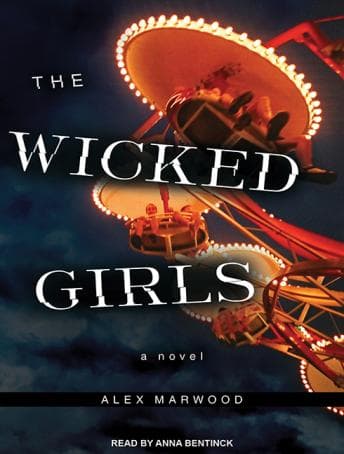

"They were eleven years old. And by nightfall, they would be murderers."
That's not the exact quote—I'm paraphrasing from memory around the 45-minute mark—but it's the moment I stopped grading sophomore essays on *The Great Gatsby* and gave Alex Marwood my full attention. This is the kind of book that demands you put down the red pen. My students' comma splices could wait.
The Weight of What Children Carry
Here's what Marwood understands that so many thriller writers don't: guilt is not a static thing. It's a living organism that grows and mutates over twenty-five years. The dual timeline structure—1986 and present day—isn't just a narrative trick. It's an examination of how two girls become two women, and how the thing they did (and the thing they became because of it) never stops reshaping them.
Kirsty is now a journalist. Amber cleans at a carnival. The class divide between their adult lives says everything about how society processed their crime and spit them back out. This reminds me of what Hardy was doing with Tess—the weight of a single moment defining an entire existence. Except Marwood gives us something Hardy couldn't: the interior experience of carrying that weight, narrated in real time.
Anna Bentinck handles this beautifully. Her Kirsty has this controlled, almost clipped quality—a woman who has learned to measure every word because one wrong syllable could unravel her entire constructed life. Her Amber is softer, more worn down, like someone who's been running for so long she's forgotten what walking feels like.
When the Recording Room Intrudes
I need to be honest about something, because I believe listeners deserve the truth: there are moments in this audiobook where you can hear the production. Page turns. The occasional lip sound. It's not constant, but when you're deep in a scene where Kirsty is realizing that the woman she's interviewing is *her*—the other girl from that day—and suddenly there's this little *smack* of lips between sentences?
It pulls you out. Not fatally. But noticeably.
The other issue some listeners have mentioned is the voice differentiation. Marwood populates this book with a significant cast—police, journalists, carnival workers, tourists, family members—and Bentinck attempts distinct voices for all of them. Mostly she succeeds. Occasionally, around hour seven or eight, I found myself rewinding to figure out who was speaking. The prose deserves to be savored, and sometimes the audio made me work harder than I wanted to.
Worth pausing the faculty meeting for? Absolutely. But maybe not the best choice for background listening while you're doing something else.
What Marwood Is Really After
Let's talk about what's actually happening here, because this isn't just a thriller. It's a meditation on identity, reinvention, and whether redemption is even possible when you've done the unforgivable.
The Edgar Award this won? Deserved. Stephen King put it on his ten best list, and I understand why—King has always been interested in the monstrous potential of children, but Marwood does something different. She's interested in what happens *after*. What happens when the monster grows up and gets a mortgage and falls in love and has to keep pretending she was never a monster at all.
The ending—and I won't spoil it—brought me to a full stop. I was walking the lakefront with Denise, and I just... stopped. She asked if I was okay. I wasn't, really. Not in a bad way. In the way you're not okay when a book has reached into your chest and rearranged something.
Who Gets an A, Who Gets an Incomplete
My students would hate this. Too slow for their TikTok-addled brains, too much interiority, not enough action. But if you're the kind of reader who loved *We Need to Talk About Kevin*, this is its spiritual successor—except told from inside the child's head, decades later, when she's no longer a child and the world has decided she's been punished enough. My Confession does this too—it sits with you long after the final chapter, refusing to let you off the hook with easy answers.
Skip this if you need fast pacing or prefer your thrillers with clear moral lines. Come for it if you want a book that makes you sit with uncomfortable questions about guilt and forgiveness and whether the person you were at eleven has any right to determine the person you become at thirty-six.
Class Dismissed (But the Questions Aren't)
Fourteen hours is a commitment. The audio has its imperfections. But this is the kind of book you find yourself thinking about while you're supposed to be listening to Principal Martinez explain next year's budget allocation. (Sorry, Principal Martinez. I was thinking about Kirsty and Amber.)
Has she been punished enough? Marwood doesn't answer that. She just makes you feel the weight of the question.