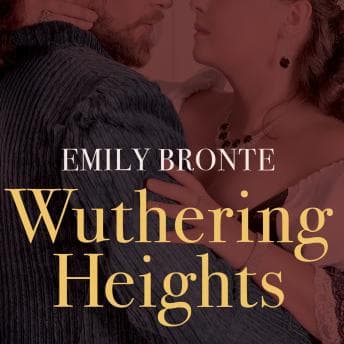

Look, I need to vent about something. I've taught Wuthering Heights to seventeen-year-olds for two decades, and every single year - every SINGLE year - some kid raises their hand and asks, "But Mr. Williams, why should we care about these terrible people?" And I launch into my speech about passion and obsession and the Gothic tradition and the moors as psychological landscape. But here's the thing I never admit: Heathcliff and Catherine ARE terrible people. Absolutely wretched. And listening to Anna Bentinck narrate their destruction at 11 PM while grading essays about symbolism in The Great Gatsby, I finally let myself just... hate them. Properly. It was liberating.
This is why we still read the classics. Not because they're comfortable or because the characters are role models. But because Emily Brontë understood something about human nature that most of us spend our lives pretending isn't true.
The Moors Sound Different at Midnight
Nearly fourteen hours with this book. I spread it across three weeks of evening grading sessions, and Bentinck's voice became the soundtrack to my red-pen massacres. Her dramatic approach works because she understands that pause is punctuation - the silences between Heathcliff's declarations carry as much weight as the words themselves. When Nelly Dean narrates, there's a practical Yorkshire sensibility in Bentinck's delivery. When we shift to Lockwood's perspective, she finds his outsider bewilderment without making him cartoonish.
But here's what struck me most: the violence in this book. I mean, I've read it probably fifteen times, but hearing it - hearing Heathcliff's cruelty, the casual abuse, the way characters treat each other like property - it lands differently. The content warnings are earned. My students read this and focus on the romance. Listening to it, I kept thinking: this is a horror novel wearing a love story's clothes.
What Hemingway Would've Cut (And Why Brontë Was Right to Keep)
This reminds me of what Hemingway said about writing true sentences. Except Brontë does the opposite - her sentences aren't spare, they're excessive, Gothic, overwrought. And they should be. The prose deserves to be savored at 1.0x speed. (My students think I'm ancient for this take. They're not wrong about the ancient part.)
Bentinck handles the nested narrative structure - Lockwood telling us what Nelly told him about what Catherine said - without losing the thread. That's genuinely difficult. The frame story can feel clunky on the page, but in audio, it becomes almost campfire-tale intimate. You're getting gossip. You're getting unreliable narrators stacked like Russian dolls.
What I wanted more of: distinction between the two Catherines. The generational echo of the story - mother and daughter, Heathcliff's revenge spanning decades - could use sharper vocal differentiation. There were moments where I had to reorient myself in the timeline. Not a dealbreaker, but noticeable.
Worth Pausing the Faculty Meeting For
Who should listen to this? Anyone who read it in high school and thought it was a romance. Go back. Listen with adult ears. Hear the abuse, the obsession, the way love curdles into something monstrous. If you loved Jane Eyre, this is its darker, wilder sister - literally. For something that splits the difference between Gothic intensity and emotional resolution, After You: A Novel offers that rare combination of darkness acknowledged and hope earned. Charlotte wrote the governess who finds her place; Emily wrote the chaos that burns everything down.
Who should skip? If you need likeable protagonists, run. If you're looking for a cozy classic to fall asleep to, absolutely not - this book will make you too angry to sleep. (Ask me how I know. Ask Denise about the night I sat up in bed at 1 AM muttering about Hindley's parenting failures.)
The thirteen-hour runtime is a commitment, but it's appropriate. This isn't a book you rush through. It's a book you sit with, the way you sit with a difficult truth about yourself. Bentinck gives it the weight it deserves - dramatic without tipping into melodrama, moving without sentimentality.
My students would hate this. I love it.
I'm adding it to my podcast queue. All 47 listeners are going to hear about how Wuthering Heights is actually about the impossibility of escaping your own nature. My mom will fall asleep during that episode too. But I'll know the truth: this is one of the great audiobook experiences of a genuine classic. Even if everyone in it is absolutely insufferable.