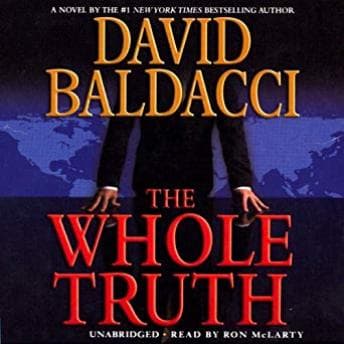

Look, I'll be honest - when I first saw the opening line of this book was "Dick, I need a war," I nearly spit out my coffee. That's not Hemingway. That's not even trying to be. But here's the thing: after twenty years of teaching students the difference between literature and entertainment, I've finally made peace with the fact that sometimes you just want a thriller that moves.
And this one moves.
McLarty's No-Nonsense Delivery
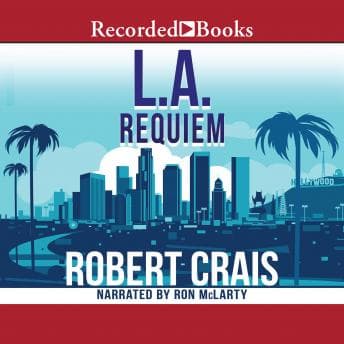
Ron McLarty has this gruff, precise delivery that fits Baldacci's world like a glove. I was grading papers at 11 PM - the usual stack of half-hearted essays about The Great Gatsby - and McLarty's voice cut through my exhaustion in a way that surprised me. He doesn't do fancy. He does precise. There's a difference.
What impressed me most was his character differentiation. You've got Shaw, this mysterious operative with no first name (very le Carré, though Baldacci would probably bristle at the comparison). You've got Nicolas Creel, the defense contractor who wants to manufacture a war for profit. You've got Katie James, the journalist trying to claw her way back to relevance. McLarty gives each of them distinct vocal signatures without ever going cartoonish. The accents for foreign characters? Actually well done. His female voices don't fall into that trap where male narrators make women sound either breathy or shrill.
The pacing is relentless. McLarty reads fast when the action demands it, slows down for the quieter manipulation scenes. He understands that pause is punctuation - something I try to teach my students about prose, though they're usually too busy checking their phones to notice.
Three Storylines, One Sledgehammer
Here's where I have to put on my teacher hat for a second. (Don't worry, I'll take it off again.)
Baldacci is doing something interesting with structure here. He's juggling three storylines - the intelligence operative, the journalist, the corporate villain - and weaving them together in a way that keeps you guessing. It's not subtle. The themes about media manipulation and manufactured consent are about as nuanced as a sledgehammer. But you know what? Sometimes a sledgehammer gets the job done. Testaments: The Sequel to The Handmaid's Tale uses that same blunt force when dealing with propaganda and control, though Atwood wraps it in literary credibility.
The book came out in 2008, and listening to it now feels almost prophetic. "Perception management" as a tool for starting wars? The way information can be weaponized? My students would probably roll their eyes and say "okay boomer, we know about fake news." But Baldacci was writing about this before it became everyone's dinner table conversation.
I found myself pausing during a particularly brutal scene - there's violence here, make no mistake - and thinking about how I'd never assign this book in class. Not because it's bad. Because it's doing something different than what I teach. It's entertainment first, ideas second. And that's fine. That's actually more honest than half the "literary thrillers" that pretend otherwise.
The Middle-Book Chess Game
I won't pretend this is perfect. There are stretches in the middle where Baldacci is setting up his chess pieces, and even McLarty's excellent pacing can't quite disguise that we're in setup mode. Some of the plot mechanics feel recycled - if you've read Baldacci before, you'll recognize certain moves. The romance subplot between Shaw and Katie felt obligatory rather than earned.
But here's the thing about listening while walking the lakefront with Denise: when a book keeps you walking an extra mile because you want to hear what happens next, that counts for something. We ended up doing six miles instead of four because I needed to know how the massacre survivor's interview would play out.
Who's This For?
If you're looking for literary stylistic writing, you're in the wrong aisle. Skip this one. But if you want something that'll make your commute disappear, that'll keep you engaged through eleven hours of international conspiracy and moral ambiguity? This delivers. Baldacci fans and thriller readers who don't need their entertainment dressed up as literature - this is your book.
Class Dismissed
My students would hate this review. They'd say I'm being too generous to a "beach read." But after grading forty essays on symbolism in The Scarlet Letter, sometimes you need a book that just asks: what if a billionaire decided to start World War III for profit? And what if the only people who could stop him were a spy with no name and a journalist with nothing to lose?
It's not Faulkner. Thank God.