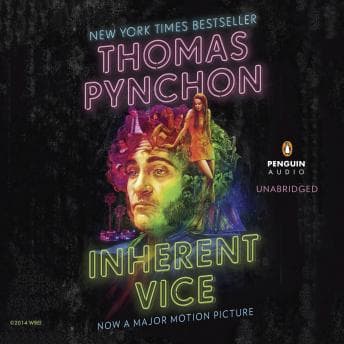

"The word 'trip' is another one of those going around at the moment, like 'love' or 'groovy,' except this one usually leads to trouble."
Somewhere around hour three, stirring a pot of dal I'd completely forgotten about, I realized I had no idea what was happening in this book. And I didn't care. This is a fascinating case study in narrative disorientation as deliberate aesthetic choice—Pynchon isn't confused, he's making YOU confused, and Ron McLarty is your willing accomplice in this particular form of literary gaslighting.
The Stoned Detective as Psychological Archetype
Doc Sportello is what happens when you put a private eye through a bong and shake vigorously. The protagonist exhibits classic avoidant attachment patterns mixed with genuine investigative competence—he's simultaneously the most unreliable and most perceptive narrator I've encountered in noir fiction. What makes this character compelling is that his marijuana haze isn't just comic relief; it's a coping mechanism for watching his entire countercultural world dissolve into Nixon-era paranoia.
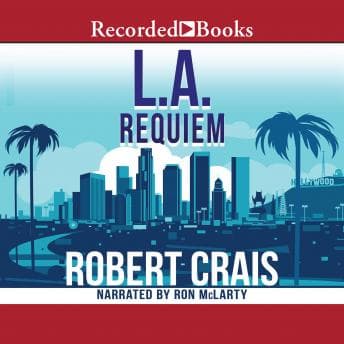
McLarty gets this. His slurred, laid-back Californian delivery isn't just accent work—it's psychological characterization. When Doc mumbles through another connection he probably should have made three hours ago, you hear the cognitive dissonance of a man who sees everything and processes nothing. This kind of deliberate pacing can trigger listener frustration, but here it functions as immersive method acting.
When the Narrator Starts Singing (No, Really)
I was chopping onions when McLarty broke into a cappella song. Nearly lost a finger. Nobody warned me about this.
The original music scattered throughout isn't just quirky production choice—it captures something essential about how the late sixties actually felt. Not the sanitized nostalgia version, but the weird, druggy, sun-soaked reality where people would just... start singing. McLarty's Donald Duck impression during Sauncho's shaving rant had me laughing so hard I had to pause and explain to my empty apartment why I was crying over dal.
His character differentiation is genuinely impressive. Each voice carries its own psychological profile—the hippie bravado, the paranoid edge of government types, the exhausted cynicism of cops who've seen too much. This isn't just "doing voices," it's inhabiting distinct cognitive styles.
Psychologically, This Doesn't Track (And That's The Point)
Here's where I found myself asking: why does Pynchon make this so labyrinthine? The plot twists back on itself like a snake eating its own tail while high on something questionable. I lost track of who kidnapped whom, which conspiracy connected to which real estate scheme, whether any of this was actually happening or just Doc's paranoid interpretation.
My therapist would have thoughts about this character—and about anyone who claims to fully follow this narrative on first listen. Listeners consistently report confusion, but also consistent enjoyment despite that confusion. I've encountered that same paradox in Femicide, where the fragmented narrative structure mirrors the detective's fractured investigation—confusion as method, not mistake. This is Pynchon's genius: he's recreated the phenomenological experience of the late sixties, where nothing quite made sense but you kept going anyway because the vibes were immaculate.
Compared to Gravity's Rainbow, this is apparently Pynchon's "accessible" work. (I found myself laughing at that assessment around hour twelve.) But it IS more accessible—the noir framework gives you something to hold onto while the psychedelic elements try to shake you loose.
Who Should Tune In, Who Should Drop Out
This is not background listening. I tried that. Failed spectacularly. You need focused attention to catch the jokes, the connections, the moments of genuine insight buried in the haze. But if you're the type who reads mystery novels to solve them before the detective—skip this. You won't. That's not the point.
Perfect for: literary fiction enthusiasts who appreciate style over plot resolution, anyone nostalgic for an era they probably didn't experience, listeners who can surrender to confusion as aesthetic experience. Not for: plot-driven readers who need clear answers, anyone expecting traditional noir satisfaction, people who get anxious when they can't follow what's happening.
The Case File Closes (Sort Of)
At fourteen and a half hours, this is a commitment. But McLarty makes it feel shorter than it is—his comedic timing, his musical interludes, his complete inhabitation of Doc's foggy consciousness. The film adaptation apparently lost much of this humor and atmosphere, which tracks. Some things only work in the theater of your own mind, guided by a narrator who understands that sometimes the journey matters more than the destination.
I finished the dal. It was overcooked. Worth it.