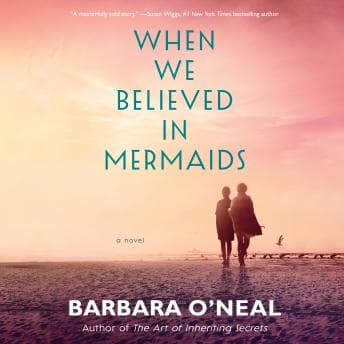

Everyone kept telling me this was the beach read of the decade. The bestseller lists, the book clubs, my wife's reading group—all raving about Barbara O'Neal's emotional gut-punch of a sister story. So I queued it up expecting something light for those late-night grading sessions when I need background noise that won't require too much attention.
I was wrong. This is not background listening. This is the kind of book that makes you stop marking papers mid-sentence because you need to know what happened to these women.
The Odyssey of Two Sisters (And I Don't Use That Word Lightly)
Here's what O'Neal understands that so many contemporary fiction writers miss: the past isn't a flashback device. It's a living thing that shapes every choice a character makes. Kit, our ER doctor protagonist, has built her entire adult life around a death that never happened. And Josie—now Mari, living in New Zealand with a new identity—has built hers around running from a trauma that neither sister has ever properly named.
This reminds me of what Hemingway said about the iceberg theory: what's beneath the surface matters more than what we see. O'Neal gives us two women who seem functional, successful even, but the underwater mass of their shared history threatens to capsize everything. The dual timeline structure works here because it has to. You can't understand why Josie faked her death without understanding those summers at their parents' beachside bar, the lost teenage boy who became family, the violence that simmered beneath the California sunshine.
My students would hate this. Too slow, they'd say. Where's the action? But the prose deserves to be savored. O'Neal writes grief the way it actually feels—not as dramatic moments but as the quiet accumulation of small losses.
The Narrator Problem (Let's Be Honest About It)
The dual narration by Katherine Littrell and Sarah Naughton should be the perfect match for alternating sister perspectives. And in concept, it works beautifully—two threads weaving together, each voice carrying its own emotional weight.
But here's where I have to be honest: one of the narrators has a pronunciation issue with words containing the letter 'i' that becomes genuinely distracting once you notice it. I tried to unhear it. I couldn't. It's the kind of thing that pulls you out of an otherwise immersive experience, and for a nearly twelve-hour listen, that's a significant commitment to push through.
The emotional delivery is there. Both narrators understand the weight of what they're reading—the grief, the guilt, the complicated love between sisters who've been shaped by the same damage in opposite ways. But the technical execution doesn't quite match the emotional intelligence. Worth pausing the faculty meeting for? Yes. A perfect audio experience? Not quite.
Who Should Listen (And Who Should Grab the Print Version)
If you loved The Art of Inheriting Secrets, know that this is O'Neal operating at a higher intensity. More drama, more darkness, more willingness to sit in uncomfortable truths about family. If you're drawn to books about sisters—the real complexity of that relationship, not the Hallmark version—this delivers.
Skip the audiobook if mispronunciations genuinely ruin your listening experience. Some folks mentioned they wished they'd read the print version instead, and I understand that impulse. The story itself is strong enough to warrant picking up the physical book if the audio frustrates you. That same willingness to sit in darkness without flinching shows up in Waste Land, though that one goes even harder on the trauma front.
Also worth noting: there are themes of violence, abuse, and family trauma woven throughout. O'Neal doesn't sensationalize it, but it's present. This isn't escapist fiction dressed up as beach reading—it's literary fiction that happens to have a beach setting.
Worth Telling Denise About
I finished this one walking the lakefront last Sunday, and I immediately texted my wife to start it. (She's three chapters into the print version now—she has less patience for pronunciation quirks than I do.) The thing is, despite the audio imperfections, the story stayed with me. The final revelations about what really happened, why Josie ran, what Kit has been carrying all these years—it earned its emotional payoff.
O'Neal understands something essential about secrets: they don't protect anyone. They just delay the reckoning. And when that reckoning finally comes for these sisters, it's devastating and necessary and exactly right.
This is why we still read the classics—because the best contemporary fiction learns from them. The bones of Greek tragedy are here, dressed in California sunshine and New Zealand rain. Two sisters. One terrible truth. The long journey home.
Not a perfect audiobook. But a story worth the imperfect journey.