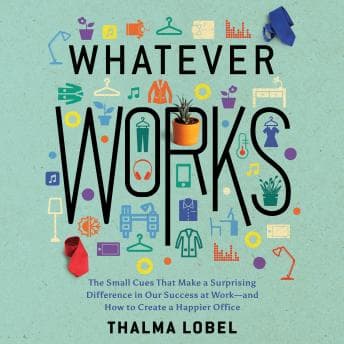

I was chopping onions for a dal that would take three hours to perfect when Thalma Lobel told me that looking at something green for forty seconds could improve my attention. I glanced at my wilting basil plant on the windowsill. Counted to forty. Did I feel more focused? Honestly, maybe? And that's the thing about this book—it had me questioning every tiny environmental cue in my apartment, my office, my life.
Lobel is a psychology professor at Tel Aviv University, and she writes like one—in the best possible way. This isn't pop psychology fluff dressed up in business casual. She's pulling from actual research, citing studies, explaining methodology. The protagonist of this book—if we can call it that—is behavioral science itself, and Lobel treats it with the rigor it deserves.
The Research Is Weirder Than You'd Expect
What makes this book compelling is how counterintuitive some findings are. Your smartphone on your desk hurts your performance even when it's off? That's not intuitive. That's the kind of finding that makes you rethink your entire workspace setup. Lobel goes through these micro-influences systematically: physical environment, body language, color psychology, the presence of objects. Each chapter is essentially a case study in how our unconscious minds are constantly being nudged by stimuli we barely register.
The doodling-for-creativity section had me particularly interested. As someone who studies how narratives shape identity, I found myself asking: why does drawing abstract shapes unlock different cognitive pathways than, say, taking notes? Lobel doesn't just tell you it works—she explains the mechanism. The research shows that certain types of doodling activate brain regions associated with creative problem-solving while keeping you engaged enough to retain information. Practical Guide to Self-Hypnosis explores similar territory—how small mental techniques can rewire our cognitive patterns in ways we barely notice. It's the kind of insight that actually changes behavior.
But here's where my academic brain got a little twitchy. Some of the studies she cites are—how do I put this—not exactly replication-crisis-proof. The forty-second green-exposure study, for instance. Sample size? Methodology? I found myself wishing for footnotes I could chase down. This is a popular psychology book, not a journal article, so I get it. But if you're going to base workplace decisions on these findings, you might want to do some additional digging.
When Practical Tips Meet Psychological Complexity
Lobel structures the book around actionable takeaways, which makes it genuinely useful for the business audience it's targeting. But I kept wanting her to go deeper. The section on mirroring body language during interviews—crossing your legs similarly to an interviewer could get you the job—is presented as a hack. And sure, it works. But psychologically, this doesn't fully track without discussing the ethics and authenticity questions. Are we manipulating? Being strategic? Where's the line?
My therapist would have thoughts about this. (She always does.)
The book won a Foreword Indie Award in the Career category, which makes sense. It's positioned squarely in the self-improvement-for-professionals lane. And for that audience, it delivers. Nine hours of content means Lobel isn't rushing through anything—you get depth, examples, and enough repetition that the concepts stick.
Rosemary Benson's Steady Hand
Benson narrates with a warm, measured clarity that suits the material. She's not trying to make behavioral psychology sound like a thriller—which is the right call. Her background in theater shows in her pacing; she knows when to let a surprising finding land, when to move through methodological explanation efficiently. There's a slight formality to her delivery that matches Lobel's academic credentials without feeling stiff.
I will say: nine hours is a lot for this type of content. By hour six, I was doing dishes, then folding laundry, then reorganizing my bookshelf (don't judge me, I needed to move). Benson's consistency helped—she doesn't have dramatic range, but she doesn't need it. This is a book for focused listening during tasks, not for getting lost in a narrative.
Who Should Listen—And Who Should Skip
If you're a manager trying to optimize your team's environment, this is genuinely useful. If you geek out on behavioral science, you'll find plenty to chew on. If you want quick hacks without the research backing, honestly, just read the book description and save yourself nine hours. And if you're looking for a more discipline-focused approach to workplace success, No Excuses! takes a different angle—less about environmental cues, more about internal willpower.
I'm somewhere in the middle. I appreciated Lobel's rigor. I wanted more critical examination of study limitations. I've already moved my phone to another room when I'm writing. So—it worked on me?
My Assessment: Worth the Nine Hours?
This is a solid case study in how to translate academic research for popular audiences. Lobel mostly succeeds. The insights are real, the applications are practical, and Benson delivers it all with professional clarity. It's not going to revolutionize your understanding of human psychology—but it might make you rethink where you put your desk plant. And honestly? That's not nothing.