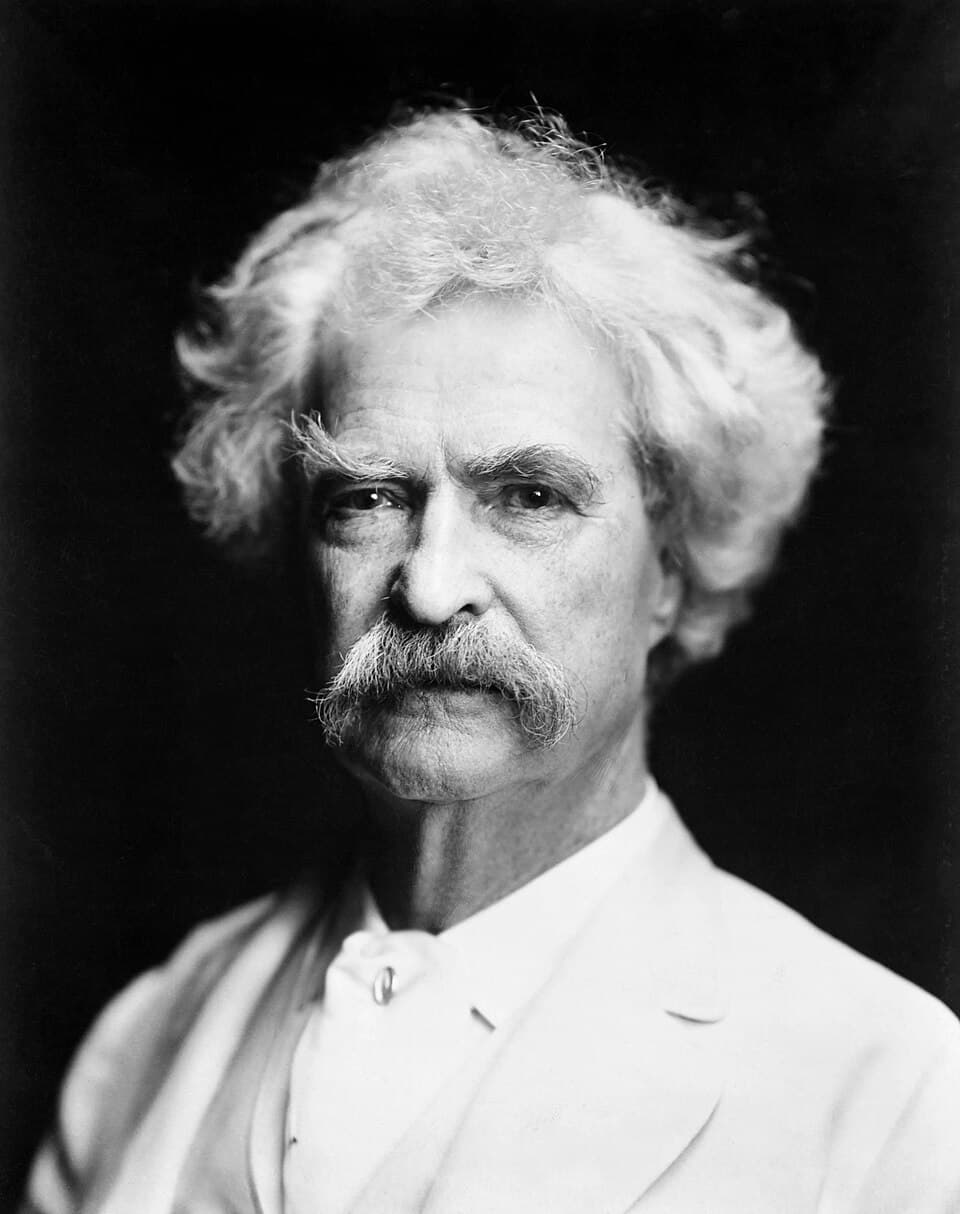

Here's the thing about Mark Twain that people forget: the guy was furious. Not ha-ha-look-at-those-politicians furious. Genuinely, philosophically, almost biblically furious at the whole project of being human. Tom Sawyer is cute. Huck Finn is beloved. But What Is Man? is Twain with the mask off, and it is not comfortable.
I started this one during a Sunday afternoon when Carlos had taken the kids to his mom's and I had the house to myself for the first time in what felt like months. Made coffee. Sat down. Expected something witty and quotable. Got something that made me stare at the wall for a while instead.
The Old Man Wants a Word With You
The title essay is basically a Socratic dialogue where Twain stacks the deck so completely in favor of the Old Man that the Young Man never had a chance. The Old Man's position: humans are machines. We don't act from virtue or conscience - we act from self-interest, always, every time, no exceptions. The Young Man keeps trying to find the counterexample. A soldier who throws himself on a grenade. A mother who sacrifices everything for her child. The Old Man dismantles every single one.
As someone who's actually worked a code - who has watched people run toward danger instead of away from it at 3 AM when nobody's watching and nobody's keeping score - I wanted to argue back. I really did. And I couldn't, entirely. That's what got me. Twain isn't saying people are bad. He's saying the wiring runs deeper than we want to admit. The soldier who jumps on the grenade does it because he can't not - because his training and his love for his unit have made that the only action his machine-self can take. It's not nihilism exactly. It's more unsettling than nihilism.
By the end of the title essay I was genuinely rattled. Which is not what I expected from a 1906 philosophical dialogue on a Sunday afternoon.
John Greenman Doesn't Get in the Way (That's a Compliment)
This is a LibriVox production, so expectations need calibrating upfront. No studio polish, no sound design, no dramatic music swells. What Greenman does is keep his voice clean and his pacing measured, which is exactly what this material needs. The dialogue between Old Man and Young Man is philosophically dense - if a narrator starts performing too hard, you lose the thread of the argument. Greenman trusts the words. He gives the Old Man a kind of weary authority and the Young Man genuine pushback without making either one a caricature.
The shorter essays that follow the title piece are where his delivery of Twain's irony lands best. There's a piece on patriotism and one on the damned human race (Twain's phrase, not mine, though I've used it after certain shifts) where the dry wit requires someone who understands that the joke lands quieter, not louder. Greenman gets that. He's not flashy. He's steady. For ten-plus hours of Twain being quietly devastating, steady is the right call.
Not the Twain Your High School Assigned
If you come to this expecting Adventures of Huckleberry Finn with a few philosophical detours, you will be confused and possibly annoyed. This is the late-career Twain who had lost a daughter, nearly gone bankrupt, and watched the Spanish-American War happen. The wit is still there but it has teeth now. Real ones.
The essays vary in weight - some are genuinely funny in that sharp, almost cruel way Twain does, and some are the Old Man from the title essay talking through different mouths about different subjects. The collection works best if you treat it like rounds in a long conversation rather than a series of separate pieces. My mom would love this, actually - she's been reading Twain since she was a teenager in Manila and always said she thought he was angrier than people gave him credit for. She was right.
This is not post-shift decompression listening. This is Sunday afternoon with good coffee and nowhere to be. The only other audiobook that's demanded that same kind of deliberate, undistracted sitting-down from me recently was Tweak: Growing Up on Methamphetamines — completely different subject matter, but that same quality of not letting you stay comfortable in your own assumptions. It asks for your full attention and then uses that attention to poke at things you thought were settled.
If You're Still Here After That
If you want Twain at his most comfortable and celebrated, go elsewhere. If you want to spend ten hours with a man who had run out of patience for comfortable conclusions and decided to write it all down anyway - this is the one. The title essay alone is worth the time. Just maybe don't start it at the end of a long week when your reserves are low. Twain will find the crack.