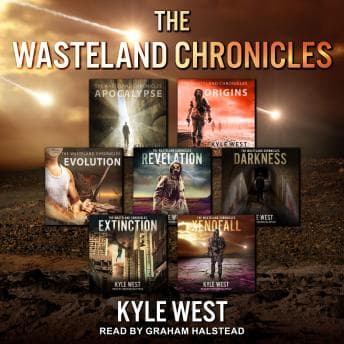

Look, I'm just going to say it: fifty hours is a commitment. That's like, what, two complete Sanderson novels? A full semester of avoiding my thesis? But here's the thing about post-apocalyptic box sets—when they hit, they're the perfect background radiation for coding sessions where you need something engaging enough to keep you awake but not so complex you lose the thread when debugging eats your attention for ten minutes.
The Wasteland Chronicles grabbed me during a particularly brutal week of procrastinating on my procedural generation research. (Dr. Patel, if you're reading this—I was also working. Mostly.)
The Magic System Is... Wait, It's an Alien Virus?
Okay so technically there's no magic system here, but Kyle West does something I genuinely appreciate: he treats the meteor's alien virus like a magic system. There are rules. There's progression. The mutations follow a logic that rewards paying attention. It's not Sanderson-level world-building, but it's doing the work. The virus mixing Earth genetics with something extraterrestrial gives the whole thing a LitRPG-adjacent feel—you're watching humanity level up against increasingly nasty threats, and there's a satisfying escalation across the series.
The premise is pretty standard post-apocalypse fare—Ragnarok meteor, bunker survivors, wasteland dangers—but the execution kept me hooked through late-night coding sessions. Is it predictable? Sometimes, yeah. You can see certain plot beats coming from a mile away. But predictable isn't always bad when the journey's fun, and this one moves.
Graham Halstead's Angsty Teenager Voice (A Divisive Choice)
So here's where it gets interesting. Halstead voices the protagonist Alex with this specific angsty teenager energy that—and I'm being honest here—some people apparently want to throw their phones over. I've seen reviews mentioning "urge to break things" levels of irritation.
Me? I thought it worked. The voice fits the character age perfectly, and there's an emotional authenticity to it that made Alex's struggles land. Halstead adds this gritty texture to everything that just fits the wasteland setting. His character differentiation is solid—you can tell who's talking without the "he said, she said" crutch.
But—and this is worth mentioning—there are moments where you can hear deep breaths at the end of sentences. It's not constant, but once you notice it, you notice it. Production quirk that doesn't ruin anything but isn't invisible either.
Fifty Hours of Commitment: Worth It?
Here's my honest take: this is a binge-worthy series for the right listener. If you're into post-apocalyptic survival stories with mutant threats and a young protagonist growing into a hero, you're going to have a good time. The pacing keeps things moving—no slogging through endless description when there are monsters to fight.
The ending apparently leaves some threads hanging, which—okay, that's frustrating if you're expecting complete closure. But across fifty hours, you're getting a full arc. Multiple arcs, actually. It's not a cliffhanger so much as a world that keeps existing after the credits roll.
My D&D group would absolutely use this as inspiration for a campaign. The mutation system alone could fuel a dozen sessions of homebrew monster design. Battlefield Earth has a similar vibe with its alien occupation mechanics—different flavor of apocalypse, same "humanity adapting to survive" energy. (Adding that to my "things to do instead of thesis" list.)
Who's Rolling Initiative on This One
Perfect for: Post-apocalyptic junkies, LitRPG-adjacent fans who like progression systems, anyone who needs fifty hours of engaging background for long work sessions, people who don't mind a young protagonist finding their footing.
Skip if: You can't handle angsty teenager energy in your narration, you need everything wrapped up with a bow, or you're looking for literary fiction dressed up as genre. This is pulpy, action-forward storytelling and it knows exactly what it is.
My Thesis Can Wait Another Week
Is this the most sophisticated audiobook I've listened to this year? No. But did it keep me company through three all-nighters of debugging procedural terrain generation? Absolutely. Sometimes you don't need a genre-defining epic—you need something that moves, that entertains, that gives you enough world-building to chew on without requiring your full attention every second. Fairy Tale scratched a different itch for me—more literary, more King doing his thing—but both understand how to keep you invested across a long runtime.
The Wasteland Chronicles delivers on that promise for fifty solid hours. Halstead's narration adds the right amount of grit, the alien virus mechanics scratch that progression itch, and the whole package is exactly what it advertises. Good, reliable post-apocalyptic adventure.
Now if you'll excuse me, I have a thesis to continue ignoring.