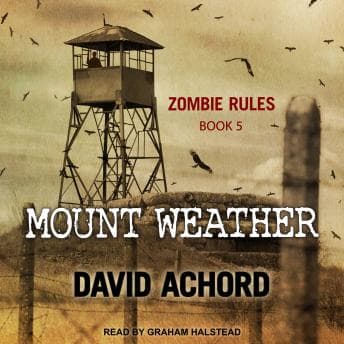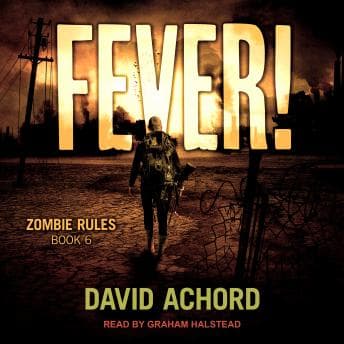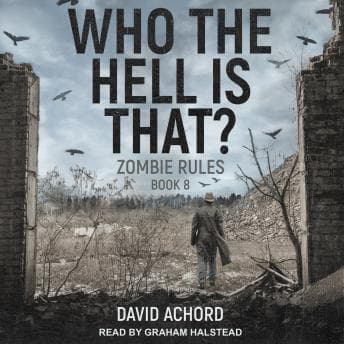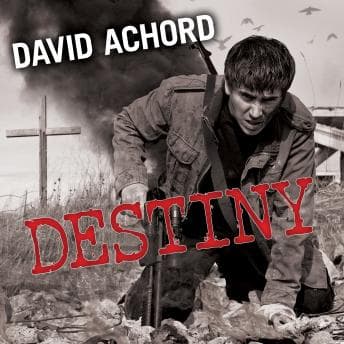

Grief is the real monster in this book. Not the zombies.
I've read countless papers on trauma responses, survivor's guilt, the psychological aftermath of catastrophic loss. But spending nearly fifteen hours inside Zach Gunderson's head? That's a different kind of case study. David Achord—former Army sergeant, former cop—writes grief like someone who's seen it up close. The messy, purposeless kind. The kind where you're still breathing but you're not sure why you're bothering.
Zach has lost almost everyone. His children were taken. Kelly survived with him, devoted and present, and yet he's emotionally unreachable. Classic dissociative response to compound trauma. The research actually shows this pattern repeatedly in disaster survivors—physical proximity doesn't equal psychological connection. You can be right next to someone and a million miles away.
Why This Zombie Story Isn't Really About Zombies
Here's the thing about post-apocalyptic fiction that most authors get wrong: they focus on the external threats. The shambling hordes, the resource scarcity, the other-survivors-as-villains trope. Achord does something more psychologically honest. He asks: what happens when survival itself feels pointless?
The protagonist exhibits classic anhedonia—that flattening of emotional response where nothing feels worth doing anymore. Two years into the apocalypse, the initial adrenaline has faded. What's left is just... existence. Kelly's steadfast devotion becomes almost painful to witness because Zach can't receive it. He's emotionally bankrupt. (My therapist would have thoughts about this character. Many thoughts.)
This is a fascinating case study in attachment disruption. The abduction of his children isn't just plot device—it's the psychological wound that won't heal because there's no resolution. No body to bury. No closure. Just the endless torture of not knowing.
Graham Halstead Made My Morning Runs Deeply Uncomfortable
Four-time Audie winner. Twenty AudioFile Earphones Awards. The man has credentials, sure. But what makes him work here is something harder to quantify.
I listened to this during my morning jogs through Cambridge—which, by the way, is a weird experience when you're simultaneously huffing up a hill and processing fictional trauma. Halstead's voice has this warmth that contrasts beautifully with the bleakness of the material. He doesn't oversell the despair. He lets it sit.
The character voices are solid. International accents, different ages—he handles them without making it feel like a performance. Which sounds counterintuitive, I know. But there's a difference between "narrator doing voices" and "narrator inhabiting people." Halstead does the latter. One listener said they "almost feel like they're real people," and yeah. That tracks.
What I found myself asking: why does Zach's emotional flatness still feel compelling across fifteen hours? Part of that is Achord's writing. But a huge part is Halstead's restraint. He doesn't try to inject energy where the character has none. He trusts the quietness.
Fifteen Hours Is a Commitment (Here's What to Expect)
Some listeners found the ending less satisfying—particularly the romantic subplot stuff. I get it. When you're investing that much time, you want the payoff to match.
For me, the pacing worked because I was analyzing Zach's psychological arc rather than waiting for zombie action sequences. (Don't tell my students I said that—I should probably be reading peer-reviewed journals, not zombie fiction. But here we are.)
The middle sections—where Zach and Kelly are just existing, surviving without purpose—those might test impatient listeners. But psychologically, that's the point. Survival without meaning is its own kind of horror. The author understands human nature in a way that feels lived-in rather than researched. Shift has that same quality—characters who feel like they've actually lived through their trauma, not just had it assigned to them.
Content warning: this book deals with grief and violence in ways that might hit hard if you're in a vulnerable place. It's not gratuitous, but it's not gentle either.
Who's This Actually For?
If you want zombies as action set pieces, this will frustrate you. Skip it. But if you're interested in character-driven apocalypse fiction—the kind that treats trauma as something more than a backstory bullet point—this is worth your fifteen hours. Listeners who want to understand what surviving actually costs, psychologically? This is the vibe.
Case Closed (For Now)
Probably wouldn't listen again immediately. It's heavy. But the production quality is clean, no audio issues—just you and Halstead and Zach's broken psyche for fifteen hours.
Sometimes the most honest thing fiction can do is refuse to fix what can't be fixed. Achord gets that.