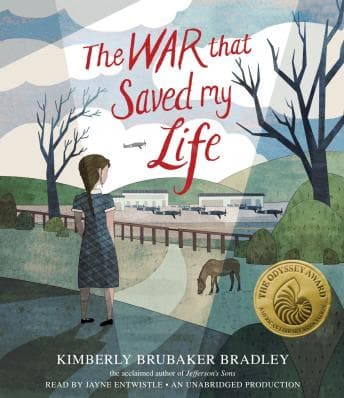

What do you do when a kid's book absolutely wrecks you emotionally while you're supposed to be debugging Python?
I'll tell you what you do - you sit there in the grad student lounge, headphones on, pretending you're working while tears are forming because a nine-year-old girl just learned to ride a pony and it's hitting you like a critical hit to the feelings.
The Character Sheet You Didn't Know You Needed
Here's the thing about Ada - she's basically a character who rolled terrible stats at creation but has the best roleplay potential. Born with a twisted foot, locked in a one-room apartment by an abusive mother who's ashamed of her, never allowed outside. Zero charisma according to her mom. Zero worth. And then WWII happens, kids get evacuated from London, and Ada makes her first real choice: she escapes.
Kimberly Brubaker Bradley does something here that I've seen in the best fantasy novels but rarely in kids' historical fiction - she builds Ada's internal world as carefully as Sanderson builds his magic systems. Every small victory matters. Learning to ride a pony isn't just cute; it's Ada rewriting her own character sheet. Learning to read isn't a montage; it's a slow, earned progression that would make any LitRPG fan nod in approval. That same careful attention to internal transformation shows up in Surrender Experiment: My Journey into Life's Perfection, though Michael Singer's dealing with a very different kind of escape.
The pacing is deliberate. This isn't a fast-paced adventure - it's a slow burn of a kid discovering she's allowed to exist. If you're the type who skips cutscenes, maybe this isn't for you. But if you've ever loved watching a character level up their confidence? Chef's kiss.
Jayne Entwistle Walked So Your Emotions Could Run
Okay, so I'd never heard of Jayne Entwistle before this. Couldn't find a ton about her online beyond her narrator credits. But based on this performance? She gets it.
Her Ada voice carries this perfect mix of defiance and vulnerability. There's a scene where Ada's trying to explain her worth to Susan - the reluctant caretaker who becomes something like family - and Entwistle's delivery just... cracks. Not melodramatic. Just enough. The kind of voice acting that makes you forget someone's reading to you.
Some reviews mentioned she uses similar voices for certain characters, and yeah, I noticed that with a couple of the side characters. But honestly? The core cast - Ada, Jamie, Susan, and (ugh) the mother - are all distinct enough that it never pulled me out. Her British accents feel authentic, and her pacing matches the book's emotional beats perfectly.
The Odyssey Award for audiobook production wasn't a fluke here. The production is clean, no weird audio artifacts, no jarring transitions. Just solid, professional work that lets the story breathe.
Where It Gets Real
I need to flag something: this book deals with child abuse. Not in a graphic way, but Ada's mother is genuinely cruel, and the emotional damage is portrayed honestly. There's a reason this won the Schneider Family Award - it handles disability and abuse with the kind of care that respects young readers' intelligence without traumatizing them.
But as an adult listener? It hits different. There's something about hearing Ada slowly realize that Susan's kindness isn't a trick, that she might actually be worth caring about, that just... look, I'm a grown man who plays D&D and listens to fantasy epics. I shouldn't be this affected by a middle-grade book about ponies and WWII evacuation. And yet.
The ending doesn't wrap everything up in a neat bow, either. (There's a sequel, which I immediately added to my queue.) It's hopeful without being saccharine - a balance a lot of kids' books fumble.
Who Should Roll Initiative
If you've got kids in the 9-12 range who like character-driven stories, this is an easy recommendation. It's the kind of book that teaches empathy without being preachy about it.
For adult listeners? If you appreciate a well-crafted emotional journey and don't mind something gentler than your usual fare, give it a shot. I listened during coding sessions and on walks, and both worked fine - it's engaging enough to follow but not so complex you'll miss things if you zone out for a minute.
Skip it if you need constant action or if themes of abuse are going to be too heavy. This isn't escapism; it's the opposite. It asks you to sit with uncomfortable truths about how we treat people who are different. Still Life does something similar with its small-town outsiders, though Louise Penny's mystery format makes those truths easier to swallow.
At seven and a half hours, it's a perfect length - substantial enough to feel like a real journey, short enough to finish in a week of commutes. My D&D group would love this, honestly. It's got that same energy as a really good backstory session where everyone gets invested in a character's trauma and growth.
Now if you'll excuse me, I have a thesis to not write and a sequel to download.