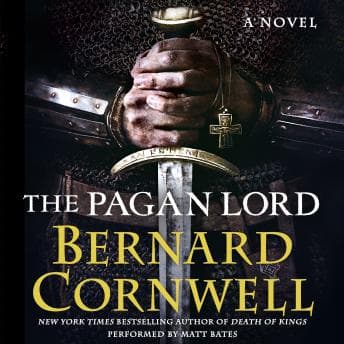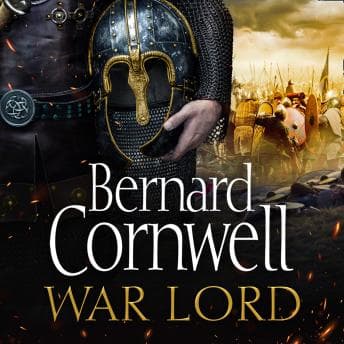

Look, I need to talk about defibrillators again. Just kidding. But I DO need to talk about shield walls, because Bernard Cornwell writes them like someone who's actually been in one, and after thirteen books I'm pretty sure the man has some past life memories he's not telling us about.
I finished War Lord at 4 AM in the break room while my unit was - knock on wood - mercifully quiet. Two patients sleeping, monitors steady, and me with my earbuds in, listening to Uhtred of Bebbanburg fight his last fight while I ate lukewarm arroz caldo from the Tupperware Carlos packed me. And I'll be honest - I got a little emotional. Not crying-in-the-car emotional, but that tight feeling in your chest when something you've followed for years actually sticks the landing.
Thirteen Books and the Old Man Still Swings a Sword
Here's what surprised me: I expected War Lord to be all spectacle. The Battle of Brunanburh - or Withealum, as Cornwell calls it - is supposedly one of the most significant battles in British history, and Cornwell's been building to it for over a decade of novels. But the book takes its sweet time getting there. The first half is almost entirely political maneuvering - Uhtred navigating between King Æthelstan's ambition to the south and Constantine's Scottish alliance to the north, getting threatened and bribed by everyone with a crown. There's an extended sequence at an encampment where Uhtred encounters Æthelstan, King Hewell, Finnan, and half a dozen other power players within twenty-four hours, and it reads like a chess game where every piece is trying to convince Uhtred they're on his side.
Some people will find this slow. I didn't. As someone who's actually worked a code, I can tell you - the buildup matters more than the crash. The tension of knowing something terrible is coming while you're still prepping? That's where the real anxiety lives. Cornwell understands that instinctively.
And when the shield wall at Withealum finally happens? Cornwell writes combat the way I wish medical shows wrote trauma bays - messy, confusing, terrifying, and grounded in physical reality. You feel the press of bodies, the mud, the exhaustion. The writing is so vivid that honestly, no screen adaptation could match the details realistically. Your imagination does better work than any CGI budget.
Matt Bates: The Narrator Debate I'm Wading Into
Okay. Matt Bates. I need to be honest here because the internet is deeply divided on this man and I understand both sides.
Bates keeps his character voices separate and distinct - Uhtred's wry authority versus Finnan's warmth versus Æthelstan's careful cunning. He's good at endowing characters with specific emotional textures. When someone's being duplicitous, you hear it. When Uhtred is tired and aging and still too stubborn to quit, Bates carries that weight in his delivery. The emotional scenes land.
But - and this is a real but - his battle sequences don't have the adrenaline punch I wanted. For a book called War Lord, for a climax that's supposed to be the most terrible battle Britain has ever experienced, the narration stays at roughly the same energy level it maintains during political conversations. It's not bad, exactly. It's controlled. But controlled isn't always what you want when men are dying in a shield wall. I wanted my heart rate to spike. It didn't quite get there.
If you've listened to earlier books in the series with a different narrator, the switch might bother you. Pronunciation shifts mid-series are like when a new nurse mispronounces your patient's name after you've been saying it right for three shifts. It's jarring even when it shouldn't matter.
That said - Bates is solid. Not electric, but solid. I'd put him at a strong 3.5. He serves the story. He just doesn't elevate the battle scenes the way the material deserves.
The Ending This Series Earned
What got me, sitting in that break room at 4 AM, was how Cornwell handles Uhtred's age. This is a man who's been fighting since he was a boy, who's outlived most of his enemies and half his friends, and who still straps on armor because he doesn't know how to be anything else. There's something deeply human about that stubbornness. I see it in my patients - the ones who've survived everything and still show up. Uhtred in this final book isn't invincible. He's old, he's tired, and he's choosing to fight anyway because the people he loves need him to.
Cornwell doesn't sentimentalize it. He doesn't wrap it in a bow. He lets Uhtred be Uhtred until the very end, and that's the most respectful thing he could've done for a character he's lived with for thirteen novels.
Carlos asked why I looked weird when I came home that morning. I told him I was just tired. I had that same hollow-chest feeling after When We Believed in Mermaids — a completely different kind of story, but it has that same quality of endings that don't quite let you go. But it was more than that. It was the particular sadness of finishing something that's been with you for a long time, and realizing it ended exactly right.
Night Shift Prescription
If you've read or listened to the whole Saxon Tales series - you're finishing this. You already know that. And you should. It's a worthy ending.
If you're new? Do NOT start here. Go back to The Last Kingdom. You need twelve books of context to feel the weight of what happens at Withealum.
Perfect for that post-shift decompression if you've got the patience for political setup before the swords come out. At 13 hours, it's a commitment - I'd say 1.25x speed is fine for the political chapters, but slow it back down for the battle. Give the shield wall the respect it deserves.
People who need constant action will get frustrated with the first half. People who love Cornwell's ability to make medieval politics feel like a knife fight at a dinner party? Night shift approved.