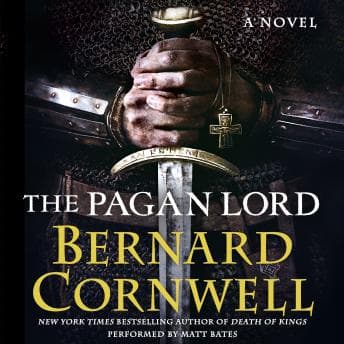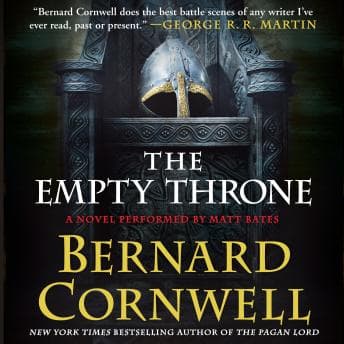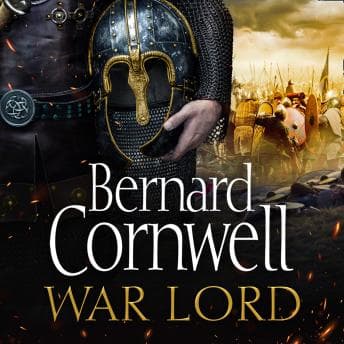

"Destiny is all."
I was three hours into my drive home after a particularly brutal night - two codes, a combative patient, and a new resident who didn't know where we keep the crash cart - when Uhtred said that line. And I almost missed my exit because I was too busy thinking about how this old warrior, pushing seventy and still swinging a sword, keeps showing up for a kingdom that's never really been his.
Sounds familiar. Night shift energy, indeed.
When Your Body's Tired But Your Brain Won't Quit
Bernard Cornwell knows how to write a battle sequence. As someone who's actually worked a code, I appreciate precision under chaos, and Cornwell delivers that same controlled mayhem on the page. The sea clash early in the book - ships splintering, men drowning in armor, Uhtred calculating angles while his shield wall holds - it's choreographed violence that makes sense. You know where everyone is. You understand the stakes. Tales of Terror and Mystery could've used this level of tactical clarity—some of those scenes made me want to throw my stethoscope at the narrator.
At 13 hours, this is a commitment. I spread it across a week of post-shift drives, and the pacing worked for that - dense enough to keep my exhausted brain engaged, but not so frantic I'd miss plot points while merging onto the 101. Cornwell's doing something interesting here with an aging protagonist. Uhtred's knees hurt. He gets tired. He watches younger men die and wonders why he's still standing. There's a weariness to his internal monologue that hit different at 4 AM.
The Narrator Situation (Let's Talk About It)
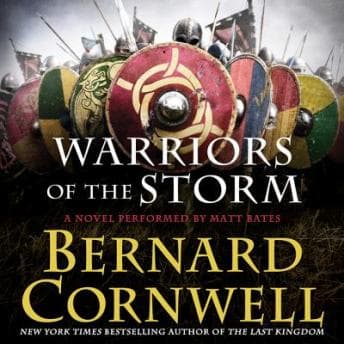
Okay. Matt Bates. Here's the thing - he's competent. His battle sequences have the right urgency, his emotional beats land, and he's consistent with pronunciation, which matters when you're twelve books deep into a series with names like Æthelstan and Sigtryggr.
But.
His Uhtred lacks... gravity. The man is supposed to be a legendary warrior-lord with decades of blood on his hands, and sometimes Bates makes him sound like he's ordering coffee. Pleasant coffee, sure. But coffee. And his Irish accent for Finan? Carlos asked why I was laughing in the car. I blamed allergies. (It wasn't allergies. Finan sounded like he was from Boston.)
If you've been listening to the series with Jonathan Keeble, the switch is jarring. Keeble's Uhtred had gravel in his throat and weight behind every word. Bates is smoother, younger-sounding, which creates this weird disconnect when the text keeps reminding us that Uhtred is old and tired and has buried too many friends.
If you're new to the series or you've only ever had Bates, this probably won't bother you. He's not bad. He's just... different.
Two Kings, One Sword, Zero Easy Choices
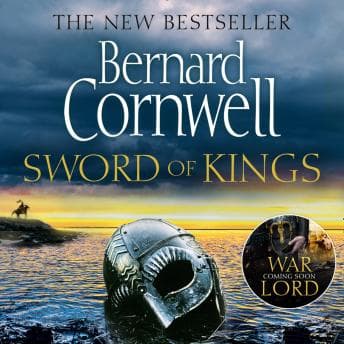
The political intrigue here is solid. England's dying king leaves a mess, two claimants emerge, and Uhtred - who just wants to go home to Bebbanburg and stop fighting other people's wars - gets dragged into the center of it. Cornwell doesn't make either king obviously right or wrong. They're both flawed, both dangerous, both convinced God is on their side.
This is not how hospitals work. Trust me. But it IS how power works, and Cornwell gets that. The backroom deals, the shifting loyalties, the way everyone's playing a longer game than they admit - it reminded me of hospital administration meetings, honestly. Less bloodshed, same energy.
What I appreciated most was Uhtred's exhaustion with all of it. He's been a kingmaker before. He's tired of crowns and oaths and men who use religion as a weapon. There's a scene - can't remember the exact timestamp, somewhere around hour 8 - where he watches a young warrior die for a cause he barely understands, and Uhtred just... sits with it. Doesn't rage. Doesn't philosophize. Just sits. That quiet moment hit harder than any battle.
Who This Is For (And Who Should Skip)
Perfect for that post-shift decompression. If you've been riding with Uhtred since book one, you know what you're getting - historical action, political scheming, a protagonist who's more pagan than Christian and doesn't apologize for it. The content warnings are real: violence, gore, language, some sexual content. Standard Cornwell.
If you're new to the series, don't start here. You'll be lost. Go back to The Last Kingdom and work your way forward. And if you're a Keeble loyalist who can't handle narrator changes, maybe wait until you're in a forgiving mood. Or just push through - the story's worth it.
Clocking Out
My mom would love this (she still thinks I should've been a doctor). She's been watching The Last Kingdom on Netflix and keeps texting me about "that handsome Uhtred." The book Uhtred is older, crankier, and less pretty than Alexander Dreymon, but he's earned every scar. Cornwell writes aging warriors the way I've seen aging nurses work - slower, maybe, but smarter. Still showing up. Still doing the job.
Destiny is all. But sometimes destiny is just putting one foot in front of the other until the shift ends.