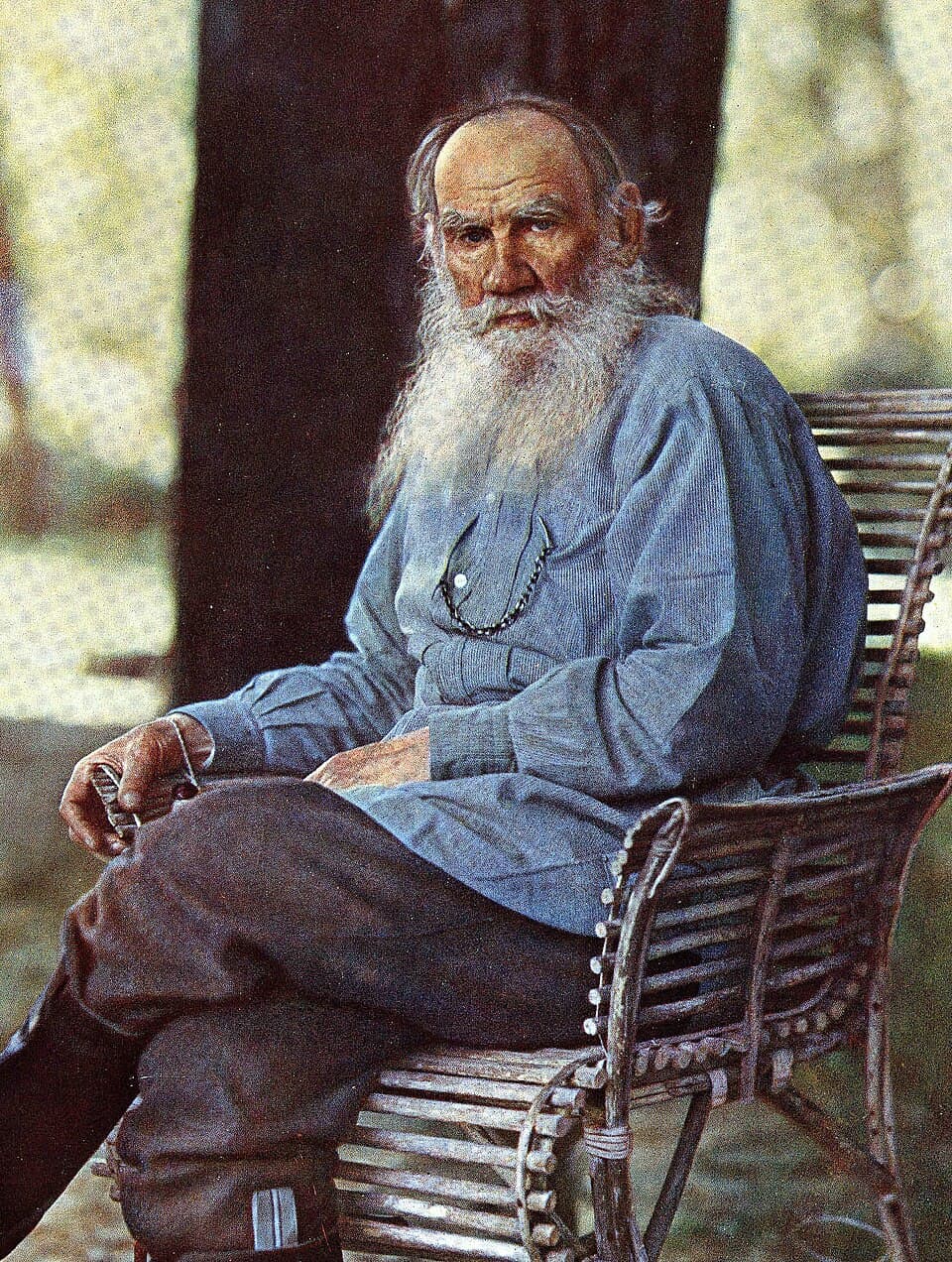
Look, I'll be honest with you. I've taught War and Peace excerpts for fifteen years and never actually finished the whole thing. There. I said it. The dirty secret of English teachers everywhere—we assign books we've only read chunks of. But this year, walking the lakefront with Denise through a brutal Chicago winter, I finally did it. All fifteen hours of Volume 1. MaryAnn Spiegel read it to me while I pretended the wind chill wasn't negative twenty.
And you know what? Tolstoy deserves the hype. My students would absolutely hate me for saying this.
The River That Carries You
The translator's preface calls this book a "broad and mighty river," and that's not just pretty language—it's genuinely what listening feels like. You don't read War and Peace. You surrender to it. The Dole translation has this old-fashioned formality that some modern readers might find stiff, but honestly? It works. Tolstoy wasn't writing for people scrolling TikTok between chapters. He was writing for people who understood that patience is a virtue and that some stories need room to breathe.
Anna Karenina (Dole translation) demands the same patience, and MaryAnn brings that same steady presence to it.
The opening salon scene—all that French aristocratic chatter that Tolstoy uses to skewer Russian high society—it's brilliant. It's also confusing if you're not paying attention. I had to rewind twice because I was grading papers (sorry, Principal Martinez, I know you think I was listening to your email about parking lot protocols).
But here's the thing about Tolstoy that I try to explain to my sophomores: he's not showing off. Every detail, every seemingly random character, every philosophical tangent—it's all load-bearing. You just don't know it yet.
MaryAnn's Gift (With a Few Stumbles)
MaryAnn Spiegel's narration is—how do I put this—like a really good substitute teacher. Competent, warm, keeps things moving. She's not going to blow your mind with dramatic character voices, but she's also not going to get in the way of Tolstoy's prose. And with writing this dense, that's exactly what you need.
Her pacing is genuinely excellent. She understands that Tolstoy's sentences are long for a reason, that the commas and clauses build toward something. She doesn't rush. At 1.0x speed (yes, I'm that person), it felt like being read to by someone who actually cares about the material.
Now, the French. Oh, the French. Tolstoy's aristocrats pepper their Russian with French phrases because that's what Russian aristocrats did, and MaryAnn's pronunciation is... let's say "American." Some listeners might find this charming. I teach in Chicago—I've heard worse from kids trying to order at French restaurants. But if you're a stickler for proper pronunciation, you might wince a few times.
There are also moments where her delivery goes a bit flat, especially during the more philosophical passages. Tolstoy's meditations on history and fate are dense, and MaryAnn sometimes reads them like she's getting through them rather than interpreting them. Not a dealbreaker, but noticeable.
I had the opposite experience with Anna Karenina—different narrator, different energy entirely, though I'll admit I liked this one better.
Who Should Walk With Tolstoy (And Who Should Keep Scrolling)
Here's my honest assessment: this audiobook is a gift for people who've been meaning to tackle Tolstoy but keep putting it off. It's free (LibriVox, bless them), it's well-paced, and it's clean. The production quality is solid—no weird background noise, no volume jumps.
But—and this is important—you need to be ready for it. This isn't a thriller. This isn't even a novel in the way we think of novels now. It's a panoramic meditation on war, peace, love, death, and what it means to be Russian in 1805. Characters appear, disappear, reappear. Plotlines weave and separate. You will lose track of who's related to whom. (Denise kept asking me "wait, which prince is that?" and half the time I didn't know either.)
If you're impatient, if you need constant action, if you listen to audiobooks while doing something that requires actual concentration—skip this one for now. But if you're ready to let a genuine classic wash over you, to walk through a Chicago winter with Tolstoy whispering about Napoleon in your ear, this is the way to do it.
Class Dismissed
My podcast has exactly 47 listeners. I'm betting at least 30 of them have already read War and Peace. The other 17—this one's for you. Start walking.