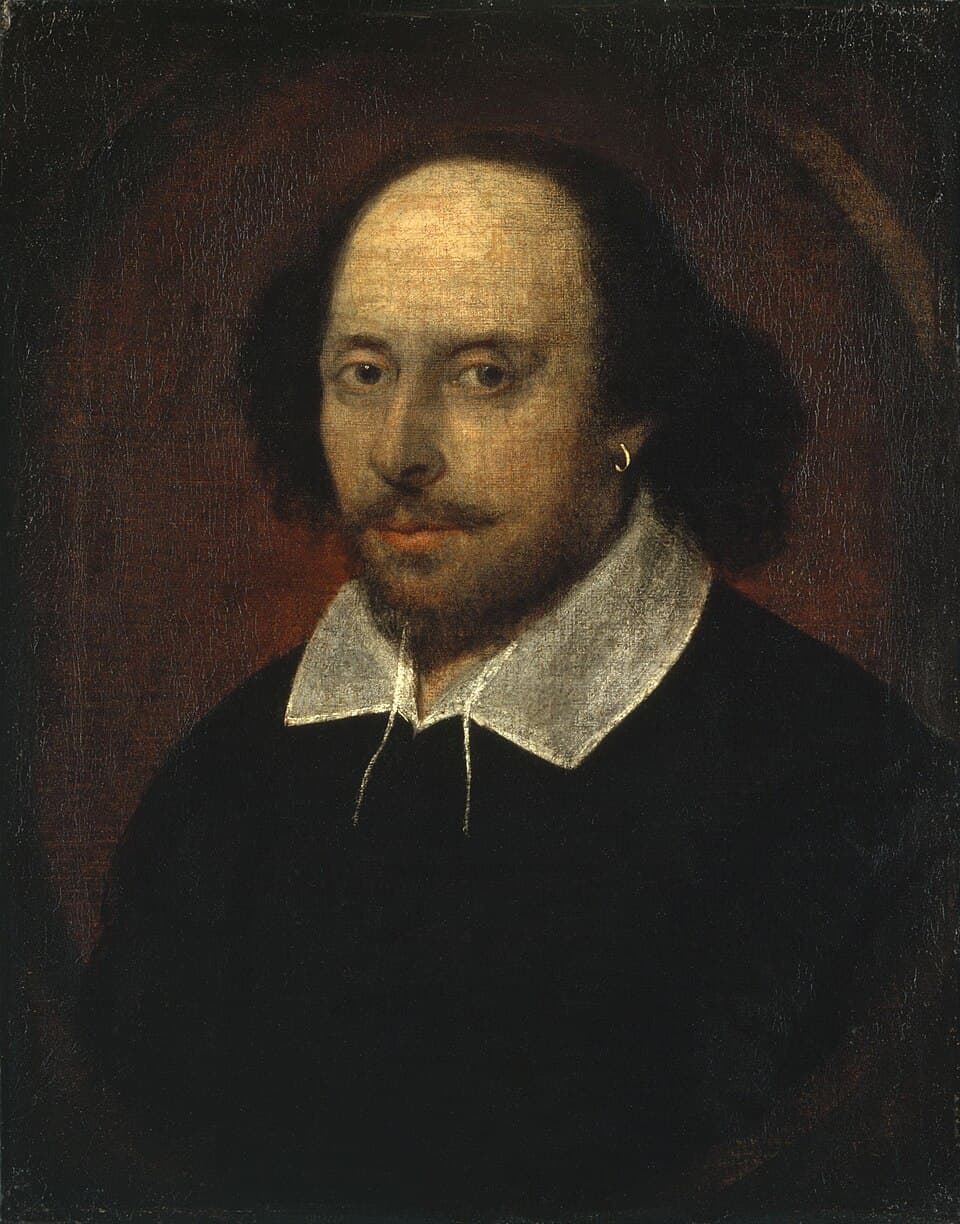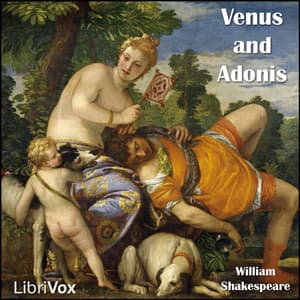

Shakespeare wrote a horny poem about a goddess throwing herself at a teenage boy, and honestly? Abuela would have loved this one. She'd have been clutching her rosary the entire 69 minutes (yes, the runtime is literally 69 minutes, I cannot make this up) while secretly living for every second of Venus basically cornering Adonis like he's the last churro at the panadería.
I was finishing up a logo redesign at like 2 AM, Frida asleep on my keyboard, Diego judging me from the bookshelf, and I threw this on because I needed something short and different from my usual contemporary romance binge. What I got was Shakespeare's earliest published work — 1593, people — and it reads like a telenovela script filtered through iambic pentameter. Venus is desperate. Adonis is not interested. She literally pins him down and monologues at him about why he should love her. The energy is unhinged in a way I deeply respect.
Venus Is Giving Desperate Telenovela Protagonist Energy
Let me be clear about what this poem actually is: it's a goddess sexually pursuing a mortal who would rather go boar hunting. That's it. That's the plot. And Shakespeare stretches this into 1,194 lines of the most elaborate persuasion tactics I've ever heard. Venus argues from beauty, from mortality, from nature itself — she literally uses a horse in heat as evidence that Adonis should give in. The audacity! The commitment! I was cackling at my desk because the emotional manipulation is so familiar if you grew up watching novelas. Venus would fit right into a Telemundo cast.
But then it turns. And Shakespeare being Shakespeare, the turn is devastating. When Adonis goes to hunt the boar and doesn't come back whole — when Venus finds what's left of him and the poem shifts from comic pursuit to genuine grief — something cracked in my chest. The image of Adonis transforming into an anemone flower, this beautiful boy becoming something fragile and temporary, hit me in a way I wasn't prepared for at 2:30 in the morning. I didn't ugly-cry (spreadsheet stays at 47), but my eyes got wet. For a 430-year-old poem. About a fictional goddess. At 2 AM.
Three Voices, Mixed Results
This is a LibriVox production, which means volunteer readers, which means you're rolling the dice on quality. The setup is smart — three different readers split between narration, Venus, and Adonis, so you get actual character separation instead of one person doing everything. And look, for a free audiobook? The role division works. You always know who's speaking, and that matters in a poem where the dialogue shifts can be subtle.
But I won't pretend this is Julia Whelan territory. The emotional range is... limited. Venus is supposed to be cycling through desire, desperation, jealousy, rage, and devastating grief, and the reader handles some of those registers better than others. The seduction passages feel a bit stiff — like someone reading Shakespeare carefully rather than living inside a goddess's obsession. The grief toward the end lands better, but I wanted more rawness there. More trembling. When Venus is literally arguing with Death itself, I need to feel that in the voice, and I only half-felt it.
Adonis's reader has less to work with (the boy barely talks, which — mood), and the narration carries the descriptive weight competently enough. No major audio issues, no background noise, clean recording. For a free production at just over an hour, it's a solid effort. But "solid effort" and "emotionally devastating performance" are different zip codes.
Who's Going to Love This (And Who Should Keep Walking)
If you're a Shakespeare-curious romance reader who wants to see the Bard write what is essentially a 16th-century "she fell first and he didn't fall at all" scenario — with mythological consequences — this is a fascinating little listen. It's free. It's barely over an hour. And it'll give you bragging rights the next time someone says romance isn't literary.
If you need your audiobooks to emotionally wreck you through performance alone, this isn't it. The poem itself has wrecking potential — Shakespeare knew what he was doing with that ending — but the delivery keeps it at a respectful distance when it should be grabbing you by the throat.
Also: content note for those who care. This poem has explicit erotic content and an ending involving graphic violence and death. Shakespeare was not playing.
This Book Felt Like Finding Your Abuela's Novela Playing on a Museum TV
Familiar passion, strange packaging. I'm glad I listened. I'm not going to pretend it changed my life, but sitting in my apartment at 3 AM with two sleeping cats and Shakespeare's horny goddess poem filling my headphones — there was something kind of perfect about that. Sometimes the shortest listens leave the weirdest marks. And now I can't see an anemone flower without thinking about a boy who just wanted to hunt boars in peace. Shakespeare's knack for threading genuine grief through comedic setups hit me similarly in All's Well That Ends Well — another one where the tone shifts on you before you've had time to brace. My heart. Not broken, but definitely bruised.