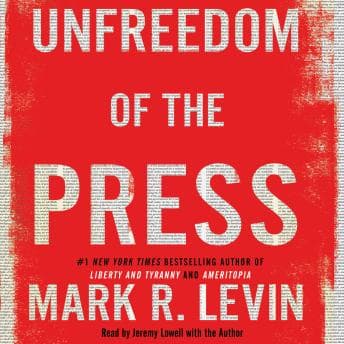

Look, I'm gonna start with a complaint. This book is basically a history lecture disguised as a media critique. And I say that as someone who actually enjoys history lectures. I've got the same appreciation for Vikings: A History, which takes a similar scholarly approach to its subject. But if you're coming to this expecting Mark Levin's usual radio-style takedowns - the kind where he's practically breathing fire through your speakers - you're going to be surprised. This is Levin in professor mode, and honestly? It works better than I expected.
Let me cut to the chase: Unfreedom of the Press is worth your time if you want to understand how we got here. Not just the current media circus, but the whole messy evolution from the patriot press of the founding era to whatever we're calling journalism today.
The History Lesson You Didn't Know You Needed
Here's where Levin actually shines. The man did his homework - and I mean serious archival digging, not just cherry-picking quotes to prove a point. He walks you through the early American press, which was openly, proudly partisan. Newspapers in the 1790s weren't pretending to be objective. They picked a side and fought for it. The Federalist papers, the Republican papers - they were basically the cable news of their day, except everyone knew exactly where they stood.
Then comes the Progressive Era, and this is where it gets interesting. The whole "objectivity" thing? That's a relatively new invention. About a century old. Reminds me of how institutional decline works - History of the Decline and Fall of the Roman Empire Vol. V covers similar patterns of systems claiming one thing while operating under completely different principles. Levin argues - pretty convincingly, I'd say - that it was never really objective at all. Just a new kind of partisanship wearing a lab coat.
I've seen this scenario play out in real life. During my deployments, the gap between what we experienced on the ground and what got reported back home was... let's call it significant. So when Levin talks about the press abandoning its actual mission, I'm not just nodding along theoretically. I've lived the disconnect.
Jeremy Lowell Carries the Weight
Jeremy Lowell handles most of the heavy lifting here, and the guy's got a clear, authoritative delivery that suits the academic tone. He's not trying to be dramatic or punch up the material - he just presents it straight. Which is exactly what this kind of content needs.
Levin himself narrates portions, and there's something authentic about hearing an author read their own work, especially when they're this invested in the subject. But I couldn't find much about Lowell's background online. What I can tell you is that his pacing works. He keeps things moving through what could easily become dense material.
The production is clean. No weird audio issues, no background noise. Just solid, professional work. Ranger sat through the whole thing without once giving me that look he gets when a narrator annoys him. (Yes, my dog has opinions about audiobooks. Don't judge.)
Where It Drags - And Where It Doesn't
At just under seven hours, this isn't a quick listen. There are stretches - particularly in the middle sections - where you're getting a lot of historical detail that feels more like a textbook than a polemic. If you're already a political history junkie, some of this will be review.
But Chapter 6? That's where Levin earns his stripes. The contemporary analysis is sharp, specific, and backed up by the historical framework he spent the earlier chapters building. It's the payoff for all that setup.
I listened to this at 1.25x during a long drive to a client meeting in Dallas. Perfect windshield time material. Kept me engaged without requiring the kind of focus that makes you miss your exit. (Don't pretend that hasn't happened to you with a really good thriller.)
Who's This Mission For?
Green light: Anyone who wants a serious, researched examination of press history and its current state. Levin fans who appreciate his more scholarly side. Commuters who want something substantive but not so complex you need to rewind constantly.
Abort mission: You want the fiery talk-radio Levin. You're looking for entertainment over education. You have zero patience for historical context. Or - and I'll just say it - if you're going to dismiss this purely because of who wrote it without actually engaging with the arguments.
Debrief
This is a serious book that takes itself seriously. It's not perfect - the pacing issues are real, and some sections could've been tighter. But the historical research is solid, the argument is coherent, and Lowell's narration keeps it professional. It's Levin's most academic work, which is either a feature or a bug depending on what you're after.
Ranger approved this one. And he's a tough critic.







![Steve Jobs [unabridged audiobook] audiobook cover](/_next/image?url=https%3A%2F%2Fcovers.audiobooks.com%2Fimages%2Fcovers%2Ffull%2F9788499923406.jpg&w=1920&q=75)