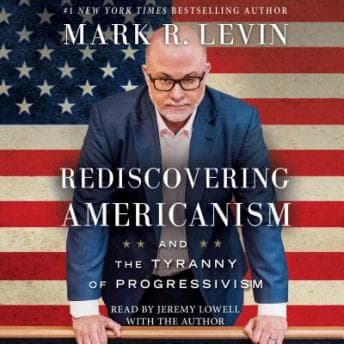

Look, I'm going to be straight with you - this book made me want to throw my phone across the cab of my truck about four times. Not because Levin's wrong about everything, but because he buries genuinely important points under avalanches of block quotes that had me reaching for the rewind button more than I'd like to admit.
I finished this one during a three-day consulting gig in Houston. Lots of highway time, which should've been perfect for a six-hour political philosophy book. Instead, I found myself white-knuckling the steering wheel during dense passages where Levin strings together Locke, Montesquieu, and the Founders in rapid succession without giving you time to breathe. Ranger was in the backseat looking at me like I'd lost my mind every time I muttered "slow down, counselor."
The Intel Report on What You're Getting
Levin's thesis is solid and worth hearing: progressivism isn't just a political preference, it's a fundamental rejection of the natural rights principles that built this country. He traces the intellectual lineage from Rousseau through Hegel to Wilson and FDR, showing how the administrative state we live under today was designed by people who explicitly rejected the Founders' vision. That's valuable intelligence, especially if you've never really dug into why our government operates the way it does.
But here's where it gets frustrating. The man quotes - and I mean QUOTES - for what feels like half the book. Long passages from primary sources, read verbatim. I appreciate the homework. I've seen too many talking heads make claims they can't back up. Levin can back up everything. That kind of rigorous sourcing reminded me of Thirty Years A Slave, where the historical weight comes through in every documented detail. Problem is, audiobooks aren't law review articles. When Jeremy Lowell is reading his third consecutive paragraph from John Locke's Second Treatise, my attention starts drifting to the exit signs.
Jeremy Lowell: Competent but Clinical
Lowell handles the narration professionally. Clear diction, proper emphasis, educational tone that fits the material. He sounds like the guy briefing you before a mission - all the information, no drama. That works for the explanatory sections.
Where it falls flat is the quoted material. Every Founder, every philosopher, every progressive villain sounds basically the same. When you're distinguishing between Madison's warnings and Woodrow Wilson's arrogance, some vocal differentiation would help. Instead, it all blends into one long lecture. Levin himself narrates portions, which adds variety - you can hear the passion in his voice when he's making his own arguments versus reading source material.
The production is clean, no audio issues to report. But this isn't an audiobook that benefits from the format. Honestly, you might want the print version so you can skim the lengthy quotations and focus on Levin's analysis.
Where the Mission Gets Muddled
Here's my tactical assessment: Levin's anger at progressivism sometimes overwhelms his argument. I get it - I've felt that same frustration watching bureaucrats make decisions that should belong to citizens. But when the emotional temperature runs too hot, the clarity suffers. Some listeners have noted that the "hate" for progressives clouds the thesis, and I can see their point. You're preaching to the choir when you should be converting the skeptics.
The natural law foundation will also lose some people. Levin grounds his entire argument in God-given rights, which is historically accurate to the Founders' thinking but may alienate listeners who don't share that framework. That's not a criticism of his position - it's just intel you need before you commit six hours.
Who Should Deploy This Audiobook
If you're already a Levin fan, you'll appreciate the depth here even if it's denser than Liberty and Tyranny. If you want a rigorous philosophical defense of constitutional conservatism, this delivers - patience required.
Skip it if you want something you can half-listen to during a workout. This demands focus. Skip it if heavy quotation drives you crazy. And probably skip it if you're looking for practical solutions - this is diagnosis, not prescription.
Cooper Out
Worth your time? Conditionally. The intellectual ammunition here is valuable, but the delivery method needs work. I'd call this a worthwhile investment for the dedicated student of American political philosophy, but a frustrating experience for the casual listener. Ranger fell asleep twice during the Hegel sections, and I can't entirely blame him.
Levin clearly did his homework. I just wish he'd trusted us with the summary more often.






![Steve Jobs [unabridged audiobook] audiobook cover](/_next/image?url=https%3A%2F%2Fcovers.audiobooks.com%2Fimages%2Fcovers%2Ffull%2F9788499923406.jpg&w=1920&q=75)