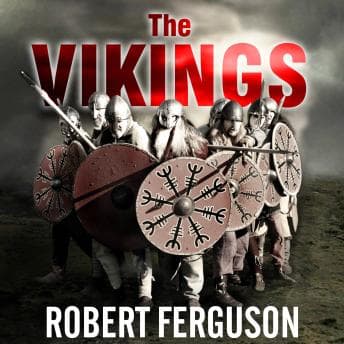

How many hours have you spent thinking you knew the Vikings, only to realize you've been fed Hollywood nonsense your whole life? That's where I found myself about three hours into this one, driving through Hill Country with Ranger in the back seat, completely re-evaluating everything I thought I knew about medieval Scandinavian warfare.
Look, I'll cut to the chase: Robert Ferguson's book is the real deal. This isn't some pop-history fluff piece designed to make you feel smart at cocktail parties. This is a serious, scholarly work that demands your attention. And honestly? That's both its greatest strength and the thing that might lose some listeners.
The Intel You Actually Need
Ferguson approaches Viking history like a good intelligence briefing - methodical, source-driven, and willing to say "we don't actually know" when the evidence isn't there. I respect that. That intellectual honesty—refusing to fill gaps with speculation—is exactly what separates serious history from the pop-culture version. I found that same rigor in Mythos, where the narrator treats ancient mythology with scholarly precision rather than Hollywood embellishment. Too many history books pretend we have certainty where we don't. The author clearly did his homework, drawing from both archaeological finds and the literary sources he's spent decades studying in Scandinavia.
Here's where it gets complicated, though. The book isn't organized chronologically. It's geographic. So you're jumping from the Danelaw in England to the Rus settlements in what's now Russia, then back to Iceland, then Norway. For someone like me who's used to operational timelines and sequential mission planning, this took some adjustment. About four hours in, I actually had to pull over and look at a map on my phone just to keep the geography straight.
Is that a flaw? Maybe. Or maybe it's just how Viking history actually works - these weren't a unified nation with a master plan. They were independent raiders, traders, and settlers moving in multiple directions simultaneously. Ferguson's structure reflects that reality, even if it makes the listen more challenging.
Michael Page Does the Heavy Lifting
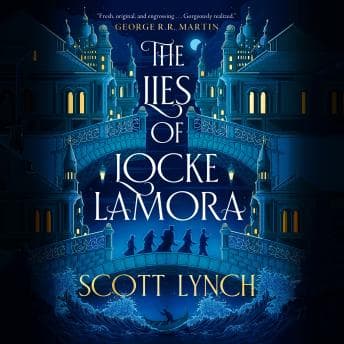
Now let's talk about the voice in my head for fifteen hours. Michael Page handles this dense material with the kind of steady professionalism I'd want from a staff officer delivering a brief. Clear, fluent, no stumbling over the endless parade of Scandinavian names that would trip up lesser narrators. Page brought that same command to Lies of Locke Lamora, where he navigates a completely different linguistic landscape with equal precision.
The man's pronunciation of Danish and Swedish names is genuinely impressive. Þórir. Sigurðr. Haraldr. He rolls through them like he's been speaking Old Norse his whole life. That said - and I found this in some listener feedback that matches my own experience - he apparently mispronounces "Seiðr" (the Norse magical practice). Small thing, but it's the kind of detail that bugs specialists.
I listened at 1.25x, which felt right for the material. Any faster and you'd miss the connections Ferguson's making between sources. Any slower and some of the drier passages about trade routes would've put me to sleep on I-35.
Where It Dragged
I won't pretend every minute was riveting. Some sections on economic systems and trade networks felt like reading an after-action report where someone included way too much logistical detail. Important? Sure. Engaging? Not always.
But then Ferguson hits you with the good stuff - the actual raids, the political maneuvering, the way these people thought about their gods and their fate. The section on the sack of Lindisfarne in 793 hit different when you've been in situations where violence arrived without warning. (Not comparing myself to medieval monks, but the psychology of sudden attack is universal.)
The violence is real here. Ferguson doesn't sanitize it. If you're squeamish about historical brutality, this probably isn't your book. But war is brutal. Pretending otherwise does a disservice to history.
Who Should Listen (And Who Should Skip)
Best for: History enthusiasts who want substance over entertainment. People willing to work for their knowledge. Anyone who's tired of the horned-helmet mythology and wants the actual archaeological record.
Skip if: You need a straight narrative timeline. You get frustrated when books jump around geographically. You want light listening for a casual commute.
This is a fifteen-hour commitment that rewards attention. I found myself taking mental notes, wanting to look things up later, actually learning something new. That's increasingly rare.
SITREP
Ranger approved this one - he didn't try to escape the truck once during our listening sessions, which is his version of a five-star review. For me, it's solid work that occasionally gets bogged down in its own scholarship. Worth your time if you're serious about the subject. Just don't expect it to be easy.
Mission accomplished, with some minor casualties in the pacing department.





![Steve Jobs [unabridged audiobook] audiobook cover](/_next/image?url=https%3A%2F%2Fcovers.audiobooks.com%2Fimages%2Fcovers%2Ffull%2F9788499923406.jpg&w=1920&q=75)