What happens when you sit with someone else's pain long enough that it becomes yours too?
I was three hours into a logo redesign for a bakery client — the kind of tedious kerning work that makes your eyes cross — when Frankie Washington started talking about being sold away from her mother, and I had to push my laptop back because I couldn't see the screen anymore. Frida jumped into my lap like she knew. Diego just stared from the bookshelf like, get it together, Elena.
Two Women, One Tulip Tree, and a Hundred Years of Wreckage
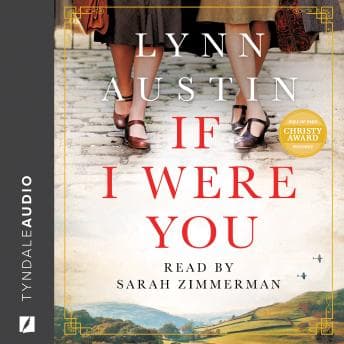
The setup here is deceptively simple. It's 1936 Nashville. Rena Leland is a broke, disillusioned young writer whose family lost everything in the crash. She takes a job with the Federal Writers' Project — a real government program, by the way, that sent writers to interview formerly enslaved people and record their stories. That historical detail alone hooked me. Rena gets paired with Frankie Washington, who is 101 years old, and what unfolds between them is this slow, careful peeling back of truth that neither woman is fully ready for. That particular ache of two very different women slowly circling each other's pain reminded me of something I felt reading Orphan's Tale — another story where the bond forming between two women carries the entire emotional weight of the novel.
What got me is that Shocklee doesn't let Rena off easy. Rena's family owned slaves. That's not a background detail — it's the fault line running through every conversation these two women have. And the book sits in that discomfort. Rena's not a savior figure. She's a young white woman in the 1930s South who genuinely doesn't understand the depth of what she's hearing, and she has to reckon with her own family's complicity in real time. I appreciated that the book didn't rush that reckoning.
Frankie's sections — her memories of enslavement, of violence, of small stolen moments of love — are where the emotional weight lives. The dual timeline structure (Rena's Depression-era present, Frankie's antebellum past) kept me grounded in both worlds without whiplash.
Sarah Zimmerman's Drawl — Honey or Molasses, Depending on Your Ears
Okay, let's talk about the accent. Sarah Zimmerman goes full Southern here. I mean thick, syrupy, every vowel stretched like taffy. And I know this is polarizing because I've seen the reviews — some people bounced right off it. I get it. If you're not used to a heavy regional accent carrying an entire audiobook, it can feel like you're wading through something.
But here's what worked for me: the accent grounds this story in a very specific place and time. Nashville in the 1930s should sound like that. And Zimmerman's emotional delivery during Frankie's harder memories — the quiet way her voice drops, the pauses she takes before revealing something devastating — that's what separates a good narrator from someone just reading words. There were moments where I could hear her voice catch slightly, like even she was affected by what she was saying. Whether that's performance or genuine feeling, I don't care. It landed.
I will say her character differentiation isn't the strongest. Rena and some of the secondary characters can blend together vocally. But Frankie's voice is distinct — older, weathered, deliberate — and since she's the heart of the book, that's what matters most.
The Part Where I Have to Be Honest About the Bow on Top
Here's where I wobbled. The faith element is woven throughout — this is published by a Christian imprint, so that tracks — and while I don't mind spirituality in my fiction (Abuela would've eaten this up, rosary in hand, tears streaming), there are moments where the resolution feels... tidy. Like the story works so hard to get to a place of grace and redemption that it smooths over some of the rougher edges that made the middle so powerful.
The late-book revelation connecting Rena and Frankie's families? I saw it coming from about hour five. And the way it resolves felt a little too neatly packaged for a story dealing with the inherited trauma of American slavery. I wanted the book to let me sit in the mess a little longer. It earned that mess. The clean ending undersells the weight of everything that came before.
But — and this is a real but — I still cried. Twice. Once during Frankie's account of losing someone she loved, and once near the end when the two women have a conversation about what it means to truly see another person's humanity across the divide of history. My heart. MY HEART.
Who This Is For (and Who Should Know What They're Getting Into)
If you love historical fiction that centers real marginalized voices — the actual Federal Writers' Project slave narratives are a treasure and this book honors that legacy — this is worth your time. If you need your fiction to be messy and unresolved, the ending might frustrate you. If heavy Southern accents in audiobooks make you want to claw at your headphones, maybe grab the print version instead.
Abuela would have loved this one. She would've called Frankie una mujer fuerte and cried harder than me.
This book felt like sitting on a porch with someone who's lived long enough to tell you the truth, even when the truth implicates you. At 1.0x speed, I let every word land. And most of them did.