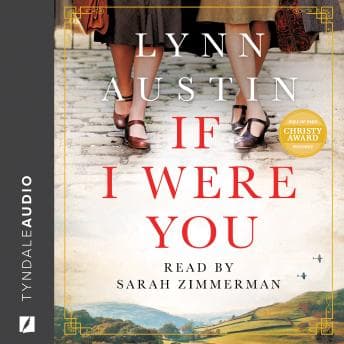

Okay, I need to talk about something that made me irrationally angry for the first three hours of this book: Eve Dawson. FOUR YEARS of impersonating your best friend to her in-laws? FOUR. YEARS. I was sitting at my desk working on a rebrand for a local coffee shop, and I had to put my stylus down because I was gesturing at nothing, arguing with a fictional character about the audacity. Frida was staring at me from the monitor stand like I'd lost it. Maybe I had.
But here's the thing Lynn Austin does that got me — she doesn't let you stay angry. She pulls you backward into 1940s London, into the Blitz, into ambulance runs through burning streets, and suddenly you're watching these two women get forged in fire and you start to understand. Not forgive, not yet. But understand.
The Class Divide That Breaks Your Heart Before the Bombs Even Drop
Audrey and Eve's friendship is built on the most unstable foundation imaginable — Eve's mum is the lady's maid to Audrey's mum at Wellingford Hall. They grow up side by side but never equal, and Austin writes that power imbalance with such quiet devastation. There's a moment where young Eve is basically told she can play with Audrey but never forget her place, and I felt that in my chest. As a first-gen kid who grew up navigating spaces that weren't built for me, that specific kind of "you're welcome here but you don't belong here" — yeah. That hit.
The dual timeline works because each era illuminates the other. The 1950 chapters in America have this suffocating tension — Audrey arriving to find Eve living her life, wearing her identity like a borrowed coat — while the 1940 chapters show you exactly how the seams of their friendship started to fray and then got stitched back together under bombs. You keep flipping between fury at what Eve did and heartbreak over why she did it.
And the faith thread — look, I'm not typically reaching for Christian fiction, but this is the kind my abuela would've actually finished. The way both women wrestle with God feels genuine, not preachy. Audrey's faith gets tested by grief. Eve's gets tested by envy and desperation. Neither gets a tidy resolution where everything clicks into place by chapter 30. It's messy faith. The kind Abuela had — rosary in one hand, telenovela remote in the other, trusting God but also yelling at the TV.
Sarah Zimmerman and the Art of Making You Forget You're Listening
Sarah Zimmerman does something smart here that I didn't fully appreciate until maybe hour six: her English accent for Audrey is warm and rounded, almost soft, while Eve's English has a slightly harder edge — not harsh, but you can hear the difference in class just from tone. It's subtle. And then when the American men show up, she shifts into these earnest mid-century American voices that feel like a completely different world, which is exactly the point. The contrast between the English women's voices and the American soldiers makes you feel the culture shock Audrey will eventually face.
At 13 and a half hours, this is a commitment. I listened at my usual 1.0x because I refuse to speedrun emotional devastation, and the pacing earns that runtime — mostly. There's a stretch in the middle where the 1940 timeline gets a little repetitive with ambulance runs, and I could feel my attention drifting toward my design work more than usual. But Austin pulls you back with a gut punch every time you start to coast.
I Ugly-Cried at Chapter... Honestly, Multiple Chapters
Three crying sessions on this one. The first snuck up on me during a Blitz scene that goes from chaos to devastating quiet in about two minutes of audio. The second was a letter — I won't spoil from whom or to whom, but if you've lost someone you loved and never said the right things, bring tissues. The third was near the end, when the full weight of both women's choices lands and you realize nobody got away clean. Nobody.
This book felt like sitting with someone who's finally telling you the truth after years of keeping it together. It's not flashy. There's no dramatic courtroom reveal or thriller twist. It's just two women, decades of love and resentment and sacrifice, and the slow painful work of forgiveness. That rawness of childhood friendships shaped by forces bigger than either kid — I got a different but equally gutting version of that in Play, which wrecked me in its own quiet way.
Who Should Press Play (and Who Should Keep Scrolling)
If you love character-driven historical fiction where the emotional stakes matter more than battle sequences — this is a clear-the-weekend listen, absolutely. Fans of Kate Quinn or Pam Jenoff who don't mind a faith element will feel right at home. If you need fast plot turns or hate dual timelines, this might test your patience. And if Christian fiction makes you bristle regardless of execution, fair warning — the faith thread is woven throughout, not just a garnish.
But if you're like me and you pick books based on whether they'll make you feel something real? My heart. MY HEART. This one earned its tears.