
"You cannot save everyone. You can only decide who to try to save."
That line hit me somewhere around hour seven, walking the lakefront with Denise on a gray Sunday afternoon. Lake Michigan was doing its moody thing—all slate and chop—and I had to stop walking for a moment. Just stood there like an idiot while joggers passed me, because Jenoff had managed to articulate something I've been trying to explain to my AP Lit students for years about moral complexity in wartime fiction.
This reminds me of what Hemingway said about writing—that the dignity of movement of an iceberg is due to only one-eighth of it being above water. Jenoff understands that. The circus setting could so easily have become spectacle, all sequins and sawdust and obvious metaphor. Instead, she uses it the way the best historical fiction uses any backdrop: as pressure. The trapeze isn't just beautiful. It's terrifying. It's trust made physical.
Two Voices, Two Women, One Impossible Choice
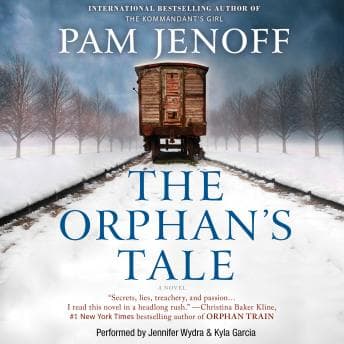
The dual narration here is the right call. Jennifer Wydra takes Astrid—the Jewish aerialist hiding in plain sight, bitter and guarded and carrying grief like a second skeleton. Kyla Garcia handles Noa, the sixteen-year-old Dutch girl who steals a Jewish baby from a Nazi transport train. (My students would call that "unhinged behavior." I call it the only moral choice in an immoral world.)
What works is how the narrators don't try to out-perform each other. Wydra's Astrid has this controlled quality, every word measured, like a woman who's learned that carelessness kills. Garcia's Noa is younger, more impulsive in her delivery—you can hear the teenager in her even when she's describing horrors. The alternating chapters create this rhythm that mirrors the trapeze act itself. Catch and release. Catch and release.
I'll admit—some listeners have questioned why the narrators adopted accents for certain characters. I get the critique. But honestly? After twenty years of teaching, I've come to believe that performance choices are like translation choices. You're never going to please everyone. What matters is consistency, and both narrators maintain their character voices throughout the nearly thirteen hours.
The Slow Build That Earns Its Devastation
Here's where I need to be honest. The first hour or so is disorienting. You're dropped into Noa's perspective, then Astrid's, and the timeline jumps around before it settles. I was grading sophomore essays while listening (the irony of red-penning run-on sentences while struggling to follow a narrative structure is not lost on me), and I had to rewind twice.
But—and this is crucial—the confusion is temporary. By hour three, you're in it. The circus train becomes home. The other performers stop being background characters and start mattering. Herr Neuhoff, the circus owner who takes in strays and refugees. The baby, Theo, who Noa is desperately trying to keep alive. The constant, grinding fear of discovery.
Around the seventy percent mark, something shifts. I won't spoil it, but the emotional stakes ratchet up in a way that felt earned rather than manipulative. Jenoff doesn't cheat. She doesn't give you easy villains or convenient escapes. The Nazis are terrifying precisely because they're bureaucratic, systematic, everywhere.
Smaller Scale Than The Nightingale, Same Impossible Questions
The Library Journal comparison to Kristin Hannah's work is apt, but I'd add a caveat. This is less sweeping, more intimate. Where Hannah gives you the whole French Resistance, Jenoff gives you a single circus train moving through occupied territory. The scale is smaller. The characters are fewer. But the questions are just as massive: What do we owe each other? What does survival cost? Who gets to decide which lives are worth saving?
Sara Gruen's Water for Elephants comparison is also fair—both books understand that circuses are fundamentally about bodies in space, about trust and timing and the constant possibility of falling. But Jenoff's book is darker. There's no romance-novel comfort here. This is WWII fiction that remembers the W stands for War.
Who Should Climb Aboard (And Who Should Stay Grounded)
This is for readers who want their historical fiction to hurt. If you're looking for something light, something you can half-listen to while meal-prepping, keep scrolling. The content includes violence, abuse, and the particular horror of what happened to Jewish communities across Europe. You need to be present for this one.
But if you're the kind of listener who believes—as I do—that fiction is how we practice empathy for lives we'll never live, this is worth your time. The Midnight Library made that same case for me last year—different era, different stakes, but the same insistence that inhabiting other lives is the whole point. My students would probably complain that "nothing happens for like the first two hours." My students are wrong. Character is happening. Trust is happening. The trapeze is being learned.
A Note on Pacing: Listen at 1.0x
I listened at normal speed because the author chose those words. Jenoff's sentences have weight. The circus imagery—the chalk dust, the rope burns, the particular terror of releasing the bar and trusting someone will be there—deserves its full measure. Speed it up if you must, but you'll lose something. The rhythm matters here. The pauses are punctuation.
Class Dismissed
Worth pausing the faculty meeting for. Worth the walk in the cold. Worth letting Denise get a few blocks ahead while you stand there, staring at the lake, thinking about what it means to catch someone who's falling.