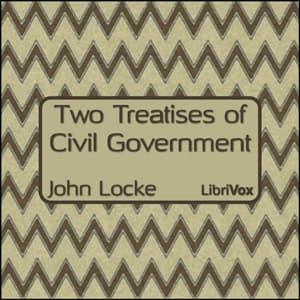

"The state of nature has a law of nature to govern it, which obliges every one."
Somewhere around hour two, that line hit different. I was on a red-eye to Chicago, couldn't sleep, and figured—why not tackle the philosophical foundation of American democracy at 35,000 feet? My parents never read Locke. They just lived his principles: work hard, own what you build, government should leave you alone unless you're hurting someone. Watching them run that dry cleaning shop in Koreatown, I saw natural rights theory in action before I knew what to call it.
The Blueprint My MBA Professors Forgot to Mention
Here's what kills me about business education: we spend semesters on Porter's Five Forces and Drucker's management principles, but nobody assigns the actual source code. Locke wrote the operating system. Property rights, consent of the governed, the social contract—every startup pitch about "disrupting" industries assumes these frameworks exist. You can't disrupt a market without stable property rights. You can't raise venture capital without contract enforcement.
The First Treatise is basically Locke dunking on this guy Robert Filmer for 200+ pages. Filmer argued kings rule because they're descended from Adam. Yes, that Adam. Locke systematically demolishes this with the patience of a lawyer billing by the hour. It's dense, it's repetitive, and honestly? Skip to the Second Treatise. Thank me later.
The Second Treatise is where the money is. Locke builds his case like a McKinsey deck—state of nature, then property, then government, then revolution. Each section builds on the last. By the time he gets to when citizens can legitimately overthrow their government, you understand exactly why Jefferson basically copy-pasted chunks of this into the Declaration of Independence.
LibriVox: The Audiobook Equivalent of a Potluck Dinner
Let's talk about the elephant in the room. This is a LibriVox production, which means community volunteers reading chapters. Some are genuinely good—clear diction, appropriate gravitas for 17th-century political philosophy. Others... look, one reviewer called it "borderline unlistenable" and I won't pretend they're wrong.
The same LibriVox roulette applies to Story of Mankind—I gave that one 3.5 stars, and the narrator inconsistency was half of why it didn't rate higher.The vocal cadence varies wildly between readers. One chapter sounds like a BBC documentary. The next sounds like someone reading to their cat at 2 AM. There's no music, no production flourishes, just raw volunteer recordings stitched together. At 2.0x speed (my default), some readers become incomprehensible while others finally sound normal.
Here's my honest assessment: this is free content, and you get what you pay for. If you're a philosophy student or genuinely interested in primary sources, the inconsistency is tolerable. If you want a polished audiobook experience, look for a professional narrator version of just the Second Treatise.
11 Hours Is 8 Hours Too Long
The core argument is worth the listen. The other 7 hours? Not so much.
Locke wrote for 17th-century readers who had time and no Netflix. He makes the same point seven different ways, anticipates objections you'd never think of, then circles back to make sure you really got it. This was thorough scholarship in 1689. In 2024, it's padding.
If I were advising Locke as a client (and Jenny would say I'm being harsh—Jenny is right), I'd tell him: "John, you've got maybe 90 minutes of revolutionary ideas here. The rest is insurance against critics who've been dead for 300 years."
The sections on property and labor theory? Essential. His argument that mixing your labor with resources creates ownership—that's the intellectual foundation of capitalism. Still relevant. Still debated. Worth your time. The pages-long refutations of Filmer's biblical genealogies? You can skim. Hard.
Who Gets ROI Here (And Who Doesn't)
Political science students, philosophy buffs, and anyone who wants to understand why the Founding Fathers thought what they thought. Also: libertarians who want primary source ammunition, history podcast hosts looking for material, and consultants like me who enjoy tracing ideas back to their origins.
Who should skip: anyone looking for casual listening, people who need consistent narrator quality, or readers who want actionable modern business advice. This is intellectual archaeology, not a how-to guide.
Park's Final Calculation
I've seen Locke's ideas fail at three different companies—not because they're wrong, but because executives cherry-pick "property rights" while ignoring "consent of the governed." Reading the source material forces you to grapple with the complete framework.
Is this audiobook the best way to consume Locke? Probably not. The LibriVox production has real limitations, and 11 hours is a serious commitment for content that could be condensed. But it's free, it's the complete text, and if you're willing to push through the rough patches, you'll understand something fundamental about how Western democracies justify their existence.
That same tension between free access and rough execution runs through my experience with Two Years Before the Mast—another LibriVox production where the text earns its place on your shelf even when the recording doesn't.My parents built their American Dream on principles Locke articulated 300 years before they arrived in LA. They never needed to read him—they just knew. Maybe that's the real test of great philosophy: it becomes so embedded in culture that people live it without knowing the source.