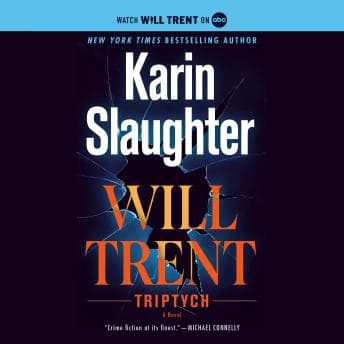
Look, I've been hosting a horror podcast for years, and I thought I was desensitized to dark content. Then Karin Slaughter came along and reminded me that crime fiction can be just as unflinching as anything in the horror genre. Maybe more so, because this stuff actually happens.
Triptych grabbed me by the throat in the first hour and didn't let go for the next twelve. And honestly? I wasn't expecting that. I picked this up because I'd heard Slaughter's name thrown around in thriller circles, but I wasn't prepared for how raw this would get.
The Grit That Gets Under Your Skin
Slaughter doesn't flinch. That's the first thing you need to know. This isn't a cozy mystery with a quirky detective and a cat named Mr. Whiskers. (Shirley would never.) This is Atlanta stripped bare—the wealthy suburbs and the housing projects, the cops who are barely holding their lives together, and a killer who moves between worlds like a ghost.
Michael Ormewood is a mess of a detective. His marriage is imploding, his temper is a liability, and his arrogance makes you want to shake him. But Slaughter writes him with such brutal honesty that you can't look away. Same with Angie Polaski—a vice cop with history tangled up in Michael's, and enough damage of her own to fill a separate novel.
And then there's the ex-con. I won't spoil how he fits in, but the way Slaughter weaves these three perspectives together? It's like watching a slow-motion car crash where you can see exactly how the pieces are going to collide but you're powerless to stop it.
Why Michael Kramer Was the Right Call
Here's the thing about audiobook narration for crime fiction: you need someone who can do gritty without tipping into parody. Michael Kramer nails it. His voice has this deep, gravelly quality that fits the material like a glove. When he's voicing Ormewood's barely-contained rage, you feel it. When he shifts to the ex-con's perspective, there's a vulnerability there that caught me off guard.
The character differentiation is solid—you always know who's speaking, which matters in a book with multiple POVs. And the tension? Palpable. There were moments during my commute where I missed my exit because I was too locked into what was happening. (Don't tell anyone. It's fine. I'm a responsible adult.)
Some listeners have complained about the pacing being too fast. I didn't have that issue, but I also listen to a lot of horror audiobooks where narrators really lean into the slow dread. Kramer brings that same steady, grounded delivery to Never Split the Difference—completely different genre, but his voice has that same authoritative weight. If you're coming from that world, Kramer's pace might feel brisk. He's not rushing, exactly—he's just not lingering. The story moves, and he moves with it.
The Slow Burn That Rewards Patience
I'll be honest: the first couple hours require some investment. Slaughter is building something complex here, layering in backstory and establishing her characters before she starts pulling the threads together. If you're the type who needs immediate payoff, you might get antsy.
But stick with it. Because when Triptych starts clicking—when you realize how all these seemingly separate storylines are connected—it's like watching a craftsman at work. The reveals hit hard. There's one twist about two-thirds through that made me pause my audiobook and just sit there for a minute, processing.
Slaughter understands that horror isn't about gore—it's about dread. The violence here isn't gratuitous; it's purposeful. Every dark moment serves the story. Every uncomfortable scene earns its place.
Who's This For (And Who Should Run)
If you're a fan of crime fiction that doesn't pull its punches, this is for you. If you appreciate character-driven narratives where the investigators are as flawed and fascinating as the criminals they're chasing, you need this in your ears. But—and this is important—there's content here that will be too much for some listeners. Violence, sexual content, substance abuse, language that would make my religious parents clutch their pearls. If you scare easily or need your crime fiction sanitized, skip this one.
My podcast listeners are going to love this recommendation. It's got that same energy as the best psychological horror—the kind that stays with you after the credits roll. Slaughter may not be writing supernatural terror, but she's mining something just as dark: the human capacity for cruelty, and the people who try to stop it. She explores similar territory in Pieces of Her, though that one goes even deeper into family secrets and identity.
Lights On, Shirley Judging
Thirteen hours felt like nothing. I finished this at 1 AM, lights on (old habits), Shirley giving me judgmental looks from the end of the bed. Worth every minute.