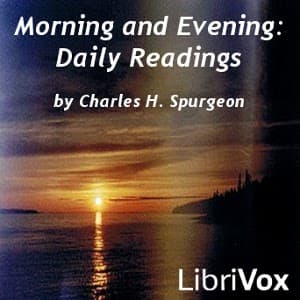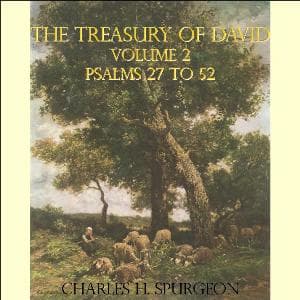

I'll be honest — I started this one expecting background noise. Something to keep my brain busy while Denise and I walked the lakefront on a Sunday morning that was too cold for October and too warm for my coat. Spurgeon's Treasury of David isn't exactly what my podcast listeners (all 47 of them) are clamoring for. But fifteen hours later, I'm sitting here at the kitchen table thinking about Psalm 51 and wondering why I waited this long to let a Victorian Baptist preacher rearrange my understanding of poetry.
Let me back up.
Spurgeon Reads the Psalms Like a Close Reader, Not a Preacher
Here's what surprised me. I expected sermonic thunder — the kind of breathless, overwrought devotional writing that makes you feel like you're being lectured at from a very tall pulpit. What I got instead was something closer to literary criticism. Spurgeon treats each Psalm the way I'd want my AP Lit students to treat a Dickinson poem: word by word, image by image, with genuine curiosity about what the author is really saying.
Take his work on Psalm 42 — the "As the hart panteth" psalm that most people know from hymns. Spurgeon doesn't just explain it. He sits inside the metaphor. He talks about the physical desperation of a hunted deer, the dry throat, the failing legs, and then maps that onto spiritual longing with the precision of someone who's actually felt both thirst and doubt. It's exegesis, yes, but it reads like close reading. The prose deserves to be savored, and I don't say that about commentary very often.
Or Psalm 32, where he unpacks the weight of unconfessed guilt — "When I kept silence, my bones waxed old" — and draws connections to the physical toll of hidden sin that feel almost modern in their psychological insight. This is a man writing in the 1870s who understood what suppression does to a body. My students would hate this. I love it. The psychological weight of hidden things — guilt, doubt, the cost of keeping silence — shows up in stranger territory too, and I kept thinking about it while reading Billion Years: My Escape From a Life in the Highest Ranks of Scientology, where that same internal reckoning with suppressed truth is the whole engine of the book.
The LibriVox Volunteer Problem (And Why It Mostly Doesn't Matter)
Let's talk about the elephant in the room. This is LibriVox. Multiple volunteer narrators. No audition process, no production budget, no director telling someone to retake a flat passage. You know exactly what you're getting: uneven recording quality, inconsistent microphone setups, and the occasional reader who sounds like they're narrating from inside a closet. Because they probably are.
The transitions between volunteers are jarring. One reader will give you warm, measured baritone on Psalm 34, and then the next chapter hands you to someone with a completely different pace and energy and room tone. There's no continuity of performance here, and if you're the kind of listener who needs a single narrator to carry you through — the way, say, Jeremy Irons carries you through Brideshead — this will drive you up a wall.
But here's the thing I discovered about halfway through, somewhere around Psalm 39: the rotating voices actually mirror how the Psalms themselves work. These are poems written by different hands, across different centuries, for different occasions of grief and praise and fury. The unevenness of the narration accidentally captures something true about the source material. I'm not sure that's intentional, but I'll take it.
That said — and I want to be straight with you — some of the readings are genuinely flat. Spurgeon's prose has rhythm. It has momentum. A few of the volunteers read it like they're reading assembly instructions, and that kills passages that should land with weight. When a reader does get the cadence right, though, you hear what Spurgeon was doing with language. The narrator understands that pause is punctuation — at least some of them do.
Who This Is Actually For
If you're looking for a devotional audiobook with polished production, go buy something from a major publisher. Seriously. This isn't that.
But if you love the Psalms — really love them, the way you love Shakespeare's sonnets or Whitman's catalogs — and you want someone brilliant to walk you through them line by line, Spurgeon is still the gold standard. The man read Hebrew poetry the way the best literary critics read fiction: with both reverence and rigor. This reminds me of what Hemingway said about writing — that the dignity of movement of an iceberg is due to only one-eighth of it being above water. Spurgeon shows you what's below the surface.
This is also, frankly, a 15-hour free audiobook. The price of admission is tolerating LibriVox production values. For Spurgeon's commentary on 26 Psalms? That's a trade I'd make again.
Not for bedtime listening unless you want to wake up confused at Psalm 44. Not for the gym. This is for long walks, for quiet mornings, for those weird 11 PM hours when you're done grading and your brain wants something that isn't a student's mangled thesis statement. Worth pausing the faculty meeting for — though honestly, what isn't.
The Annotation in the Margins
I'm giving this a careful recommendation with a caveat the size of Lake Michigan: the audio quality is what it is. But Spurgeon's mind? Still extraordinary, 150 years later. This is why we still read the classics — even the ones nobody assigns in English class anymore.