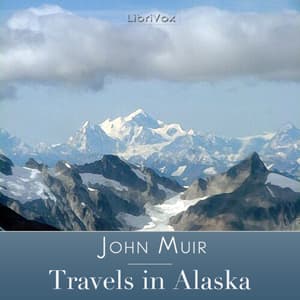

I'm going to be honest with you. I spent three evenings walking the lakefront with John Muir whispering in my ears about Alaskan glaciers, and I have... feelings.
Not all of them are good feelings. But we'll get there.
The Whole Iceberg, Every Crystalline Facet
First, the prose. Oh, the prose. Hemingway said the dignity of an iceberg comes from only one-eighth being above water. Muir is the opposite. He gives you the whole thing—every crystalline facet, every blue shadow, every thunderous calving into the sea. The man writes about glaciers the way other people write love letters. And honestly? It works. His descriptions of Alaska in 1879 are so vivid I could practically feel the cold spray on my face while dodging joggers on the Chicago lakefront in June.
Muir wasn't just a nature writer—he was a scientist who happened to have the soul of a poet. He went to Alaska specifically to test his theories about glacial action, and you can feel that dual purpose in every chapter. He's measuring. He's theorizing. And then suddenly he's rhapsodizing about "the divine harmony of Nature's works" and you remember this is the guy who basically invented American environmentalism.
The LibriVox Lottery
But here's where it gets complicated.
This is a LibriVox recording. For those unfamiliar, LibriVox is a wonderful volunteer project that makes public domain audiobooks free for everyone. I've worked through a bunch of their catalog—Works of Edgar Allan Poe, Raven Edition, Volume 2 and The Art of War both have that same volunteer inconsistency. I love what they do. I recommend them to my students all the time for classic literature. But—and this is a significant but—volunteer narration is inconsistent by nature.
Some readers here are perfectly fine. Clear enunciation, steady pacing, professional enough that you forget you're listening to someone's home recording. Others... well. Let's just say I understand that pause is punctuation, but some of these folks didn't get that memo. There's a deadpan quality to certain sections that flattens Muir's gorgeous language into something that sounds like a very eloquent instruction manual.
I found myself doing something I never do—adjusting my expectations chapter by chapter depending on who was reading. It's a bit like watching a Shakespeare production where half the cast is Royal Shakespeare Company and the other half is your nephew's drama class. (Don't tell my students I said that.)
The thing is, Muir's writing can carry a lot of weight. Even when the narration is monotone, the words themselves are so rich that you catch yourself leaning in anyway. He describes a canoe journey through icebergs with such precision and wonder that I actually stopped walking and just stood there, staring at Lake Michigan like an idiot, imagining Alaska. That's the power of this book.
But I won't pretend the narration elevates the material. It doesn't. At best, it delivers clearly. At worst, it undercuts moments that should soar.
Who Gets in the Canoe, Who Stays on Shore
If you're already a Muir fan or you love nature writing, this is worth your time. It's free, it's nine hours of genuine literary history, and Muir's Alaska is a world that doesn't exist anymore—these glaciers, these Indigenous communities, this raw wilderness before roads and cruise ships. There's something almost archaeological about listening to it.
If you need dynamic narration, dramatic pacing, character voices—skip this version. Seriously. Find a professionally narrated edition. Muir deserves a narrator who can match his energy, and you deserve not to zone out during the good parts.
Me? I listened at 1.0x because the author chose those words. My students would absolutely hate this—too slow, too descriptive, too much about rocks and ice. I loved it. (Well. I loved Muir. I tolerated the narration.)
An Old Man at His Desk
One more thing. This was the last book Muir worked on before he died in 1914. He spent his final months polishing these Alaska memories, journeys he'd taken thirty-five years earlier. There's something moving about that—an old man at his desk, trying to capture the glaciers one more time. Muir tried something similar with Near View of the High Sierra, though honestly that one didn't land for me the same way. The production doesn't capture that poignancy, but if you know it going in, you can feel it anyway.
Worth pausing the faculty meeting for? Depends on the meeting. Budget presentations, absolutely. Anything involving actual decisions, maybe wait until you get home.
This is why we still read the classics. Even when the delivery is imperfect, the words endure.









![Steve Jobs [unabridged audiobook] audiobook cover](/_next/image?url=https%3A%2F%2Fcovers.audiobooks.com%2Fimages%2Fcovers%2Ffull%2F9788499923406.jpg&w=1920&q=75)